
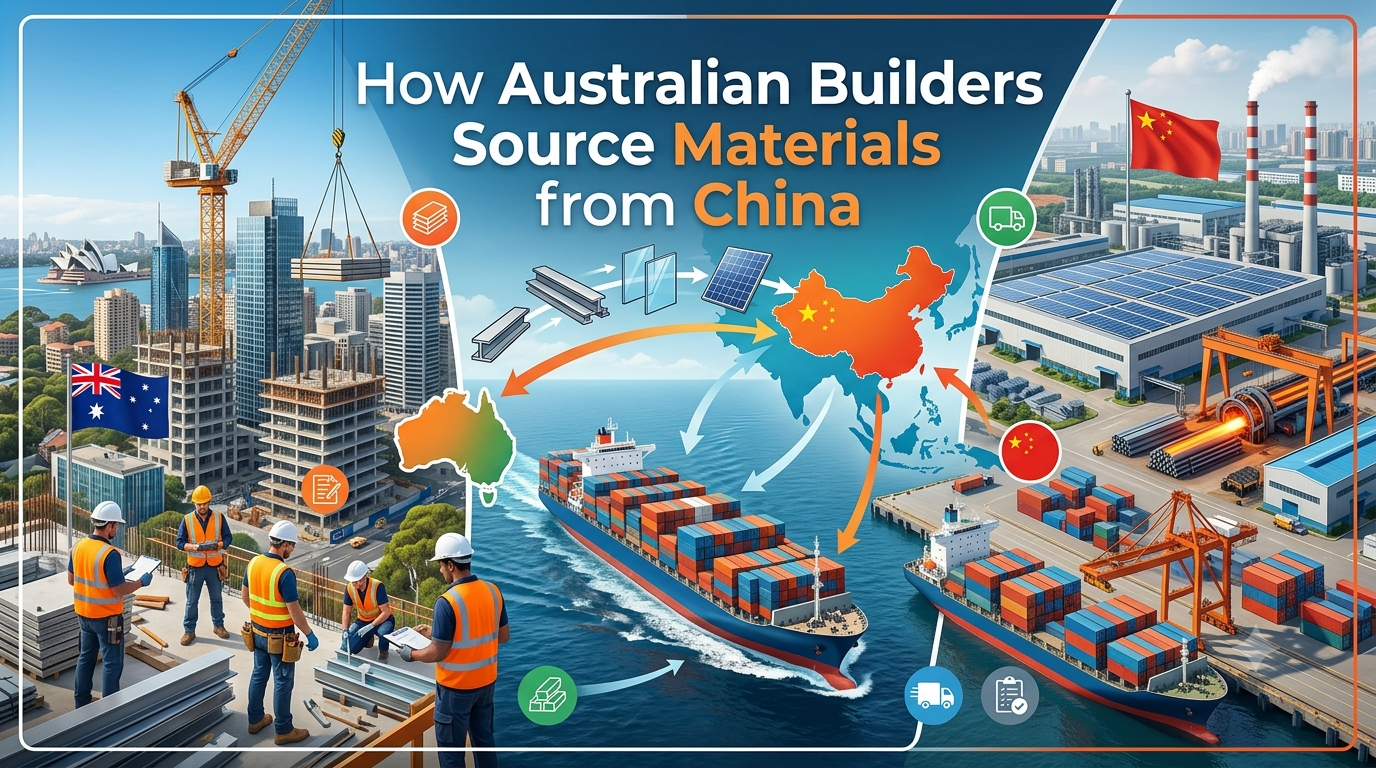
For Australian residential developers, commercial builders, and hotel owners, sourcing building materials from China—specifically the manufacturing cluster in Foshan—offers significant cost efficiency and direct access to custom manufacturing. Sourcing imported finishes, fenestration, sanitary ware, and custom millwork can reduce total material budgets by 30% to 50% compared to local Australian wholesale pricing.
However, Australia maintains some of the strictest building codes and biosecurity regulations in the world. Importing non-compliant building products into Australia can result in severe consequences: customs seizures by the Australian Border Force (ABF), rejection during site certification by local council certifiers, or forced tear-outs after installation.
This guide outlines how successful Australian builders navigate Chinese procurement, ensure compliance with the National Construction Code (NCC), and manage on-the-ground quality control in Foshan.
Key Takeaways
- Verify Mandatory Australian Certifications Early: Ensure sanitary ware carries valid WaterMark and WELS registration, window systems meet AS2047 / AS1288, and tiles comply with AS 4586 slip resistance ratings before paying factory deposits.
- Audit Biosecurity & Timber Standards: All timber products and wooden packing materials must comply with Department of Agriculture, Fisheries and Forestry (DAFF) biosecurity rules and carry ISPM 15 treatment stamps.
- Lock in Approved Physical Control Samples: Obtain physical control samples signed off by the project architect or head contractor prior to full production runs.
- Conduct On-Site Workshop Inspections: Tie milestone payments to verified pre-shipment inspections in China, including 100% trial assemblies for custom joinery and dry-lays for stone/tile orders.
- Consolidate Freight in Foshan: Combine multi-supplier orders (tiles, cabinetry, plumbing, windows) into full container loads (FCL) to minimize freight costs and destination port handling charges in Australia.
Why Do Australian Construction Projects Sourcing from Foshan Face Strict Regulatory Barriers?
The primary challenge Australian builders face when importing from China is not manufacturing capability, but regulatory alignment. Chinese factories produce goods for global markets, but domestic Chinese specifications rarely match the requirements of the Australian National Construction Code (NCC).
+--------------------------+------------------------------------+----------------------------------------+
| Product Category         | Mandatory Australian Standard      | Key Testing Parameters                 |
+--------------------------+------------------------------------+----------------------------------------+
| Plumbing & Sanitary      | WaterMark & WELS Scheme            | Pressure testing, lead content, flow   |
|                          | (AS/NZS 3718, AS/NZS 3500)         | rate star ratings                      |
+--------------------------+------------------------------------+----------------------------------------+
| Windows & Glazed Doors   | AS2047 & AS1288                    | Deflection, air infiltration, water    |
|                          |                                    | penetration, glass safety & thickness  |
+--------------------------+------------------------------------+----------------------------------------+
| Tiles & Pavers           | AS 4586                            | Slip resistance classification         |
|                          |                                    | (P1 to P5 ratings for wet surfaces)   |
+--------------------------+------------------------------------+----------------------------------------+
| Custom Joinery & Timber  | AS/NZS 1859 / E0-E1 Board Specs    | Formaldehyde emissions, moisture       |
|                          | & DAFF Biosecurity (BICON)         | content, timber treatment verification |
+--------------------------+------------------------------------+----------------------------------------+
1. The WaterMark and WELS Requirement
In Australia, it is illegal for a plumber to install non-WaterMark certified plumbing fixtures. Even high-end European-style faucets or toilets will be rejected by building certifiers if they lack a valid WaterMark license number listed on the public database. Furthermore, taps, showers, and toilets require WELS (Water Efficiency Labelling and Standards) star ratings.
2. Structural Fenestration Rules (AS2047)
Windows and sliding glass doors imported for Australian residential or commercial projects must be tested and certified to AS2047 (structural performance, water penetration, and air infiltration) and fitted with safety glass complying with AS1288. Standard factory test reports from North America (AAMA) or Europe (CE) are not automatically accepted by Australian certifiers without recognized cross-equivalence or local laboratory testing.
3. Biosecurity and Timber Import Conditions
The Australian Department of Agriculture, Fisheries and Forestry (DAFF) enforces strict quarantine rules to prevent pests like the Asian Gypsy Moth or subterranean termites from entering Australia. Raw timber, engineered flooring, and solid wood joinery must be treated, dried to approved moisture thresholds (<12%), and properly documented.
What Are the Most Critical Australian Building Standards to Verify Before Ordering?
To prevent costly site rejections, procurement teams must audit vendor test certificates against Australian standards before issuing purchase orders.
                    ┌─────────────────────────────────────────┐
                    │  Australian Compliance Audit Workflow   │
                    └────────────────────┬────────────────────┘
                                         │
       ┌─────────────────────────────────┼─────────────────────────────────┐
       ▼                                 ▼                                 ▼
┌───────────────┐               ┌─────────────────┐               ┌─────────────────┐
│  Plumbing     │               │  Windows/Glass  │               │ Tile / Surfaces │
├───────────────┤               ├─────────────────┤               ├─────────────────┤
│ • WaterMark   │               │ • AS2047 Test   │               │ • AS 4586 Slip  │
│   License     │               │   Report        │               │   Rating        │
│ • WELS Star   │               │ • AS1288 Glass  │               │   (P3/P4/P5)    │
│   Rating      │               │   Stamp         │               │ • Water Abs.    │
│ • HPb59 Brass │               │ • PA66 Thermal  │               │   < 0.5%        │
└───────────────┘               └─────────────────┘               └─────────────────┘
Detailed Compliance Verification Checklist:
- Sanitary Ceramics & Brassware: Confirm the factory holds a active WaterMark license issued by an accredited JAS-ANZ certification body. Verify that faucet bodies use HPb59-1 lead-free brass or 304 stainless steel to meet updated Australian low-lead plumbing regulations.
- Exterior Windows & Sliding Doors: Check that thermal-break aluminum profiles meet local wind load specifications (N1 through N6 for residential, or site-specific Pascal ratings for commercial towers). Glass panes must carry visible safety marks referencing AS1288 or AS/NZS 2208.
- Floor & Wall Tiles: For outdoor balconies, pool surrounds, and commercial wet areas, specify pendulum slip ratings complying with AS 4586:
- P3 Rating: Standard indoor living areas and dry corridors.
- P4 / P5 Rating: External ramps, pool decks, and exposed commercial entries.
- Joinery & Board Materials: Ensure carcass boards use E0 or E1 low-formaldehyde emission substrates. Edge banding should be executed using PUR hot-melt adhesive to withstand Australian humidity variations without delamination.
How Do Successful Australian Developers Manage the Step-by-Step Import Process?
Navigating procurement in Foshan requires a structured process from early design stage to container unloading on-site in Sydney, Melbourne, Brisbane, or Perth.
+-----------------------+-----------------------------------------------------------------------------------+
| Stage                 | Key Action Items                                                                  |
+-----------------------+-----------------------------------------------------------------------------------+
| 1. Design & Spec      | Issue architectural CAD drawings and specify mandatory AS/NZS codes in the BOQ.   |
| 2. Factory Audit      | Verify vendor business license, in-house machinery, and valid lab test reports.   |
| 3. Sample Sign-Off    | Sign physical master samples (finish, color, hardware) and send to the project job site. |
| 4. Production & QC    | Execute mid-production checks, timber moisture testing, and full trial assemblies.|
| 5. Pre-Shipment Audit | Conduct 100% pre-shipment inspections, packaging checks, and container loading supervision.|
| 6. Quarantine & Docs  | Secure ISPM 15 fumigation certificates, packing declarations, and unified custom docs. |
+-----------------------+-----------------------------------------------------------------------------------+
Step 1: Architectural Alignment & BOQ Preparation
Provide factory engineering teams with complete architectural schedules and CAD shop drawings. Ensure line items explicitly specify required Australian certifications, hardware brands (e.g., Blum, DTC, G-U), and exact material finishes.
Step 2: Physical Master Control Samples
Request physical samples of finishes—including anodized aluminum profiles, PVD hardware, timber veneers, and ceramic tile glazes. Establish three signed sets: one for the head contractor on-site in Australia, one for the factory floor, and one for the local sourcing agent in Foshan.
Step 3: Trial Assemblies and Dry-Laying
Before disassembling custom joinery or crating natural stone:
- Custom Kitchens & Vanities: Demand full workshop trial assemblies to verify soft-close drawer action, hinge alignment, and plumbing cutouts.
- Sintered Stone & Marble: Lay out cut slabs flat on the factory floor (“dry-lay”) to inspect vein continuity and shade matching under daylight viewing conditions.
What Are the Common Pitfalls Australian Importers Experience in China Logistics?
Logistical oversights can quickly erode the cost benefits of importing from China through expensive port delays or quarantine holds in Australia.
                       ┌─────────────────────────────────────────┐
                       │    Common Shipping & Quarantine Risks   │
                       └────────────────────┬────────────────────┘
                                            │
         ┌──────────────────────────────────┼──────────────────────────────────┐
         ▼                                  ▼                                  ▼
┌───────────────────┐              ┌───────────────────┐              ┌───────────────────┐
│ Quarantine Holds  │              │ Container Rain    │              │ Packaging Breakage│
├───────────────────┤              ├───────────────────┤              ├───────────────────┤
│ Non-compliant wood│              │ High humidity at  │              │ Weak cartons, non-│
│ packaging / solid │              │ sea causes timber │              │ palletized heavy  │
│ timber infestation│              │ swelling & mold   │              │ tiles/sanitary    │
└───────────────────┘              └───────────────────┘              └───────────────────┘
1. Non-Compliant Packaging and ISPM 15 Stamps
All solid wood packing materials (pallets, wooden crates, bracing) must be treated (Heat Treatment or Methyl Bromide) and clearly display the ISPM 15 stamp. Unstamped wood crates will trigger mandatory fumigation or re-export at the Australian destination port at the importer’s expense.
2. High Moisture and Container Rain
Containers shipping across tropical ocean routes experience drastic temperature shifts, causing internal condensation (“container rain”). Timber flooring, leather upholstery, and custom cabinetry are vulnerable to mold and warping unless packaged with high-absorption industrial desiccants and protective moisture barriers.
3. Destination Port Demurrage
If export documentation (Bill of Lading, Commercial Invoice, Packing List, Treatment Certificates, and Packing Declarations) contains errors or arrives late, containers will sit at Australian terminal yards, incurring high daily storage charges (demurrage).
Why Choose HSY Sourcing for Your Australian Project in Foshan?
Managing building material procurement in China requires technical knowledge, familiarity with Australian building standards, and strict local supervision. HSY Sourcing operates as your dedicated procurement, engineering, and quality control team on the ground in Foshan.
- Australian Standards Compliance Expertise: We understand AS2047, WaterMark, WELS, and DAFF biosecurity requirements, ensuring our partner factories deliver certified, site-ready building materials.
- Rigorous On-Site Quality Control: Our engineers conduct comprehensive inspections at every stage—raw material checks, timber moisture testing (<12%), workshop trial assemblies, and pre-shipment quality audits.
- Local Warehousing & Staging Facility: We operate a dedicated staging warehouse in Foshan where we collect products from multiple factories, inspect finished items, re-pack fragile goods into export-grade ISPM 15 crates, and optimize container packing.
- Direct Factory Price Transparency: We connect Australian developers and head contractors directly with top-tier OEM factories in Foshan, eliminating unnecessary middleman markups while protecting your commercial interest.
- Complete Documentation & Logistics Management: We handle all export paperwork, ISPM 15 treatment certificates, packing declarations, and container loading supervision for seamless clearance with Australian Border Force and DAFF.
Frequently Asked Questions (FAQ)
Can I import windows and sliding doors from China without an AS2047 certificate?
Installing non-AS2047 certified windows on Australian residential or commercial builds is a major compliance risk. Local private or council certifiers will inspect glass markings and request valid AS2047 test reports before issuing an Occupancy Certificate. HSY Sourcing works directly with certified window manufacturers in Foshan that maintain valid AS2047 / AS1288 testing.
How are biosecurity inspections handled for timber flooring and cabinetry entering Australia?
To clear Australian DAFF biosecurity seamlessly, timber products must be manufactured from treated raw materials, possess a moisture content below 12%, and be shipped with a valid Annual Packing Declaration and ISPM 15 Treatment Certificate for all wooden packaging.
What is the typical lead time for shipping building materials from Foshan to Australia?
Production lead times in Foshan typically range from 30 to 45 days for custom joinery, windows, and sanitary ware. Ocean transit times from South China ports (Yantian, Nansha, or Shekou) to major Australian ports (Sydney, Melbourne, Brisbane) take approximately 14 to 21 days, plus 5 to 7 days for customs clearance and port handling.
How do Australian builders ensure color and finish consistency across multiple factories?
To ensure uniform aesthetics across kitchen joinery, sanitary hardware, and ceramic tiles, HSY Sourcing establishes a master set of physical control samples in Foshan. We perform color-matching audits under standardized lighting conditions across all suppliers before authorizing mass production.