
Key Takeaways:
- Aesthetics Do Not Equal Compliance: A window or door that looks good on a rendering is useless if it fails local acoustic, fire, or wind-load building codes.
- Geographic Fragmentation Kills Budgets: Sourcing materials from scattered provinces increases inland freight costs and causes scheduling disasters. Centralizing procurement in a hub like Foshan reduces these risks.
- Foshan is the Epicenter for Doors and Windows: Leveraging Foshan’s dense aluminum extrusion and glass processing clusters allows developers to buy commercial-grade, thermally broken glazing systems at direct-from-factory costs.
- Unverified Packing Leads to Shattered Budgets: Heavy architectural glass and frames must be inspected for structural A-frame packing before leaving the factory, otherwise ocean transit will destroy the cargo.
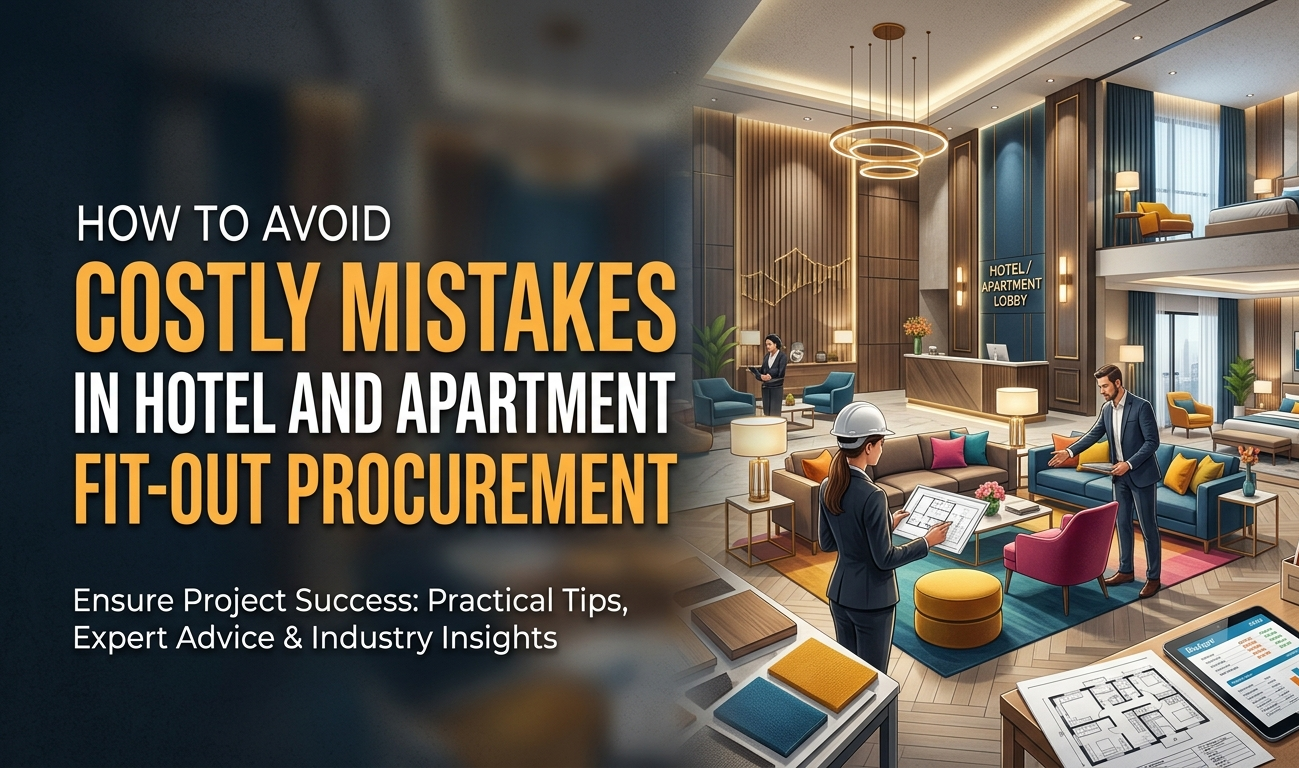
Procuring the fit-out materials and FF&E (Furniture, Fixtures, and Equipment) for a 300-room hotel or a high-rise apartment complex is a high-risk operation. The Bill of Quantities (BOQ) is massive, and a single mistake in specifications or logistics can halt construction and cause severe budget overruns.
Many global developers turn to China to manage these costs. However, buying building materials remotely without understanding the local supply chain geography or enforcing strict quality control often leads to costly errors.
Here is how project buyers can avoid the most common, and expensive, procurement mistakes.
Why Do Fragmented Supply Chains Inflate Fit-Out Budgets?
A standard hotel or apartment fit-out requires a massive variety of goods: structural windows, interior doors, bathroom vanities, flooring, and lighting.
A common mistake is treating China as one giant factory and ordering these items from entirely different provinces. When you buy windows from Shandong, furniture from Zhejiang, and lighting from Guangdong, you multiply your inland shipping costs and create a logistical nightmare. If the interior doors arrive a month after the framing is finished, your on-site labor sits idle.
The Solution: Centralize your procurement. Foshan is uniquely positioned for building materials, particularly doors, windows, and ceramics. By sourcing your entire fit-out package from factories located within a 50-kilometer radius in Foshan, a local agent can synchronize production schedules, consolidate the goods into Full Container Loads (FCL), and ensure everything arrives on-site exactly when the builders need it.
Are You Using Residential Windows for Commercial Projects?
The most expensive mistake in a high-rise apartment or hotel build is misspecifying the building envelope. Developers often approve standard residential aluminum windows to save money, only to face heavy penalties or forced replacements when the building fails its energy or acoustic audits.
Foshan is the global manufacturing hub for aluminum extrusion. To leverage this advantage properly, you must specify commercial-grade engineering:
- Acoustic Performance: Hotels near airports or CBDs require high Rw (Sound Reduction) ratings. Standard double glazing won’t work. You need factories to manufacture asymmetric double glazing (e.g., 6mm + 12A + 8mm) or use acoustic PVB laminated glass.
- Thermal Efficiency: Commercial codes demand low U-values. You must specify thermal break aluminum profiles (using PA66 nylon strips) and Low-E glass to prevent heat transfer. Foshan factories have the specialized equipment to produce these complex profiles at scale, provided you write it into the technical contract.
What Happens When Aesthetics Override Technical Compliance?
Interior designers focus on how a fit-out looks; procurement teams must focus on how it performs legally. Buying beautiful interior doors or hallway paneling that lacks the necessary fire rating is a fatal project error.
- Fire Ratings: Hotel entry doors and corridor materials must meet strict local fire codes (e.g., 60-minute or 90-minute fire resistance). You cannot take a factory’s word for it. You must demand physical testing certificates from recognized international laboratories (like SGS or Intertek) that match your local building authority’s requirements.
- Structural Wind Loads: For high-rise apartments, sliding doors and curtain walls must be engineered for specific wind pressures. The aluminum wall thickness must be verified (typically a minimum of 2.0mm for commercial projects, rather than the 1.2mm used in cheap residential builds).
How Does Poor Logistics Planning Destroy Construction Timelines?
Shipping air is a massive waste of money, and shipping fragile goods without supervision results in high damage rates.
When you order custom architectural windows, large glass panels, and solid wood doors, the packaging dictates whether the product survives the ocean freight.
A major procurement mistake is leaving the container loading sequence entirely up to individual factories. Instead, utilize a local staging warehouse in Foshan. Heavy, dense materials like ceramic tiles and structural window A-frames should be loaded securely at the base of the container. Lighter fit-out items, such as lighting fixtures or custom upholstery, can be safely packed on top. This consolidation not only protects the cargo but dramatically reduces your freight cost per cubic meter.
Why Is Relying on Factory Self-Inspection a Major Risk?
Accepting a factory’s internal Quality Control (QC) report is a conflict of interest. By the time finished windows, doors, and vanities are boxed and ready to ship, it is too late to check the internal construction.
If a factory used the wrong density foam in a lobby sofa, or applied a cheap powder coating to your exterior window frames instead of an architectural-grade finish (like AkzoNobel), you will only discover the problem when the items fail on your job site months later. QC must be conducted by an independent party midway through production—measuring aluminum thickness, checking wood moisture content, and verifying hardware brands before assembly is completed.
Why Choose HSY Sourcing for Your Project?
At HSY Sourcing, we are stationed directly in Foshan, giving us immediate access to China’s premium door, window, and building material manufacturing clusters. We act as your localized procurement and engineering team.
- Door & Window Expertise: We do not just pass along orders; we bridge the gap between your architect’s CAD drawings and the Foshan extrusion factories, ensuring thermal breaks, acoustics, and structural thicknesses meet your local building codes.
- Physical Factory Oversight: We reject polished marketing photos. Our team is on the factory floor taking physical measurements of your aluminum profiles and checking glass specifications before packaging begins.
- Unified Consolidation: We manage complex BOQs. We gather your windows, interior doors, bathroom fixtures, and furniture from specialized Foshan factories, storing and packing them strategically in our warehouse to optimize your shipping containers.
- Factual, Transparent Workflow: No exaggeration, no hidden margins. We operate strictly on clear technical specifications, providing real-time updates from the production line to your project management team.
Visit www.hsysourcing.com to share your project’s BOQ and window schedules. Let us engineer a secure, cost-effective supply chain for your development.
Frequently Asked Questions (FAQ)
Q: Can Foshan factories provide customized door and window hardware for commercial projects?
A: Yes. For commercial projects, hardware durability is critical. We ensure factories use heavy-duty commercial friction stays, multi-point locking systems, and Marine Grade 316 stainless steel components, especially if your project is in a coastal or high-traffic area.
Q: How do we ensure the finishes match across different materials, like aluminum window frames and interior wooden doors?
A: This is the exact reason you need a local sourcing agent. We take the physical master color samples approved by your design team and hand-carry them to the separate aluminum powder-coating facilities and the wood veneer factories to ensure the final aesthetics align perfectly before mass production.
Q: What is a realistic timeline for sourcing a complete hotel fit-out package from Foshan?
A: Standard building materials take 15-20 days, but custom architectural windows, fire-rated doors, and bespoke joinery require 35 to 45 days after the final shop drawings are signed off. Including consolidation and ocean freight, we advise developers to factor a minimum of 12 to 14 weeks into their critical path schedule.