

Furniture is usually the starting point when a private villa owner looks at China. Sofas, dining tables, beds, and loose seating are visual, easy to compare across showrooms in Foshan, and straightforward to ship once finished.
Once architectural plans and interior design drawings are on the table, a different question comes up: besides furniture, what other parts of the villa can realistically be sourced from China, and which categories make practical sense to coordinate together?
A private luxury villa is not bought from a single catalog. It is built from separate architectural, mechanical, and decorative packages—custom cabinetry, natural stone, sanitary ware, windows, doors, architectural lighting, and wall finishes—each made by different specialist factories with different lead times and technical requirements.
The useful question for a homeowner entering the procurement stage is not simply “What can Chinese factories manufacture?” The more practical question is: which villa products are strong candidates for China sourcing based on customization, drawings, inspection, logistics, installation, and local compliance—and which items require extra caution or local sourcing?
Buying Furniture vs. Procuring Villa Building Materials
Ordering loose furniture is relatively direct: you select a model, confirm dimensions, approve fabric or leather swatches, and inspect the finished piece before packing.
Architectural products and fixed building materials operate differently. A custom kitchen, walk-in wardrobe, book-matched marble feature wall, oversized sliding door, or floating bathroom vanity has to fit into an actual structure on site. Instead of placing a simple order, you are managing project procurement:
- Drawing translation: Interior renders and architectural plans must be converted into factory shop drawings with exact carcass dimensions, tolerances, hardware cutouts, and edge details.
- Finish and sample sign-off: Veneers, lacquer colors, stone slabs, metal plating, and glass tints need physical sample approval before mass production starts.
- Technical compatibility: Plumbing rough-ins, electrical voltages, wall thicknesses, and floor buildup heights must match the product specifications before fabrication.
- Multi-factory coordination: A kitchen cabinet factory does not make natural stone countertops, and a lighting factory does not supply architectural wall cladding. Each package involves separate production schedules, quality checks, crating standards, and consolidation timing.
When these steps are handled clearly, China sourcing works well across many villa categories. When technical details are left vague, the savings on unit price can quickly disappear into site modifications or delays.
How to Evaluate Villa Categories for China Sourcing
Before reviewing specific products, it helps to separate villa procurement items into three practical groups:
- Strong candidates for China sourcing: Categories where custom sizing is standard, factories work directly from architectural drawings, multiple specialist suppliers can be compared, physical quality can be verified before shipment, and consolidating goods adds clear operational value.
- Categories requiring closer technical review: Products that can be sourced from China, provided electrical standards, plumbing connections, structural wind/water ratings, site measurements, and replacement-part availability are checked first.
- Items often better sourced locally: Bulk raw construction materials, heavily regulated safety systems, or equipment requiring local installer warranties and ongoing mechanical servicing.
With that framework in mind, here is how the major villa categories break down in practice.
Custom Kitchens and Built-In Cabinetry
For many luxury villa projects, fixed cabinetry is one of the highest-value categories to coordinate alongside furniture.
Custom Kitchen Cabinets
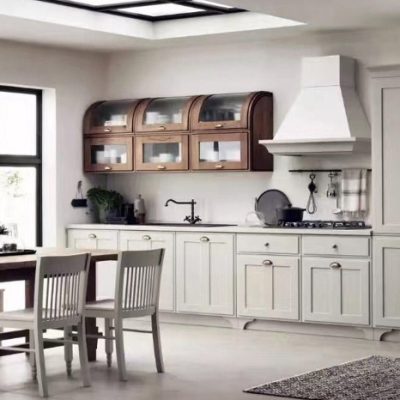
- Why it is suitable: Foshan and the surrounding Pearl River Delta have a dense cluster of custom cabinetry manufacturers experienced in export residential projects. Factories routinely build to project layouts using European hardware systems (such as Blum or Hettich), marine-grade plywood or moisture-resistant boards, wood veneers, matte/gloss lacquers, and sintered stone or quartz worktops.
- What is required: Kitchen floor plans, elevation drawings, appliance spec sheets (for built-in ovens, refrigerators, dishwashers, and range hoods), sink/faucet cutout details, and confirmed countertop thickness.
- What makes it difficult: Kitchens leave little room for measurement error. Ideally, cabinets are fabricated after on-site plastering and flooring dimensions are verified, or built with planned filler panels to absorb site tolerances. Appliances themselves are often better purchased locally to preserve manufacturer warranty and voltage compatibility, while their exact dimensions are sent to the cabinet factory in China.
Wardrobes, Walk-In Closets, and Built-In Joinery
- Why it is suitable: Walk-in closets, TV feature cabinetry, library shelving, hallway storage, and utility room cabinets benefit significantly from factory customization. Integrated LED strip channels, leather-wrapped drawer inserts, glass-framed aluminum doors, and custom veneer matching can all be produced to drawing.
- What is required: Room-by-room elevations, ceiling heights, skirting details, internal layout preferences (hanging vs. drawer ratios), and lighting voltage specs.
- What makes it difficult: Floor-to-ceiling wardrobes require accurate ceiling height checks and clear installation labeling per room so local carpenters can assemble each unit without guesswork.
Bathroom Products and Sanitary Ware
Bathroom packages combine decorative items with plumbing-critical fixtures, so each sub-category should be evaluated separately.
Bathroom Vanities and Mirrors
- Why it is suitable: Custom floating vanities, double-basin stone counters, fluted timber fronts, and backlit mirrors are straightforward to manufacture to exact bathroom widths and pair well with cabinetry or stone orders.
- What is required: Vanity elevations, basin type (undermount, vessel, or integrated stone), faucet hole positions, and mirror electrical points.
Bathtubs
- Why it is suitable: Freestanding solid-surface (artificial stone), acrylic, and carved natural stone bathtubs are widely produced in Guangdong for export projects, offering shapes and dimensions that can be expensive locally.
- What is required: Drain position, floor load confirmation (especially for solid stone tubs on upper floors), and doorway/stairwell access dimensions for delivery into the bathroom.
- What makes it difficult: Weight and crating. A solid stone or heavy resin tub requires reinforced wooden crating and careful site handling once the container arrives.
Faucets, Showers, and Sanitary Ware
- Why it is suitable: Concealed shower systems, thermostatic mixers, brushed PVD finishes (brushed gold, gunmetal, bronze), toilets, and ceramic basins offer wide aesthetic selection and coordinated finishes across all bathrooms.
- What is required: Local plumbing thread standards (such as BSP vs. NPT), water pressure specifications, rough-in valve depth requirements, and local certification rules where applicable.
- What makes it difficult: Concealed shower valves are buried inside the wall before tiling finishes. If a valve body is missing a part or incompatible with local plumbing codes, fixing it later is disruptive. Many villa owners source decorative mixers, basins, and freestanding tubs from China while verifying whether concealed valves or wall-hung toilet carrier frames (such as Geberit) should be sourced locally for installer familiarity and spare-part access.
Marble, Natural Stone, and Sintered Stone
Stone is one of the strongest categories for project-based villa sourcing in China—particularly around Yunfu and Foshan, two of the country’s largest stone processing hubs.
- Why it is suitable: Chinese stone processors import raw marble, granite, quartzite, and travertine blocks from Italy, Turkey, Greece, Brazil, and Iran, then cut, resin-treat, book-match, and waterjet-fabricate them to exact villa drawings. Sintered stone slabs for large-format walls, kitchen islands, and outdoor cladding are also widely available.
- What is required: Stone schedule, CAD cutting layouts for flooring and feature walls, edge profiles, finish type (polished, honed, leathered, brushed), and dry-lay photos before crating.
- What makes it difficult: Natural stone varies by block and vein. Relying on a small hand sample is not enough for a luxury villa; buyers should review photos or videos of the actual slabs and inspect dry-laid layouts on the factory floor to approve vein continuity before packing. Stone is also heavy, so container weight limits—not volume—often govern how much stone can be loaded per container.
Windows, Exterior Doors, and Interior Doors
Doors and windows have a major impact on a villa’s appearance and comfort, but they sit directly at the intersection of aesthetics and building engineering.
Interior Doors and Pivot Entrance Doors
- Why it is suitable: Flush-to-wall invisible doors, tall acoustic timber bedroom doors, steel-framed glass partitions, and custom architectural pivot front doors are strong candidates for China sourcing. Factories can match door veneers directly to wall panels and cabinetry finishes.
- What is required: Structural opening sizes, finished floor thickness, wall thickness (critical for jamb/frame depth), swing direction, lockset standards, and hardware finishes.
- What makes it difficult: Door frames must match exact finished wall thicknesses. Ordering doors before wall framing and plaster thicknesses are finalized leads to costly frame extensions on site.
Windows and Exterior Sliding Systems
- Why it is suitable: Thermal-break aluminum windows, slim-frame motorized sliding doors, and curtain-wall glazing systems from Foshan factories offer high build quality at competitive project pricing compared with many local markets.
- What is required: Window/door schedule, wind-load requirements, acoustic and thermal U-value targets, glazing specs (double/triple glazed, Low-E, laminated safety glass), drainage details, and local building code compliance.
- What makes it difficult: Local building regulations and installation. In regions with strict hurricane, cyclone, energy-efficiency, or glazing safety certifications (such as parts of the US, Australia, or the EU), suppliers must provide test reports accepted by local inspectors. In addition, large oversized glass panels require specialized glazing equipment and experienced local installers on site.
Tiles, Wall Panels, and Interior Finishes
Surface finishes account for large square meterage in a villa and benefit from coordinated sampling.
Porcelain Tiles and Mosaics
- Why it is suitable: Foshan is a primary global center for architectural porcelain tiles, large-format slabs, terrazzo-look porcelain, anti-slip pool deck tiles, and custom stone or glass mosaics.
- What is required: Area takeoff by room (including 10%–15% wastage allowance), slip-resistance ratings (R-ratings) for wet and outdoor areas, and grout/trim specifications.
- What makes it difficult: Shade and caliber variation between production batches. All tiles for the same zone must come from the same batch number, and spares should be ordered upfront because matching a dye lot two years later is rarely possible.
Wall Panels and Decorative Cladding
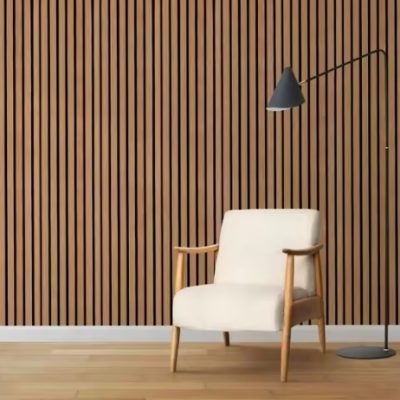
- Why it is suitable: Fluted wood-veneer wall panels, WPC exterior soffit slats, acoustic panels, PU stone textures, and custom metal trims are lightweight, modular, and easy to pack alongside furniture and cabinetry.
- What is required: Wall elevation drawings, fire-rating requirements (if applicable), substrate conditions, and corner/edge trim details.
Lighting, Rugs, and Decorative Products
Once structural and fixed finishes are defined, decorative packages help tie the interior scheme together.
Architectural and Decorative Lighting
- Why it is suitable: Zhongshan (Guzhen) and Shenzhen offer extensive options for custom statement chandeliers, stairwell pendant installations, recessed architectural downlights, magnetic track systems, and outdoor landscape lighting.
- What is required: Reflected ceiling plan (RCP), local voltage and frequency (e.g., 110V–120V/60Hz vs. 220V–240V/50Hz), dimming protocol (DALI, 0–10V, Triac), color temperature (2700K/3000K), CRI requirements, and ceiling junction-box mounting details.
- What makes it difficult: Electrical certification and driver replacement. Chandeliers and decorative fixtures are straightforward to customize, while architectural downlights and LED drivers should use recognizable, replaceable driver brands and meet local electrical safety standards.
Rugs, Curtains, and Soft Furnishings
- Why it is suitable: Hand-tufted wool and silk rugs custom-sized to living room furniture layouts, motorized curtain tracks, and custom drapery are easy to specify alongside furniture orders.
- What is required: Exact rug dimensions, pile material, color pantones or yarn pom-poms, window recess measurements, and motor voltage/smart-home protocol (Zigbee, Z-Wave, KNX, or dry contact).
Selected Decorative and Outdoor Products
- Why it is suitable: Sculptures, architectural planters, custom mirrors, outdoor pergola systems, and poolside loungers can be sourced to match the villa’s exterior palette and consolidated into the same shipment plan.
Villa Categories at a Glance
| Category | China Sourcing Fit | Key Inputs Needed | Main Risks to Manage |
| Custom Kitchens & Wardrobes | High | Elevations, appliance specs, hardware list, finishes | Site measurement tolerances, local appliance sizing |
| Marble & Sintered Stone | High | Stone schedule, CAD layouts, edge profiles, slab photos | Vein variation, dry-lay approval, container weight limits |
| Porcelain Tiles & Wall Panels | High | Room takeoffs, slip ratings, elevation details | Batch/shade consistency, breakage without proper crating |
| Interior Doors & Pivot Doors | High | Opening sizes, wall thickness, swing direction, lock specs | Late changes to wall thickness or floor height |
| Vanities & Freestanding Tubs | High | Bathroom elevations, basin/drain positions, access width | Heavy crating, floor load for solid stone tubs |
| Decorative Lighting & Rugs | High | Ceiling plan, voltage, dimming type, rug sizes | Driver quality, local electrical certification |
| Windows & Exterior Sliders | Medium–High | Window schedule, wind/thermal specs, glazing rules | Local building code compliance, specialized installation |
| Faucets & Concealed Showers | Medium | Thread standards, water pressure, rough-in specs | In-wall valve compatibility, long-term spare parts |
| Smart Home & HVAC / MEP | Low–Medium | Engineering schematics, local grid/code specs | Local licensing, warranty, ongoing technician support |
Which Villa Products Are Often Better Sourced Locally?
A realistic procurement plan does not try to put every item into an export container. Certain categories usually make more sense to buy in the project country:
- Heavy rough construction materials: Cement, rebar, sand, standard drywall, structural timber, and basic concrete blocks carry too much weight relative to product value.
- Core MEP equipment: Central air-conditioning chillers, heat pumps, water heaters, electrical distribution boards, and fire-alarm panels rely heavily on local code compliance, certified commissioning, and rapid technician service.
- Kitchen appliances: High-end ovens, induction hobs, wine coolers, and built-in refrigerators are best purchased locally so plug types, voltage, gas regulations, and manufacturer warranties remain intact.
- Specialized smart-home backbones: While motorized curtains and certain lighting fixtures can come from China, core KNX/Lutron processors and security systems are typically supplied and programmed by the local integrator maintaining the house.
A Practical Villa Procurement Sequence
Because different villa packages intersect during construction, ordering them in the wrong sequence causes delays on site. A workable procurement flow generally follows this path:
- Drawings & BOQ review: Organize architectural plans, interior elevations, reflected ceiling plans, and the bill of quantities into clear product packages.
- Category filtering: Decide which packages will be sourced in China and which will stay local.
- Supplier shortlisting & quotations: Match each package to specialist factories rather than general trading catalogs, and compare quotes on equal material and hardware specifications.
- Physical samples & finish sign-off: Approve stone slabs, wood veneers, lacquer chips, metal finishes, tile samples, and fabric swatches together so colors work across rooms.
- Shop drawings & technical confirmation: Review factory shop drawings against site conditions, appliance dimensions, and rough-in schedules before production starts.
- Production follow-up & pre-shipment inspection: Monitor lead times (custom cabinetry, stone, and windows take longer than loose furniture) and inspect workmanship, dimensions, and dry-lay layouts before final balance payments.
- Warehouse receiving, consolidation & shipping: Sequence shipments to match your site construction schedule—structural and rough-in items (windows, tiles, stone, concealed valves) ship earlier than cabinetry, lighting, and loose furniture.
Not every category moves at the same pace. Tiles and sanitary rough-ins may need to leave China months before sofas, rugs, and chandeliers.
What to Prepare Before Requesting Quotes From Chinese Suppliers
Sending a general inquiry such as “How much for kitchen cabinets and marble for a 600 sqm villa?” usually produces inaccurate estimates that change once real drawings appear. Factories quote accurately when they receive structured project inputs:
- Architectural and interior drawings: Floor plans, wall elevations, ceiling plans, and 3D renders for visual intent.
- BOQ or material schedule: Itemized list with estimated quantities, square meterage, and room allocations.
- Technical specifications: Hardware preferences, stone types, glass specs, electrical voltage, and plumbing standards.
- Project location and climate context: Coastal humidity, extreme heat, freezing winters, or local building code requirements affect material selection.
- Target construction and shipping timeline: Knowing when tiles, stone, cabinetry, and furniture are needed on site determines factory scheduling and shipment splits.
When Does a Villa Owner Need Local Procurement Coordination?
If you are only buying a few pieces of loose furniture, you can often work directly with one or two showrooms.
Once your scope expands to five, ten, or fifteen specialist factories across cabinetry, stone, tiles, doors, lighting, and furniture, the workload shifts from shopping to project coordination. Someone on the ground in China has to translate design intent into factory shop drawings, verify that veneer colors from the door factory match the wardrobe factory, check actual marble slabs before cutting, inspect finished goods prior to loading, and consolidate cargo safely for overseas shipping.
As a Foshan-based sourcing and procurement coordination partner for overseas residential and luxury villa projects, HSY Sourcing works alongside homeowners, architects, and interior designers to screen specialist suppliers, compare technical quotations, coordinate samples and shop drawings, follow up on production, arrange pre-shipment inspections, and manage warehouse consolidation and shipping.
Ready to Assess Your Villa Procurement Scope?
If you are preparing to source for a villa project, share your current project package with HSY Sourcing:
- Architectural and interior drawings (plans, elevations, or renders)
- BOQ or material schedule
- Target product categories and estimated quantities
- Project location
- Required procurement and shipping timeline
Based on your drawings and schedule, our team can review which categories are practical to source from China, highlight potential technical or compliance considerations early, and outline the supplier and procurement coordination required for your project.
The goal is not to source everything from China. The goal is to identify the villa products that can be sourced reliably, specified clearly, inspected properly, and delivered in a way that works for the project.