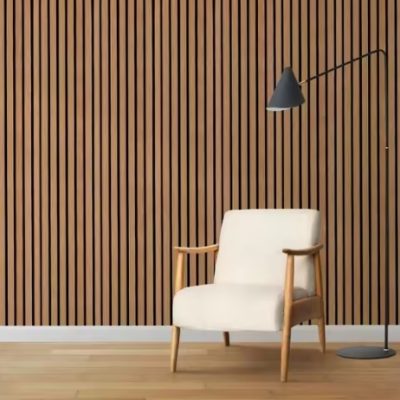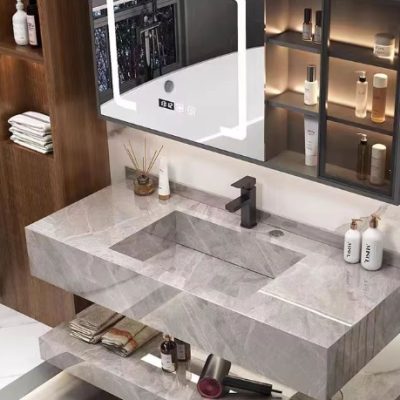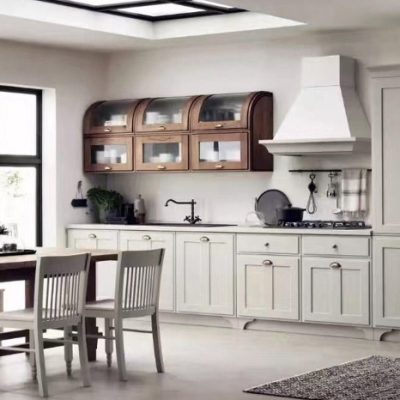

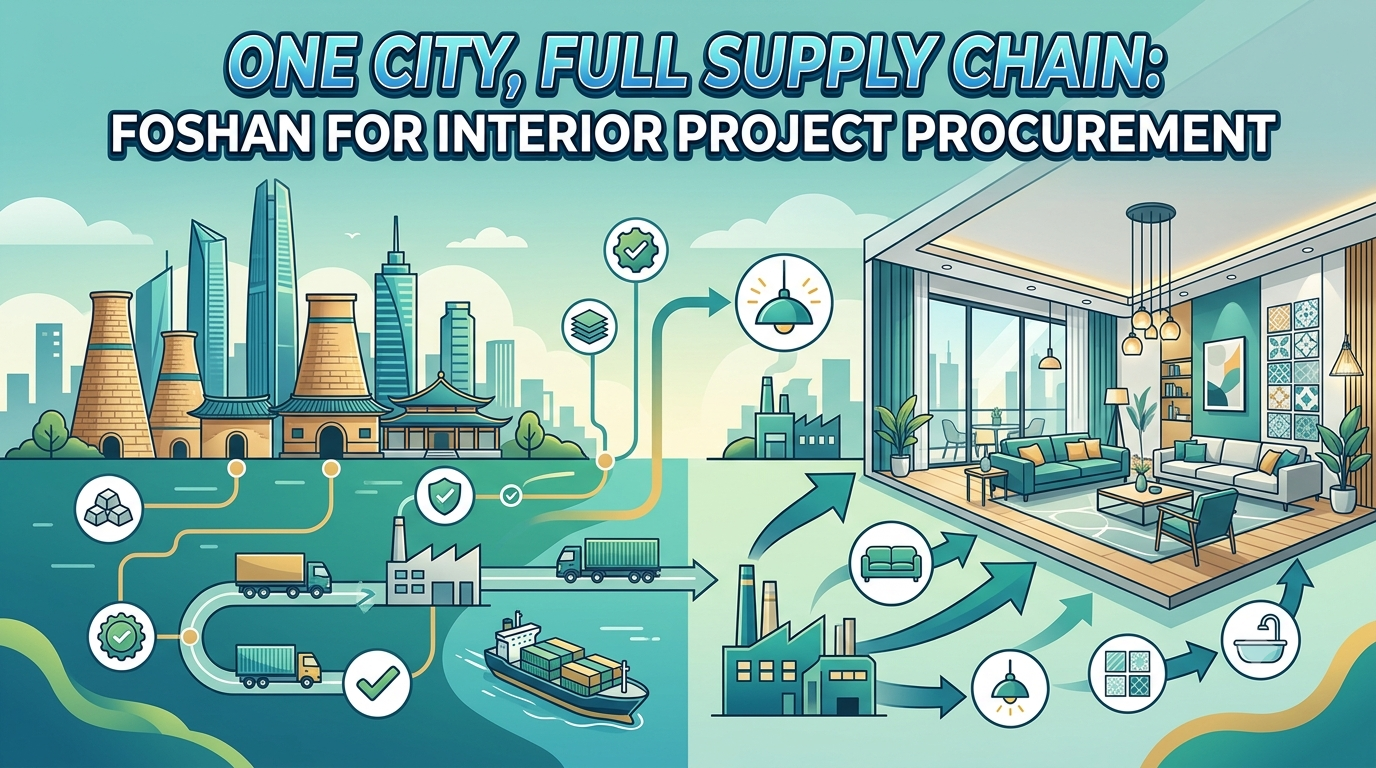
For international developers executing a hotel build, a multi-family apartment fit-out, or a luxury villa project, the Bill of Quantities (BOQ) is inherently fragmented. A standard commercial interior requires porcelain flooring, vitreous china sanitary ware, custom millwork, upholstered seating, and architectural aluminum.
When a procurement manager attempts to source these diverse categories across different provinces in China, the supply chain breaks down. Managing five factories in five different cities means paying redundant domestic freight fees, struggling with mismatched production schedules, and shipping inefficient Less than Container Load (LCL) freight.
The structural solution is geographic concentration. Foshan operates as a closed-loop industrial ecosystem. By centralizing the procurement of all interior finishing categories within this single regional hub, developers can synchronize manufacturing schedules, execute cross-category quality control, and engineer optimized mixed-container logistics from one local base.
Key Takeaways
- Eliminate Domestic Transit Waste: Sourcing all materials within a 50-kilometer radius cuts domestic trucking costs by up to 80% and removes the risk of cross-country transport damage before export.
- Enable Cross-Category Interface Testing: A centralized supply chain allows physical control samples (like stone countertops) to be tested directly against adjacent materials (like custom wood vanities) on the factory floor.
- Optimize Ocean Freight: Combining heavy masonry (ceramics) and volumetric cargo (furniture) into engineered Full Container Loads (FCL) maximizes space utilization and lowers the landed unit cost of every material on your BOQ.
Why does geographic fragmentation destroy project budgets?
The largest hidden cost in overseas real estate procurement is logistical fragmentation. When a developer buys bathroom fixtures from Fujian, lighting from Zhejiang, and furniture from Guangdong, they must manage three independent supply chains.
This creates compounding financial liabilities:
- LCL Shipping Penalties: If the lighting order cannot fill an entire container, it must be shipped via public LCL freight. LCL shipments incur exorbitant destination unpacking fees (CFS charges) and expose fragile goods to damage from adjacent, unrelated industrial cargo.
- Mismatched Production Timelines: Factories operate on different cycles. If the bathroom fixtures finish in 15 days but the custom furniture takes 45 days, the early-arriving goods must sit in a port warehouse, accumulating expensive daily storage and demurrage fees.
- Redundant Quality Control (QC) Overhead: Sending an engineering or QC team to audit factories in three different provinces requires extensive domestic flights, hotels, and lost time, severely limiting the frequency of physical inspections.
How does Foshan’s industrial zoning deliver a complete interior package?
Foshan is not a general manufacturing city; it is a hyper-specialized aggregation of distinct building material sectors. The city and its immediate borders house global-scale production hubs designed specifically for the architectural and interior design industries:
- Chancheng District: The epicenter for commercial porcelain tiles, large-format sintered stone slabs, and structural ceramics.
- Shunde District (Lecong & Leliu): The largest contract furniture, seating, and bespoke cabinetry manufacturing cluster in the world.
- Nanhai District (Dali): China’s primary zone for architectural aluminum profiles, exterior glazing, and interior shower enclosures.
- Zhongshan (Guzhen): Located immediately south of Foshan, serving as the undisputed center for commercial and residential LED lighting.
Because these specialized zones operate side-by-side, a local procurement office can manage a complete 500-unit apartment fit-out without ever leaving the metropolitan area.
What are the structural benefits of localized quality control?
The most critical errors in a real estate fit-out occur where different material categories physically intersect on the construction site. A minor discrepancy between an undermount sink basin (manufactured by a sanitary ware plant) and a marble countertop cutout (processed by a stone fabricator) results in a failed installation.
When both factories are located in Foshan, interface risk is eliminated. A sourcing agent can physically transport the actual sink basin to the stone fabrication line to conduct a 1:1 scale fit-test before the countertop is polished.
Localized QC allows for:
- Finish Alignment: Matching wood veneers on custom wardrobes with the exact powder-coat color of aluminum interior doors under calibrated lighting.
- Hardware Compatibility: Ensuring specialized hinges or sliding tracks operate smoothly under the physical weight of specific glass or timber panels.
- Moisture Auditing: Standardizing the Equilibrium Moisture Content (EMC) of all timber products across different factories to match the specific climate of your destination country.
How does a single-city supply chain optimize container consolidation?
Shipping raw building materials internationally requires balancing a shipping container’s legal weight limits against its cubic meter (CBM) volume.
A container filled exclusively with floor tiles will hit its maximum weight limit (roughly 26 to 28 metric tons) while leaving nearly 50% of the internal air space empty. Conversely, a container loaded only with assembled sofas will completely fill the spatial volume but utilize less than 30% of the allowed weight payload.
Operating a central consolidation warehouse in Foshan allows buyers to engineer perfect mixed loads. Heavy, dense cargo (like porcelain tiles and cast-iron plumbing) is palletized and secured flat across the floor of the container. The remaining vertical air space is then packed with lightweight, volumetric items (like flat-pack kitchen cabinetry, mattresses, and seating). This strategy ensures you utilize 100% of the space and weight you are paying for, drastically reducing ocean freight costs.
Why Choose HSY Sourcing for Your Foshan Procurement?
Navigating thousands of contract factories across the Foshan industrial zone requires localized technical oversight and independent ground representation. HSY Sourcing operates strictly as your dedicated engineering and procurement office in South China, protecting the commercial interests of real estate developers and asset managers.
- Direct Factory Access: We cut out export trading fronts and decorative showrooms, placing your multi-family or hospitality project directly with primary OEM lines scaled for institutional volume.
- Timeline Synchronization: We map the lead times of your entire BOQ, staggering deposit releases to ensure that your custom millwork, flooring, and bathroom fixtures all arrive at our consolidation dock within a coordinated 72-hour window.
- Turnkey Consolidation Warehouse: We operate secure staging facilities directly within Foshan. We manage incoming factory receipts, verify export-grade packaging standards, and execute dense, secure container loading plans to prevent transit damage.
- Unified Customs Documentation: Consolidating products from multiple vendors requires complex export clearance. We compile the individual factory packing lists, classify every item under its precise HS code, and generate a single, clean export declaration to ensure seamless port processing.
Frequently Asked Questions (FAQ)
What is the minimum project volume required to benefit from Foshan consolidation?
Geographic consolidation provides the highest return on investment when your total project volume fills at least one Full Container Load (a 20GP or 40HQ container). This typically aligns with a multi-unit apartment fit-out, a boutique hotel renovation, or a premium private villa. For smaller volumes, the logistical savings are less pronounced, though we can facilitate structured LCL solutions.
How do you handle design changes once production has started across multiple factories?
If an architectural revision occurs, having a localized team is critical. HSY Sourcing issues immediate stop-work orders to all affected Foshan factories. Because we are on the ground, our engineers can audit the raw materials in person, update the master integration drawings across both the cabinetry and plumbing lines simultaneously, and approve physical samples before clearing the factories to resume.
Can you verify that the factories meet our local environmental and building codes?
Yes. During the initial supplier filtration phase, we require factories to provide active, verifiable third-party testing reports. We verify that cabinetry substrates meet CARB Phase 2 or E0 formaldehyde emission standards, and ensure that commercial flooring passes the required DCOF (Dynamic Coefficient of Friction) slip-resistance ratings for your specific municipal building codes.
How are different product warranties managed when buying from multiple suppliers?
We structure your purchasing contracts to hold each individual primary factory legally accountable for their specific product category based on objective technical parameters (e.g., hardware cycle ratings or wood moisture stability). HSY Sourcing maintains all technical baselines and inspection reports on file, ensuring that if a defect arises post-installation, the responsible manufacturer is clearly identified and compelled to provide the contracted replacement parts.