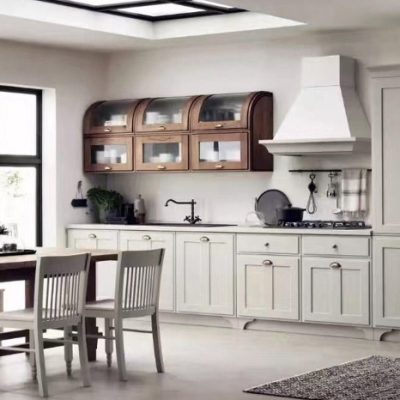


Building a luxury private villa overseas while sourcing materials directly from China offers access to exceptional craftsmanship, deep customization, and world-class manufacturing. Homeowners can select aluminum slim-line windows from Foshan, custom kitchen cabinetry and walk-in wardrobes from Shunde, designer furniture from Lecong, architectural lighting from Guzhen, and natural marble or sintered stone slabs from specialized stone processors.
However, purchasing high-end customized materials from multiple independent Chinese factories introduces a central logistics challenge: How do you combine products from different suppliers—each with its own lead time, packaging format, and dispatch location—into an organized, damage-free international shipment?
To consolidate building materials successfully, you cannot treat the process as simply renting space in a shipping container. Real consolidation is an integrated China-side procurement workflow. It requires coordinating factory production schedules, inspecting incoming goods at a dedicated consolidation warehouse, verifying product completeness against shop drawings, managing weight distribution and packaging protection, and staging export logistics to match the construction timeline on your job site.
What Does Building Material Consolidation Mean for a Private Villa?
For a commercial buyer purchasing fifty identical pallets of ceramic tiles from one factory, “shipping” is straightforward. The factory loads a container at its dock, seals the doors, and sends it to the port.
For a private villa homeowner, procurement is vastly more complex. A single residential build typically involves 5 to 15 different specialized factories spread across manufacturing hubs in Guangdong province and beyond.
+-----------------------------------------------------------------------------------+
|                        TYPICAL VILLA PROCUREMENT CHAIN                            |
+-----------------------------------------------------------------------------------+
|  [Window Factory]   [Cabinet Workshop]   [Stone Yard]   [Furniture Manufacturer]  |
|     (Foshan)            (Shunde)          (Yunfu)             (Lecong)            |
|        |                   |                 |                   |                |
|        +-------------------+--------+--------+-------------------+                |
|                                     |                                             |
|                                     v                                             |
|                     [Central China Consolidation Warehouse]                       |
|         (Receiving -> Inspection -> Staging -> Container Planning)                |
|                                     |                                             |
|                                     v                                             |
|                       [International Ocean Freight]                               |
|                                     |                                             |
|                                     v                                             |
|                           [Villa Construction Site]                               |
+-----------------------------------------------------------------------------------+
Villa material consolidation is the structured process of taking control of these separate supply chains on the ground in China before any cargo leaves the country. It encompasses seven distinct operational steps:
- Production Scheduling: Aligning factory timelines so items arrive at the staging point in a logical sequence.
- Receiving & Logging: Tracking incoming freight at a secure, centralized warehouse in China.
- Condition & Quantity Checks: Verifying package integrity, crate counts, and product labeling immediately upon arrival.
- Physical Inspection: Unpacking and checking custom fabrications (such as cabinetry, stone finishes, or joinery) against approved shop drawings when agreed in the project scope.
- Secure Staging: Storing completed orders safely while waiting for late-stage items (e.g., loose furniture or decorative lighting) to finish production.
- Container Load Planning: Calculating payload capacities, volumetric space, fragile-goods placement, and job-site unloading priorities.
- Export Logistics: Coordinating customs clearance, container stuffing, port drayage, and ocean bills of lading.
Distinguishing between freight consolidation (a shipping line combining random boxes from different clients) and villa procurement consolidation (combining all components for one specific house) is critical. Your house requires a deliberate sequence; if your curtain wall glass arrives first but your stone substrate is packed behind it, your site team faces unnecessary delays and double-handling risks.
Which Villa Products Can Be Consolidated in China?
Most architectural finishes and interior fit-out products can be consolidated into shared ocean containers, provided their physical characteristics, packaging, and weight profiles are evaluated beforehand.
Architectural Joinery & Custom Cabinetry
- Products: Kitchen cabinets, island units, bathroom vanities, walk-in wardrobes, interior doors, and wall paneling.
- Consolidation Profile: High volume, moderate weight. Panels are usually flat-packed in wooden crates or heavy-duty cartons with corner edge protectors. Cabinetry can sit safely in intermediate container layers, provided heavy structural items are not stacked directly on top of them.
Aluminum Windows & Glass Doors
- Products: Thermal-break sliding doors, slim-line aluminum windows, glass balustrades, and entrance pivot doors.
- Consolidation Profile: Heavy, bulky, and highly sensitive to glass breakage or surface scratches. Standard practice requires heavy-duty A-frame wooden crates or enclosed steel-reinforced stillages. These must be secured directly to the floor or side walls of the container with heavy strapping to prevent shifting during ocean transport.
Natural Marble & Sintered Stone Slabs
- Products: Bookmatched feature wall slabs, cut-to-size floor tiles, vanity tops, and stair treads.
- Consolidation Profile: Extremely heavy, high density, and fragile under flexural stress. Stone slabs are secured in reinforced vertical wooden bundles or closed export crates.
Important Weight Constraint: Because stone reaches container weight capacity limits long before filling the physical volume, stone items are often paired with high-volume, low-weight cargo—such as loose furniture, curtains, or lighting—to maximize container value.
+------------------------------------------------------------------------------------+
|                      CARGO DENSITY & WEIGHT COMPATIBILITY                          |
+------------------------------------------------------------------------------------+
|  HIGH DENSITY / HEAVY CARGO             LOW DENSITY / BULKY CARGO                  |
|  (Reaches weight limit quickly)        (Reaches volume limit quickly)              |
|                                                                                    |
|  • Natural Marble & Sintered Stone      • Loose Living Room Furniture              |
|  • Ceramic Tiles & Porcelain Pavers     • Custom Wardrobes & Flat-pack Joinery     |
|  • Bathroom Sanitary Ware               • Decorative Lighting & Shades             |
|                                                                                    |
|  [STRATEGY]: Pair Heavy Cargo + Bulky Cargo in a single 40ft High Cube Container    |
+------------------------------------------------------------------------------------+
Loose Furniture & Lighting
- Products: Sofas, dining tables, outdoor furniture, chandeliers, and architectural LED fixtures.
- Consolidation Profile: High volume, variable fragility. Fully assembled sofas require significant volumetric space. Delicate chandeliers require reinforced plywood outer boxes with custom foam inserts.
How Does the Villa Consolidation Process Work?
To keep your villa procurement organized and transparent, the consolidation process follows a structured twelve-step sequence:
1.Project Scope & BOQ Review:Establishing the master schedule.
Review architectural drawings, Bill of Quantities (BOQ), material specifications, and target installation dates to map out supplier lead times.
2.Purchase Order Alignment:Formalizing supplier responsibilities.
Confirm order terms, deposit schedules, shop drawing approval milestones, and delivery obligations with each Chinese factory.
3.Production Tracking:Active weekly monitoring.
Track manufacturing progress across all factories, flagging potential delays in raw material sourcing or custom fabrication early.
4.Warehouse Dispatch Coordination:Managing local freight in China.
Schedule factory pickup or local truck dispatch to bring finished goods from regional manufacturing towns (Foshan, Zhongshan, Shenzhen) to the central warehouse.
5.Receiving & Documentation Logging:Initial arrival verification.
Log incoming deliveries against master purchase orders, verifying crate quantities, supplier tags, and job site unit labels.
6.External Packaging & Condition Checking:Identifying transit damage early.
Inspect outer wooden crates, cartons, and shrink-wrap for punctures, water exposure, or crushed corners incurred during domestic truck transport.
7.Detailed Product Quality Inspection:As agreed in service scope.
Unpack designated custom items to inspect surface finishes, dimensions, hardware function, and stone veining against approved shop drawings and physical samples.
8.Warehouse Staging & Inventory Indexing:Organized short-term storage.
Place verified crates into designated bay locations in a secure, dry warehouse facility, maintaining an active consolidated inventory log.
9.Container Load Engineering:Optimizing volume, weight, and sequence.
Calculate weight distribution, center-of-gravity balance, and volumetric stacking sequences to ensure heavy crates support lighter packages safely.
10.Stuffing & Cargo Securing:Supervised container loading.
Load the container according to the approved plan. Secure heavy machinery, stone A-frames, and window stillages using ratcheting straps, wooden bracing, and dunnage bags.
11.Customs Clearance & Export Documentation:Ensuring smooth port dispatch.
Prepare consolidated packing lists, commercial invoices, certificates of origin, and fumigation documentation required for export and destination customs clearance.
12.Vessel Booking & Tracking:Ocean freight management.
Hand over the sealed container to the shipping line, obtain the Ocean Bill of Lading, and monitor vessel progress to the destination discharge port.
How Do You Coordinate Different Factory Production Schedules?
One of the most common pitfalls in villa procurement is assuming all factories will finish on the exact same date. Production timelines vary naturally based on material complexity:
| Product Category | Typical Lead Time | Key Dependency Factors |
| Aluminum Windows & Doors | 35–50 Days | Profile extrusion color matching, glass tempering, hardware arrival |
| Custom Kitchen & Joinery | 40–60 Days | Shop drawing approvals, custom veneer/lacquer finishes, hardware integration |
| Natural Marble Slabs | 20–35 Days | Block cutting, surface polishing, dry-lay approval, edge profiling |
| Loose Furniture | 30–45 Days | Upholstery fabric availability, custom frame carving, lacquer drying |
| Sanitary Ware & Fittings | 15–25 Days | Standard production stock, custom electroplating finishes |
Managing Schedule Discrepancies
When managing multiple suppliers, implement three practical strategies:
- Maintain a Live Consolidated Production Tracker: Require every factory to confirm production status at 30%, 60%, and 90% milestones. Never rely on the initial proforma invoice lead time.
- Stage Shipments logically: Allow longer lead-time items (like custom cabinetry) to dictate the container loading window. Standard off-the-shelf items should be scheduled to complete shortly before the custom joinery finishes to minimize unnecessary warehouse storage time.
- Evaluate Split Shipments vs. Holding Costs: If a vital structural element (like windows or rough-in plumbing) is ready while decorative items are delayed by six weeks, calculate whether shipping a 20ft container for first-stage construction is more cost-effective than holding up job-site progress.
What Should Be Checked When Villa Materials Arrive at the Warehouse?
A critical distinction in villa sourcing is the difference between a Receiving Check and a Detailed Quality Inspection.
+----------------------------------+----------------------------------+
|      WAREHOUSE RECEIVING CHECK   |    DETAILED QUALITY INSPECTION   |
|      (Standard Arrival Protocol) |     (Agreed Project Scope)       |
+----------------------------------+----------------------------------+
| • Crate & carton count matching  | • Uncrating/unpacking individual |
|   the packing list.              |   custom items.                  |
| • Outer box condition checks     | • Dimension verification using   |
|   (crushing, water marks).       |   approved shop drawings.        |
| • Supplier & project label       | • Surface finish & color matching|
|   verification.                  |   against reference samples.     |
| • Photo log of sealed crates     | • Hardware operation testing     |
|   upon arrival at dock.          |   (hinges, soft-close slides).   |
+----------------------------------+----------------------------------+
Receiving checks confirm that the correct number of packages arrived from the local factory without major domestic transport damage. However, an intact cardboard box does not guarantee that a custom kitchen island inside was lacquered in the correct shade of matte grey, or that a marble countertop was cut with the correct sink cutout dimensions.
For customized, high-value villa items, detailed inspections should be conducted against signed shop drawings, approved color swatches, and hardware schedules before goods are repacked and staged for export.
How Should Different Products Be Packed and Loaded?
Loading a multi-category villa shipment requires strict attention to physical compatibility, packaging standards, and weight distribution.
Packaging Requirements by Material
- Marble & Sintered Stone: Must be packed in closed, fumigated solid-wood crates with internal foam cushioning. Slabs must travel vertically on their edge—never lay large stone slabs flat, as road vibration will fracture them.
- Glass & Custom Windows: Require A-frame steel or heavy timber crates. Rubber gaskets must cushion glass edges, and crates must be strapped to the container’s internal D-rings to prevent lateral movement.
- Custom Cabinetry & Joinery: Panels require high-density foam edge guards, plastic film wrapping, and double-corrugated outer cartons. High-gloss or delicate veneer surfaces require protective peel-off films.
- Sanitary Ware & Ceramics: Toilets and basins should sit on individual wooden pallets or reinforced honeycomb boxes to prevent impact damage during fork-hoist operations.
+------------------------------------------------------------------------------------+
|                         CONTAINER LOADING LAYOUT PRINCIPLES                        |
+------------------------------------------------------------------------------------+
|                                                                                    |
|  [DOOR END]                                                          [FRONT WALL]  |
|  +------------------+-------------------+-------------------+-------------------+  |
|  | Light/Bulky Cargo| Intermediate Cargo| Cabinetry & Joinery| Heavy Stone Crates|  |
|  | (Loose Furniture, | (Sanitary Ware,   | (Flat-packed Wood | & Window Stillages|  |
|  |  Lighting, Decor) | Tiles, Hardware)  | Crates & Cartons) | (Secured & Strapped)|
|  +------------------+-------------------+-------------------+-------------------+  |
|                                                                                    |
|  <--- UNLOADING SEQUENCE AT SITE (First Out: Framing/Windows; Last Out: Decor) ---  |
+------------------------------------------------------------------------------------+
Loading Sequence for Site Access
Structure container loading around site construction phases whenever possible. Windows, doors, and concealed plumbing fixtures should sit near the container door for immediate unloading, while interior decorative lighting and soft furnishings remain protected toward the back until later in the build.
Can an Entire Villa Fit into One 40ft Container?
There is no standard universal formula to determine container quantities for a villa build. Container requirements depend heavily on material choices, architectural scale, and custom joinery design.
Key variables affecting container space include:
- Villa Footprint & Ceiling Height: A 500 m² villa with double-height glass facades requires significantly more container capacity than a 500 m² single-story residence.
- Volumetric vs. Payload Limits:
- A 40ft High Cube (40HC) Container offers approximately 76 m³ of usable volume and a maximum cargo payload of around 26,500 kg (varying slightly by shipping line and local road transport regulations).
- If your project includes 25 tons of thick marble flooring and bathroom wall tiles, you will reach the weight limit long before utilizing the 76 m³ volume.
- If your project consists mostly of fully assembled designer sofas, outdoor loungers, and custom walk-in closets, you will reach the volume limit while using only a fraction of the weight allowance.
To obtain an accurate shipping estimate, work with a coordinator who can compile package dimensions ($L \times W \times H$) and gross weights ($kg$) into a 3D container-loading calculation.
What Can Go Wrong During Villa Consolidation?
Procuring products remotely involves operational risks. Understanding these failure points helps homeowners implement effective safeguards:
1. The Delayed “Trailing” Supplier
- The Risk: Eight suppliers finish on time, but one key supplier (e.g., custom entrance doors) delays production by three weeks. The container sits idle, incurring warehouse demurrage or job-site delays.
- Preventive Measure: Set hard production deadlines with financial penalty clauses for custom suppliers, or prepare a split-shipment contingency plan early.
2. Unlabeled or Missing Packages
- The Risk: A factory delivers thirty plain brown boxes to the consolidation warehouse without part numbers, room tags, or order references.
- Preventive Measure: Mandate that all suppliers affix standardized, bilingual shipping labels (showing Project ID, Room Name, and Item Code) to every crate before dispatching from the factory.
3. Inadequate Export Crating
- The Risk: A domestic furniture maker packs an intricate glass dining table in a thin wooden crate designed only for short-distance domestic truck delivery. During ocean transport, moisture and movement cause the frame to collapse.
- Preventive Measure: Require export-grade, fumigated timber crating with internal foam block isolation for all fragile items.
+------------------------------------------------------------------------------------+
|                         RISK MANAGEMENT MATRIX                                     |
+------------------------------------------------------------------------------------+
| OPERATIONAL RISK        | CONSEQUENCE                 | PREVENTIVE SAFEGUARD       |
+-------------------------+-----------------------------+----------------------------+
| Delayed Supplier        | Demurrage / Site Idle Time  | Milestone tracking + Split |
|                         |                             | shipping contingency plan. |
+-------------------------+-----------------------------+----------------------------+
| Missing Room Labels     | Confusion / Lost Parts      | Mandate bilingual unit tags|
|                         | at Site Unloading           | prior to factory dispatch. |
+-------------------------+-----------------------------+----------------------------+
| Substandard Crating     | In-Transit Vibration Breakage| Export-grade timber crates |
|                         |                             | & dunnage bag securing.    |
+-------------------------+-----------------------------+----------------------------+
| Incomplete Accessories  | Hardware missing during     | Unpack & verify BOM against|
|                         | on-site installation        | shop drawings at warehouse.|
+------------------------------------------------------------------------------------+
What Information Should a Villa Owner Prepare Before Requesting Consolidation?
To develop a reliable consolidation, inspection, and shipping plan, prepare a procurement dossier containing:
- Project Location & Access Constraints: Destination country, port of entry, and job-site access rules (e.g., whether a 40ft ocean container can drive directly to the property or if cargo must be transferred to smaller trucks).
- Architectural Plans & BOQ: Floor plans, window schedules, and an itemized Bill of Quantities.
- Product List & Supplier Status: A clear schedule showing which items are sourced from existing suppliers and which require factory matching in China.
- Estimated Production Lead Times: Target completion dates provided by your selected factories.
- On-Site Installation Timeline: The precise sequence in which materials are required on-site.
When Does Professional China-Side Procurement Support Make Sense?
Managing multi-supplier procurement independently from abroad can be rewarding, but it carries operational demands.
When Independent Management Works Well:
- You are purchasing standard, off-the-shelf products from a single established supplier that handles its own direct exports.
- Your project volume is small (e.g., 2–3 items) and can ship safely via standard LCL (Less than Container Load) freight consolidation services.
- You or your architect can travel to China frequently to inspect production milestones personally.
When On-the-Ground Coordination Is Essential:
- You are sourcing across multiple customized categories (windows, joinery, stone, loose furniture) from independent factories across different cities.
- You require physical uncrating and inspection against custom shop drawings before final factory payments are released.
- You need a centralized, secure China staging warehouse to store early-finishing goods safely until the full shipment is ready.
- You require professional container load planning to balance structural weight, maximize container space, and protect fragile cargo during sea transport.
How HSY Sourcing Can Help With Private Villa Consolidation
Navigating suppliers across Guangdong’s manufacturing centers requires boots on the ground and practical procurement experience. HSY Sourcing operates as your dedicated China-side procurement coordination partner, bridging the gap between overseas villa owners, architectural plans, and local factories.
+------------------------------------------------------------------------------------+
|                       HSY PROCUREMENT COORDINATION SERVICES                        |
+------------------------------------------------------------------------------------+
|  • Factory Matching & Specification Review                                         |
|  • Shop Drawing & Finish Sample Coordination                                       |
|  • Active On-Site Production Following & Milestone Tracking                        |
|  • Central Staging Warehouse Operations in Foshan                                  |
|  • Comprehensive Pre-Shipment Product Quality Inspections                          |
|  • Custom Export Crating & Package Reinforcement                                   |
|  • Container Load Engineering & On-Site Stuffing Supervision                       |
|  • Complete Export Documentation & International Shipping Coordination              |
+------------------------------------------------------------------------------------+
Based in Foshan, HSY Sourcing coordinates the entire on-the-ground consolidation chain. We help villa owners organize multi-factory production schedules, receive and log crates at our central staging warehouse, perform detailed physical inspections against approved shop drawings, and plan container loading to ensure your materials arrive safely on site.
By maintaining direct oversight of receiving, checking, and loading operations, HSY minimizes transport risks and gives homeowners clear visibility into their China procurement workflow.
Frequently Asked Questions
Can products from different Chinese factories be shipped in one container?
Yes. Products from different factories can be delivered to a central consolidation warehouse in China, logged, inspected, and loaded together into a single dedicated ocean container (FCL – Full Container Load).
Can kitchen cabinets, furniture, marble, and windows be consolidated together?
Yes, provided weight distribution, packing standards, and cargo protection are planned correctly. Heavy items like marble slabs and window crates are positioned on the container floor and secured to walls, while lighter joinery cartons and furniture fill intermediate and upper layers.
What happens if one supplier finishes later than the others?
Early-arriving goods are logged, inspected, and staged safely at the central consolidation warehouse. Depending on site urgency, you can wait for the delayed item or arrange a split shipment (e.g., sending a 20ft container first with structural materials and a subsequent container with decorative finishes).
Does warehouse receiving automatically include a full quality inspection?
No. Standard warehouse receiving verifies crate counts, box labels, and external transit condition. Detailed product quality inspections—such as uncrating joinery, measuring dimensions against shop drawings, or checking paint finishes—are structured based on the agreed project scope.
How long can villa materials be stored before shipment?
Storage timelines depend on project requirements and warehouse agreements. Short-term staging (2–6 weeks) is standard practice during multi-supplier consolidation to allow all production orders to complete.
How many containers does a private villa need?
Container requirements depend on villa square footage, architectural ceiling heights, material selections, and packaging formats. A 3D container loading assessment based on package dimensions ($L \times W \times H$) and gross weights is required to determine exact container counts.
Can HSY coordinate products from suppliers in different Chinese cities?
Yes. While our primary staging warehouse is based in Foshan, we coordinate domestic freight and receiving from factories located across Shunde, Zhongshan, Shenzhen, Dongguan, Yunfu, and other regional manufacturing hubs.
Key Takeaway
Successful building material consolidation for a private villa is not just about container packing. It is an integrated China-side procurement workflow that aligns factory schedules, warehouse receiving, physical quality inspections, protective packaging, and load engineering into a controlled process. Taking control of these steps on the ground in China ensures your villa materials arrive at your construction site complete, correct, and ready for installation.