
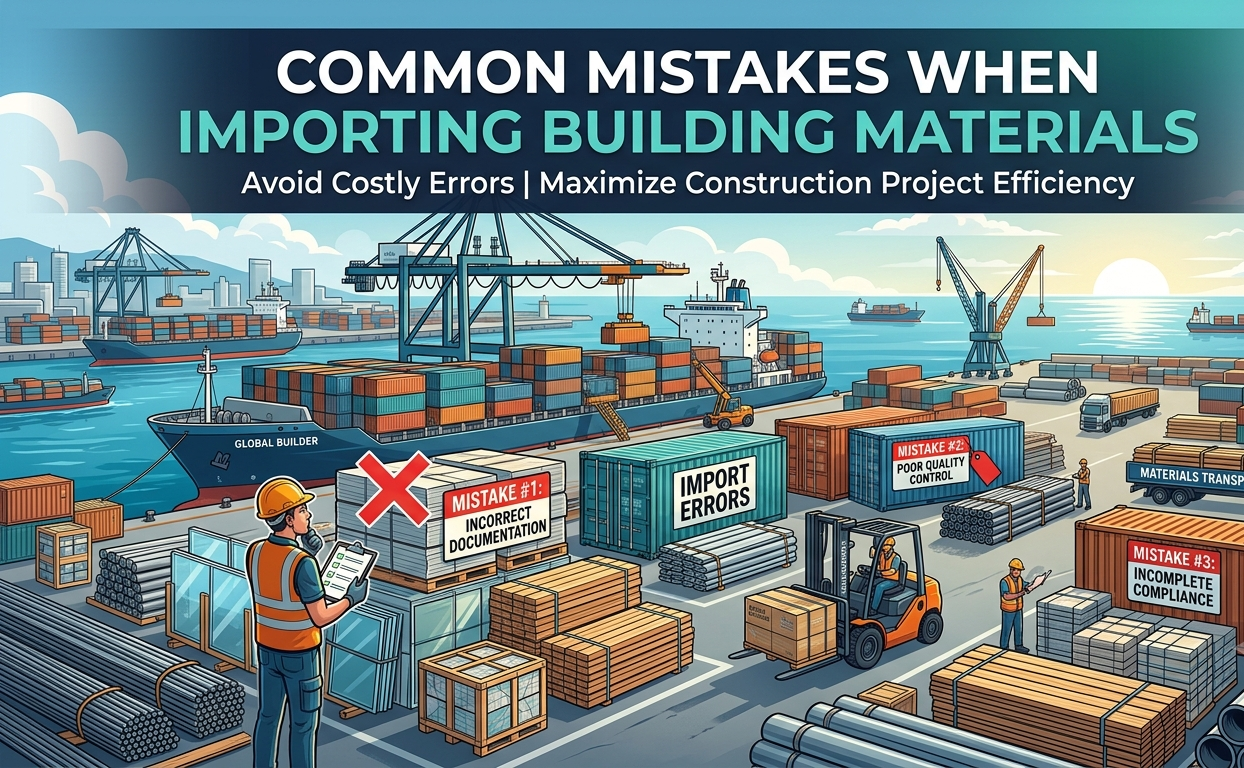
Sourcing building materials from China for a commercial real estate project—such as a multi-family apartment, a boutique hotel, or a luxury villa—presents a massive opportunity to lower procurement costs. However, international developers often treat overseas B2B procurement like a simple retail transaction.
Buying architectural finishes, custom millwork, and structural materials requires strict technical oversight and logistical engineering. Without it, the initial savings on the factory invoice are quickly consumed by job site delays, replacement costs, and inflated ocean freight bills.
Here is an objective breakdown of the most expensive mistakes project buyers make when importing building materials, and how leveraging Foshan’s one-stop industrial cluster prevents them.
Key Takeaways
- Logistical Fragmentation is Costly: Sourcing from scattered provinces multiplies domestic freight and Less-than-Container-Load (LCL) port fees. Centralizing procurement in Foshan allows for mixed Full Container Load (FCL) consolidation.
- Aesthetics Do Not Equal Durability: Accepting quotes based solely on surface finishes without auditing core densities and hardware cycle ratings leads to rapid structural failure in commercial environments.
- Skip the Mockup, Pay the Penalty: Approving mass production of custom joinery or doors based entirely on 2D CAD drawings almost guarantees on-site installation conflicts. Always mandate a 1:1 physical prototype.
Why Does Failing to Consolidate Cargo Ruin Project Budgets?
A standard hotel or apartment fit-out requires a diverse bill of materials: heavy porcelain tiles, bulky upholstered furniture, custom cabinetry, and fragile aluminum windows.
A common mistake is allowing independent factories spread across different Chinese provinces (e.g., buying tiles from Fujian and furniture from Zhejiang) to ship their goods separately. This forces you to ship multiple LCL consignments. LCL shipping incurs exorbitant destination terminal handling charges, multiplied customs clearance fees, and high warehouse destuffing costs.
Foshan eliminates this logistical trap. Because Foshan is a localized epicenter for tiles, furniture, doors, and custom millwork, you can centralize your supply chain. An on-the-ground team can pull all your goods into a single local warehouse and engineer a mixed container load.
By placing heavy, dense materials (like floor tiles) at the bottom of the container and layering high-volume, lightweight items (like flat-pack cabinets or compression sofas) on top, you max out both the weight and volume capacities of a 40HQ container, driving your landed cost per square meter down to the absolute minimum.
How Does Skipping the 1:1 Factory Mockup Lead to Job Site Disasters?
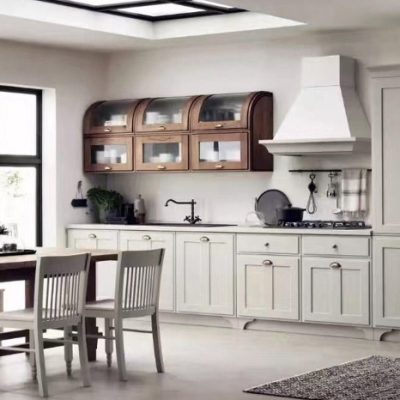
When dealing with custom interior joinery—such as kitchen cabinets, wardrobe systems, or flush architectural doors—many buyers make the mistake of approving mass production immediately after signing off on a set of 2D shop drawings.
Paper drawings cannot test physical reality. If a cabinet’s plumbing routing is misaligned by a few millimeters, or if an integrated oven cutout lacks proper ventilation clearance, you will not discover the error until your expensive local carpentry crew tries to install it on your job site. Halting a construction site to wait for a replacement panel to ship from China is financially disastrous.
To mitigate this, professional procurement requires a 1:1 Scale Physical Mockup. Before the CNC machines are cleared for mass production, the factory must build a complete physical room prototype. Your local sourcing team then physically tests the hardware tolerances, measures the appliance cutouts, and verifies the moisture-resistant edge-banding on the factory floor, resolving errors before the goods are ever loaded onto a ship.
What Happens When You Ignore Substrate Densities and Hardware Ratings?
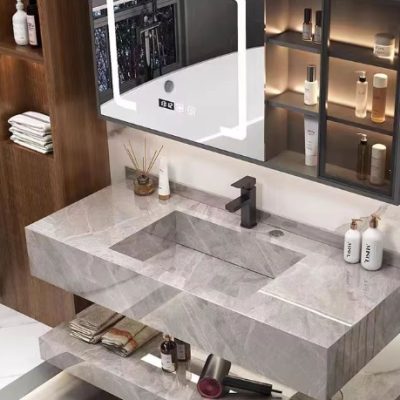
It is easy to find two factory quotes for a hotel vanity that look identical in a PDF rendering but have a 40% price difference. The mistake buyers make is assuming the cheaper quote is simply a “better deal.” In B2B manufacturing, extreme price drops are achieved by quietly degrading the invisible core materials.
If you fail to specify technical minimums in your contract, a low-tier factory will:
- Swap High-Density Melamine Faced Chipboard (MFC, >700 kg/m³) for low-density particleboard, causing the vanity to sag under the weight of a stone countertop.
- Use standard EVA cold glues instead of PUR (Polyurethane) hot-melt edge-banding, ensuring the veneer will peel off after a few months of exposure to bathroom humidity.
- Downgrade branded commercial hinges to thin-gauge steel replicas that lack hydraulic soft-close dampers and fail after 10,000 open-close cycles.
Always audit the line items. Demand independent laboratory certifications for board densities, formaldehyde emissions (CARB Phase 2 / E0), and hardware cycle testing.
Why Are Inadequate Export Packaging Standards a Financial Trap?
Standard domestic Chinese packaging is not designed to survive the high-impact vibrations of a trans-oceanic voyage or the rough handling of dockside forklifts.
A frequent mistake is assuming the factory will automatically upgrade their packaging for international transit. If heavy porcelain tiles are packed in standard cardboard without reinforced wooden pallets, or if aluminum window frames lack rigid corner protectors and MDF crating, the cargo will arrive shattered or scratched.
Export packaging specifications must be negotiated and written into the initial purchase order. This includes mandating fumigated IPPC-stamped wooden crates, internal moisture-barrier shrink wrap, and specialized A-frame racks for large glass panels.
Why Choose HSY Sourcing
Avoiding these procurement traps requires having a technical advocate directly inside the manufacturing cluster. The HSY Sourcing Team acts as your local engineering and logistics department in Foshan.
- Independent Quality Control: We do not rely on factory-provided photos. Our QC inspectors are physically present on the production lines checking core board densities with calipers, testing lamination adhesion, and verifying that the hardware matches your exact contract specifications.
- Localized Cross-Category Consolidation: We leverage Foshan’s one-stop geographic advantage. We stage your custom doors, wall panels, sanitary ware, and loose furniture at our local facility, executing calculated mixed-container loading plans that protect your cargo and slash your ocean freight costs.
- Proactive Mockup Verification: We enforce the 1:1 physical mockup rule for all custom millwork and architectural joinery, physically verifying dimensions against your project’s Bill of Quantities (BOQ) before mass production begins.
- Commercial Project Focus: We specialize strictly in B2B procurement for hotels, multi-family apartments, and luxury villas. We understand the stringent building codes, fire ratings (Class B1/A), and strict handover schedules your project demands.
Frequently Asked Questions (FAQ)
Can I trust a factory’s in-house quality control team to inspect my materials?
No. A factory’s internal QC team is employed by the manufacturer to protect the manufacturer’s bottom line, not yours. They are highly unlikely to halt a production line or force a costly re-run over a marginal color discrepancy or a slight dimensional tolerance error. Independent third-party inspection is mandatory for commercial procurement.
How do we handle color matching when buying from different factories?
This is a core advantage of sourcing in Foshan. Because your door, wall panel, and cabinet factories are located in the same city, our team physically transports master control samples (such as a specific wood veneer or PET film) between the factories to ensure a perfect aesthetic match across all your interior finishes.
What should be included in a bulletproof Purchase Order (PO) for building materials?
A standard proforma invoice is not enough. A commercial PO must include granular technical specs: core material density, specific edge-banding glue types, hardware brand and model numbers, exact production lead times, late-delivery penalty clauses, and explicitly defined export packaging requirements (e.g., “12mm plywood crating with internal foam braces”).