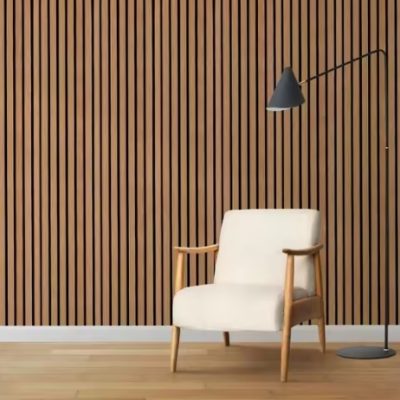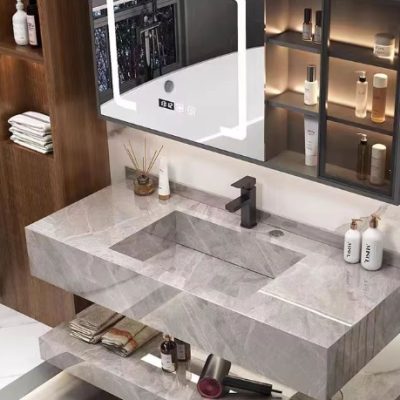

Real estate developments—whether high-end resort villas, multi-family apartments, or mid-scale hotels—rely heavily on wall panels to accelerate interior construction timelines. Wall paneling eliminates the need for multi-layer wall plastering, painting, and drying cycles, cutting down interior fit-out schedules by up to 50%.
However, international procurement managers often face significant friction when sourcing these products from overseas. Common issues include color mismatches with custom furniture, failure to meet local fire-retardant codes, and high damage rates during maritime transit.
As an on-the-ground sourcing hub, Foshan manufactures a massive share of the world’s architectural wall panels and custom millwork. Below is a practical guide to navigating the technical realities of wall panel procurement.
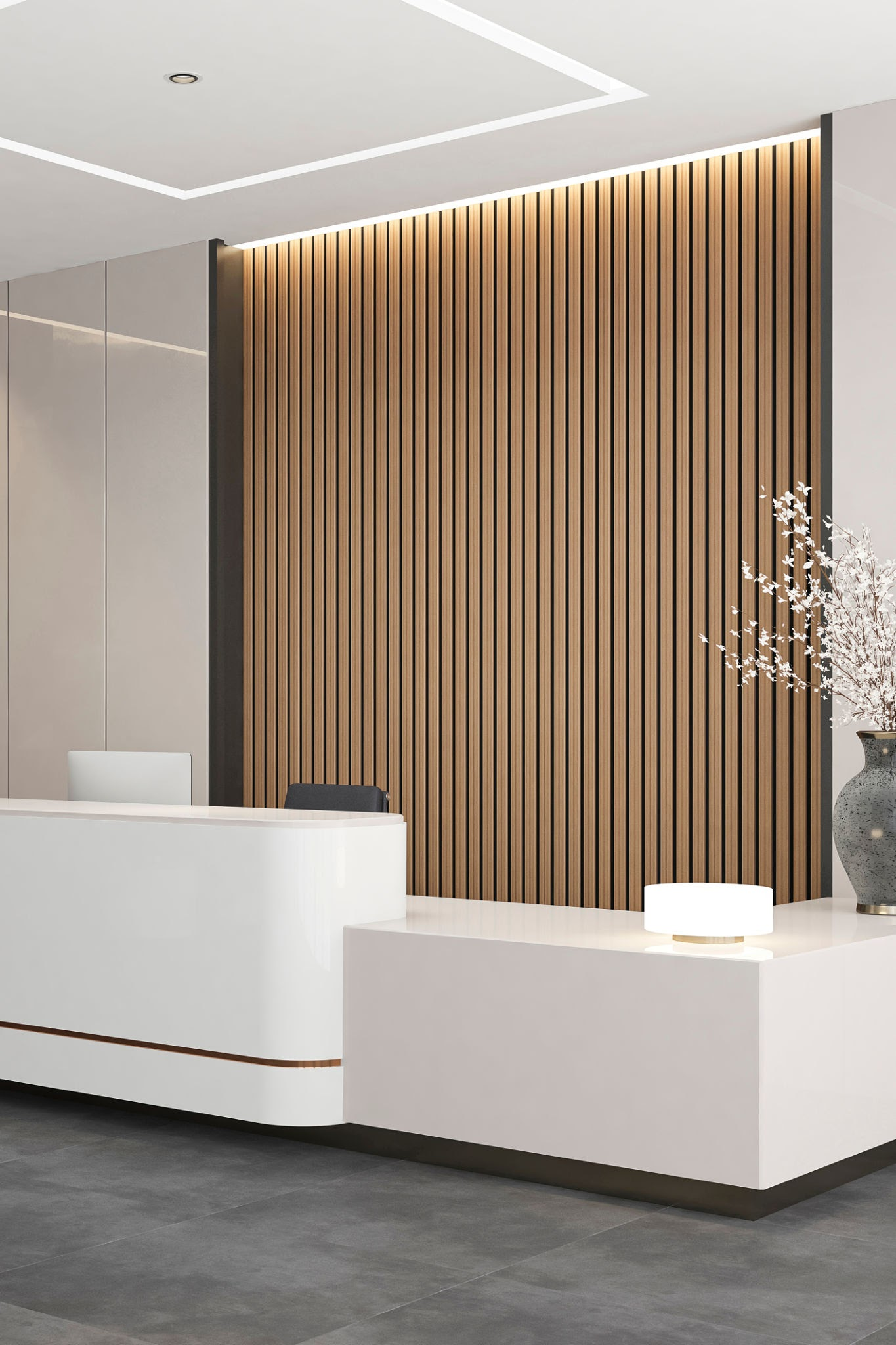
WPC fluted wall panels installed in a commercial project lobby. Source: tulcarion / Getty Images
What are the best wall panel materials for commercial projects?
Selecting the right substrate determines both the budget efficiency and the longevity of the project. Different areas within a commercial property require distinct material specifications.
| Panel Type | Core Material | Best Applications | Core Benefits |
| Wood Veneer Panels | Engineered MDF/Plywood + Natural Wood Skin | Luxury hotel guestrooms, villa lobbies, executive offices | Premium tactile finish, realistic wood grain warmth |
| WPC & Fluted Panels | Wood-Plastic Composite | Apartment living spaces, corridors, feature walls | Termite-proof, low maintenance, high impact resistance |
| SPC / Stone-Texture | Stone Plastic Composite | Hotel bathrooms, kitchenettes, high-humidity zones | 100% waterproof, lightweight alternative to heavy porcelain tiles |
| Acoustic Fabric/Leather | High-Density Fiber + Foam + Fabric/PU | Bed headboard walls, conference rooms, home theaters | Noise reduction (NRC rated), soft-touch safety profile |
How do you prevent color and texture mismatches across different factory batches?
One of the costliest mistakes in hospitality and villa procurement is “batch variance.” If you buy your wall panels from Factory A, your interior doors from Factory B, and your wardrobes from Factory C, the “Walnut” or “Oak” finishes will almost never match under real project lighting.
[Wall Panel Factory] --(Physical Sample)--> [Sourcing Agent Inspection] <--(Physical Sample)-- [Door Factory]
                                                      │
                                           (Color Matching Approval)
                                                      │
                                                      ▼
                                         [Unified Batch Production]
To prevent this issue, you must establish a physical master sample protocol. Do not rely on digital photographs or catalog numbers (like Pantone or RAL codes), as variations in backing materials and lacquer compositions alter the final reflection.
An effective sourcing workflow requires an on-the-ground team to physically carry a signed master sample from the furniture maker to the wall panel factory, ensuring the film or veneer run is color-matched before mass extrusion begins.

Precision color-matching between fluted wall panels and architectural millwork. Source: The Wood Veneer Hub
What compliance and technical specifications are mandatory for hospitality and villa builds?
Commercial real estate projects must clear strict local building inspections. Residential-grade panels often fail these parameters, leading to customs delays or forced tear-outs.
- Fire Retardant Ratings: Hospitality corridors and public spaces generally require Class B1 (China standard) or Class A/B (ASTM E84 for US / EN 13501-1 for Europe) certifications. Specify fire-retardant chemical additives during the raw material mixing phase for WPC and acoustic panels.
- Formaldehyde Emission Limits: For indoor environments, panels must hit E0 or ENF standards (formaldehyde emissions less than or equal to 0.025 mg/m³). This is critical for hotels that need to open immediately after furniture installation without chemical odor complaints.
- Installation System Compatibility: Traditional glue-on methods are slow and damage the underlying drywall during repairs. For large-scale real estate projects, source interlocking tongue-and-groove profiles or snap-on aluminum clip systems. These allow field contractors to drop panels directly onto raw stud walls.
How can you optimize container loading to prevent damage and reduce freight costs?
Wall panels are high-volume, flat commodities. If you ship them in isolation, you end up paying heavily for volumetric space, and long, thin panels are prone to snapping if a container shifts at sea.
Volumetric Consolidation Rule: Heavy building materials like porcelain floor tiles or sanitary ware go at the very bottom of the container. Wall panels must be packed flat in rigid plywood crates, positioned along the container walls or stacked horizontally on top of structural goods to eliminate shifting.
By consolidating your wall panel order with the project’s custom furniture and lighting within the Foshan cluster, you maximize the container’s interior volume, effectively lowering your per-square-meter shipping cost by 20% to 30%.
Why choose HSY Sourcing as your Foshan partner?
At HSY Sourcing, we specialize in bridging the gap between complex architectural blueprints and the realities of Foshan factory floors. We do not just pass paper; we manage quality on the ground.
- Cross-Category Color Alignment: We actively coordinate with your chosen furniture, door, and wall panel manufacturers. We physically match veneer stains and PVC film finishes to ensure a seamless interior aesthetic.
- Strict Specification Auditing: Our team verifies raw material composition, checks fire-retardant chemical logs, and conducts random laboratory testing for formaldehyde release before products leave the factory gate.
- On-Site Volumetric Packing: We operate our own consolidation warehouse in Foshan. We pack and crate your wall panels alongside heavy structural building materials, ensuring maximum container utilization and zero transit damage.
Key Takeaways for Project Buyers
- Match material to utility: Use SPC for wet areas, WPC for high-traffic corridors, and real wood veneers for premium impact zones.
- Enforce physical sampling: Never sign off on mass production without a physical cross-check across your furniture and wall panel suppliers.
- Verify compliance early: Ensure the factory provides verified test reports matching your destination country’s fire and environmental codes before placing deposits.
- Consolidate smart: Utilize Foshan’s unique geographic density to mix flat panels with bulky furniture items, minimizing shipping overheads.
Frequently Asked Questions
What is the standard lead time for commercial wall panel production in Foshan?
For standard WPC or SPC stock profiles, production takes 10 to 15 days. For custom wood veneer matching or specific fire-retardant runs requiring custom raw material mixes, lead times range from 25 to 35 days, depending on project scale.
How do we check the quality of the panels before they ship?
Our QC team performs on-site checks during production and final packing. We measure thickness tolerances (retaining an accuracy within 0.1mm), test the locking mechanism tightness, and perform water-immersion tests for moisture-resistant lines. A comprehensive inspection report with HD photos and video is delivered to you before balance payment.
Can factories customize panel heights to fit our specific ceiling elevations?
Yes. While standard catalog lengths are usually 2.8m or 3m, we can source custom extrusion lengths up to 5.6m for high-ceiling villa lobbies or hotel voids. This eliminates horizontal seam lines and lowers on-site waste.