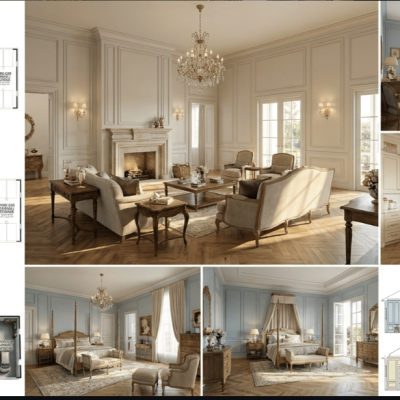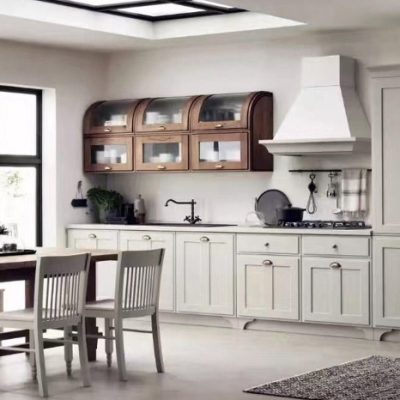

A typical commercial real estate project Bill of Quantities (BOQ)—whether fitting out a 150-key hotel, a multi-family apartment block, or a luxury villa complex—forces developers to coordinate with anywhere from 5 to 20 separate manufacturers. To secure primary factory-floor pricing, procurement managers naturally source specialized items from their respective native hubs: porcelain tiles from Chancheng, custom kitchen millwork and loose furniture from Shunde, and structural aluminum glazing panels from Nanhai.
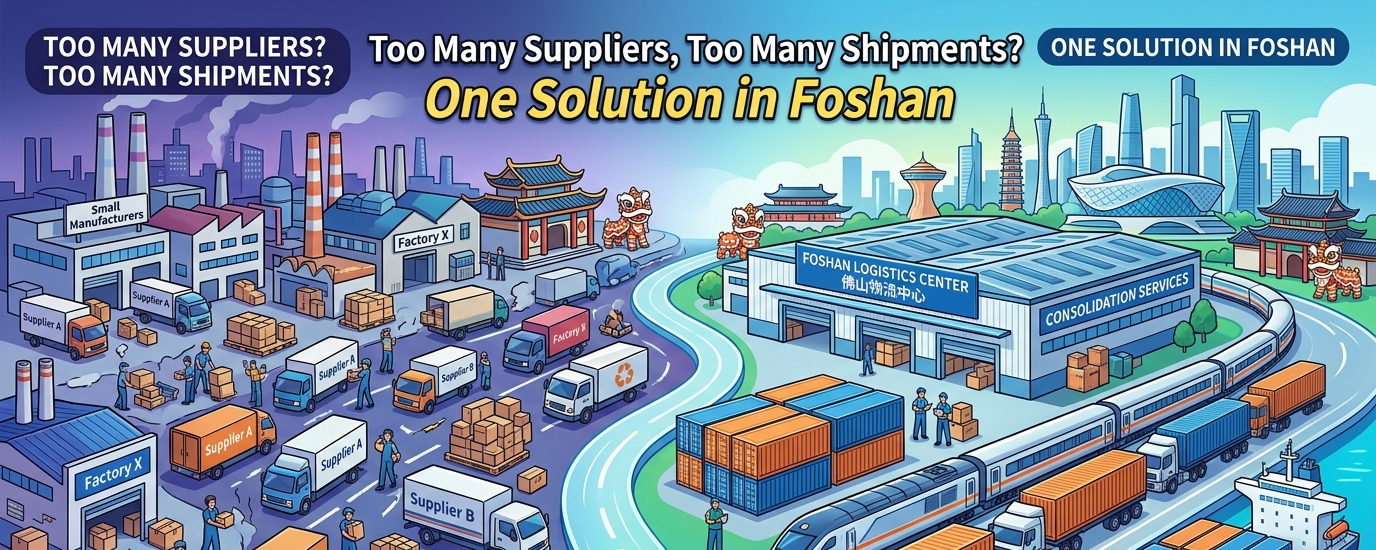
While purchasing directly from these specialized OEM factories maximizes your purchasing power, it introduces a severe logistical bottleneck. If each factory manages its own shipping independently, your supply chain fractures into a high-cost, high-risk administrative nightmare.
Allowing multiple independent shipments to run separate routes results in skyrocketing local port fees, duplicate customs filings, and an alarming risk of transit damage. The strategic response to this multi-vendor operational bottleneck is a centralized, local cargo consolidation framework anchored right within the Foshan industrial cluster.
Key Takeaways
- Consolidate to Bypasses Public LCL Risks: Merging multiple factory orders into a single, project-dedicated Full Container Load (FCL) eliminates the premium per-CBM sorting, handling, and stripping fees at destination terminals.
- Maximize Container Payload Efficiency: Pairing high-density architectural finishes (tiles, stone slabs) with low-density volumetric items (cabinetry, seating) allows you to utilize close to 100% of both container weight and space capacities.
- Establish a Unified Quality Gate: Centralizing incoming factory freight into a single warehouse allows for cross-category interface checks and dimensional verifications before goods ever cross an ocean.
Why does managing individual shipments from multiple Chinese vendors drain your project budget?
The hidden financial drain in international procurement rarely stems from the factory’s Ex-Works (EXW) production cost; it builds up rapidly during the domestic inland freight, export documentation, and destination terminal clearance phases.
When a developer allows multiple factories to ship their orders independently via public Less than Container Load (LCL) freight, the logistics expenses accumulate through three specific mechanisms:
[Fragmented Logistics Route] ──> 10 Separate LCL Shipments ──> 10x Local Fees + High Handling Damage
[Centralized Foshan Hub]     ──> Coordinated Staging     ──> 1 Clean FCL Container + Single Customs Entry
- Redundant Documentation and Brokerage Surcharges: Every independent cargo delivery requires its own unique export customs declaration pack in China and a corresponding import entry filing at your destination port. Importers end up paying duplicate customs broker handling charges, terminal documentation invoices, and port security fees for every minor order.
- Premium Destination Container Freight Station (CFS) Fees: In a standard public LCL arrangement, your cargo is stuffed into a shared vessel alongside general freight and then stripped at a destination port yard. The local labor rates for unpacking, pallet-sorting, and staging mixed items at Western or Middle Eastern terminals are calculated on a premium per-CBM basis, often rivaling the cost of the entire ocean voyage.
- Uncontrolled Stacking and Structural Crushing: Public LCL containers are packed purely based on the physical sequence in which freight arrives at the port terminal. Fragile custom kitchen cabinets or premium upholstered sofas can easily end up placed directly beneath un-palletized metal fabrications or heavy industrial machinery components from completely unrelated shippers.
How does Foshan’s physical geography solve the multi-supplier logistics bottleneck?
A cargo consolidation strategy is only financially viable if the internal domestic trucking fees required to bring materials to your warehouse remain nominal. If you attempt to aggregate goods from factories scattered across widely separated provinces, internal long-haul freight will quickly cancel out your ocean shipping savings.
Foshan represents a unique, closed-loop industrial ecosystem. Within a 30-to-50-kilometer radius of a central local management office sits a global concentration of specialized building material and interior sectors:
- Chancheng and Nanzhuang: The global epicenter for commercial porcelain flooring, sintered stone slabs, and sanitary ceramics.
- Shunde District (Lecong and Leliu): The undisputed global epicenter for contract furniture, commercial seating, custom upholstery, and institutional millwork.
- Nanhai District (Dali): A major industrial cluster for architectural aluminum window extrusions, glass partitioning, and interior door assemblies.
Because these distinct industrial zones share physical borders, local transport costs are minimal. A local sourcing agent can dispatch regional flatbed trucks to collect cargo from five different factories in a single morning, making staging highly efficient, inexpensive, and completely visible.
What step-by-step warehouse sequence guarantees an engineered container load?
Once materials from your suppliers arrive at the central staging ground, the physical assembly of the container must follow a strict engineering protocol. Building materials cannot simply be stacked in the order they arrive; they must be arranged by density, weight tolerances, and geometric packaging structure.
1.Receiving Inspection, Quantitative Counting, and Quality Audits:Phase 1: Dock Intake.
As factory trucks arrive at our warehouse, every pallet is unloaded, documented, and measured. The incoming items are cross-checked against the master project BOQ, and wood core moisture levels are checked with pin meters to ensure they match target standards before storage.
2.3D Volumetric Weight-Volume Balance Calculation:Phase 2: Load Engineering.
Before the physical container is booked, the exact packaging dimensions (CBM) and total gross weights are entered into load-planning software. This calculates the precise layout needed to utilize nearly 100% of a 40HQ container’s 68 CBM volume while remaining safely within legal port weight boundaries.
3.Density-Stratified Container Loading :Phase 3: Container Assembly.
Heavy, rigid items (tiles, stone slabs, cast-iron plumbing) are loaded flat across the container floor to build a low, stable center of gravity. Reinforced plywood decking and industrial dunnage airbags are installed to establish a secondary structural floor before stacking lightweight, volumetric items (cabinets, sofas, mattresses) on top.
4.Unified Customs Documentation Compilation:Phase 4: Compliance Mapping.
The unique packing lists, commodity descriptions, and factory invoices from all suppliers are compiled into a single clean export declaration file. Every product is matched to its precise Harmonized System (HS) code to avoid structural inspection holds at both the shipping port and destination customs.
What physical loading rules prevent heavy materials from crushing fragile interior goods?
Professional cargo consolidation is a balancing act between a container’s physical volume limit and its legal maritime weight payload. A standard 40-foot High Cube (40HQ) container provides roughly 68 usable cubic meters (CBM) of space and a maximum safe weight limit of 26 to 28 metric tons.
Loading a single material category across an entire project creates severe spatial or weight inefficiencies. For example, if you ship an entire container of porcelain floor tiles, the vessel hits its legal weight capacity when the container is only half full by volume—meaning you pay to transport a massive pocket of empty air. Conversely, shipping a container filled purely with upholstered sofas hits the physical volume ceiling while utilizing less than 35% of the allowed weight limit.
By managing the intake of these materials at a single warehouse, loading teams calculate precise weight-to-volume ratios before the container arrives. Heavy pallets of tiles or quartz slabs are secured flat along the container floor to establish a safe center of gravity. A structural mezzanine barrier or timber dunnage padding is built over the heavy goods, allowing flat-pack cabinetry and lightweight loose furniture to occupy the upper air space. This drives down the landed freight cost per unit for every material on your project list.
Why Choose HSY Sourcing as Your Logistics Anchor in Foshan?
Navigating thousands of contract manufacturers across the South China industrial zone requires deep technical competence, localized contract enforcement, and independent ground representation. HSY Sourcing operates strictly as your dedicated procurement, engineering, and logistics office in Foshan, engineered to protect the commercial interests of real estate developers.
- Independent, Direct B2B Representation: We operate completely free of factory alliances or hidden showroom commissions. Our transparent service structure gives you direct access to original factory-floor pricing with zero hidden markups.
- Cross-Category Technical Competence: Our engineering team understands how different building materials interface. We coordinate directly between your appliance suppliers, cabinetry factories, and stone fabricators to ensure all elements slot together perfectly on the job site.
- Milestone-Based Quality Enforcement: Our QC team conducts rigorous, physical testing at multiple production stages, including substrate moisture control (ensured between 8% and 12%), hardware mechanical cycle auditing, and precise color-batch matching against master control samples.
- Turnkey Warehouse Consolidation : Operating out of our central Foshan staging facility, we manage incoming factory deliveries, enforce rigid export-grade packaging standards (such as reinforced crating and corner protectors), and execute engineered mixed-loading plans to guarantee safe ocean transit.
Frequently Asked Questions (FAQ)
How do you coordinate shipping when suppliers have different production readiness dates?
This is one of the primary challenges in multi-vendor procurement. Our staging warehouse provides flexible storage windows tailored to your project’s construction schedule. We coordinate with your factories to synchronize timelines, but if a specific cabinetry line experiences an unavoidable delay, your early-completed building materials (such as tiles or sanitary ware) are held securely in our dry racking bays until the complete shipping volume converges.
How do you handle export customs clearance when a container holds goods from ten different factories?
Different manufacturers in China operate under different export tax profiles. Some possess independent export licenses, while others require domestic invoicing. HSY Sourcing manages this complexity behind the scenes: we legally merge the diverse packing lists, classify each item under its precise Harmonized System (HS) code, and generate a single consolidated export declaration that complies with maritime shipping laws.
What happens if a shipment arrives at the Foshan warehouse with defects or wrong specifications?
If our warehouse check-in team discovers structural defects, incorrect dimensions, or finish variations at our receiving dock, we halt the intake process immediately. We document the non-compliance with high-resolution photos and video, file a formal claim against the manufacturer’s contract, and coordinate regional transport to return the defective batch for remanufacturing before the primary container loading date arrives.
How do you prevent luxury furniture from absorbing moisture or odors from building materials?
We enforce physical segregation rules within our holding bays and inside the container. Upholstered items, fabrics, and mattresses are wrapped in heavy-duty, heat-sealed polyethylene plastic film and packed with industrial desiccant gel packs to absorb ambient humidity. Furthermore, we ensure that building materials requiring curing or chemical finishes are completely stabilized and off-gassed before they enter the mixed container environment.