
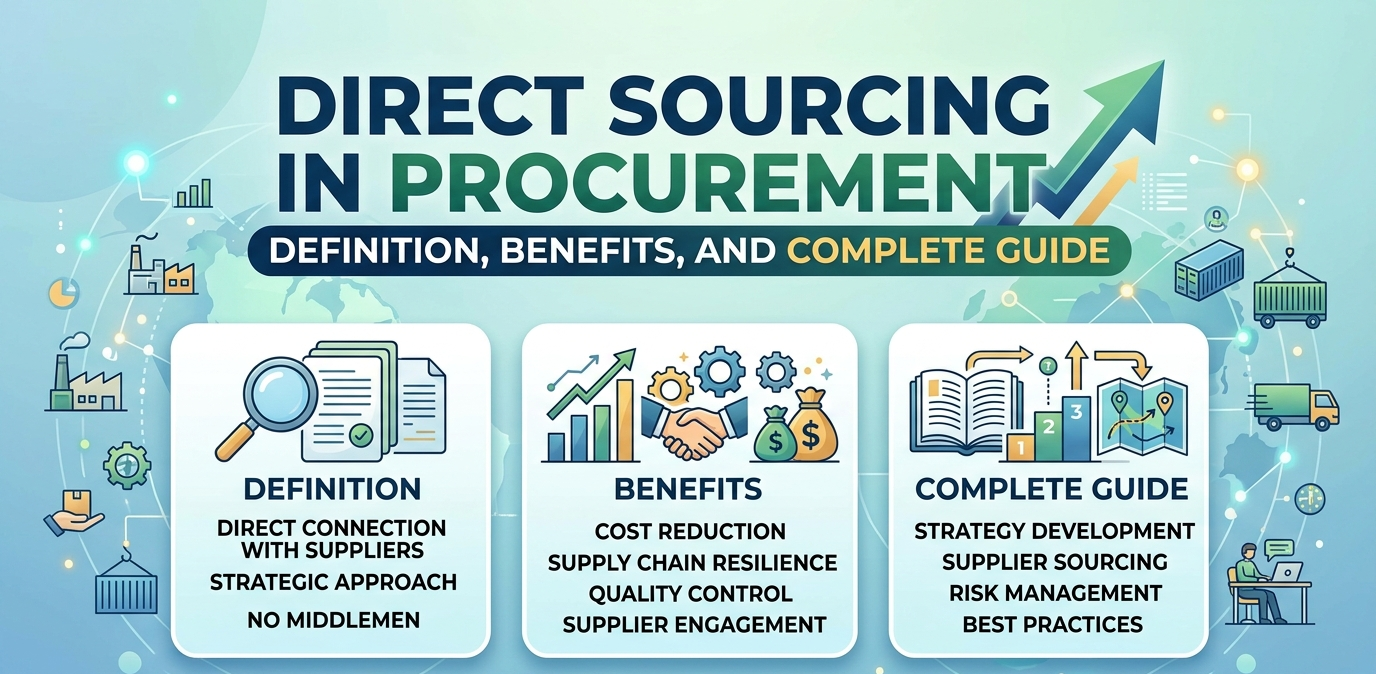
When a property developer, retail brand, or construction company looks to improve their profit margins, the supply chain is usually the first place they audit. Eventually, every growing business hits a wall where buying from local distributors is no longer financially viable.
This is where direct sourcing comes in. But what exactly does it mean to “source directly,” and is it the right strategy for your next large-scale project? This guide breaks down the reality of direct procurement, bypassing the textbook definitions to look at how it actually functions on the ground.
What exactly is direct sourcing in procurement?
In simple terms, direct sourcing is the process of purchasing the core materials, goods, or services that are directly incorporated into the final product or project you are selling.
To understand it, you have to contrast it with indirect sourcing.
- Indirect sourcing involves buying the things that keep your business running day-to-day: office computers, cleaning supplies, or marketing software.
- Direct sourcing is buying the actual building blocks of your revenue. For a hotel developer, direct sourcing means buying the custom cabinetry, the porcelain tiles, and the commercial upholstery that will physically go into the building.
When companies talk about a “direct sourcing strategy,” they usually mean bypassing domestic wholesalers and local distributors to buy straight from the original manufacturers—often overseas in industrial hubs like China.
Why do companies choose a direct sourcing strategy?
The primary driver is cost, but the benefits extend far beyond the initial invoice.
- Eliminating the Middleman Markup: Local distributors often add a 30% to 50% margin to cover their own warehousing, marketing, and operational costs. Direct sourcing strips these layers away, allowing buyers to access true factory-gate prices.
- Customization and OEM Capabilities: If you buy from a local wholesaler, you are restricted to their catalog. When you source directly from the manufacturer, you control the specifications. You can adjust the dimensions of a wardrobe, change the PVD finish on a faucet, or specify a different fire-rating for wall panels.
- Supply Chain Transparency: Direct sourcing allows you to trace your products back to the origin. You know exactly which factory produced your goods, what quality control standards were applied, and what ethical labor practices are in place.
What are the biggest risks of direct sourcing from overseas?
Direct sourcing offers massive financial rewards, but it requires technical execution. Simply finding a supplier on an online directory is not a procurement strategy; it’s a gamble. The main risks include:
- The Communication and Technical Gap: A factory might say “yes” to your design, but if they misunderstand your CAD drawings or material specifications, you will end up with unusable goods.
- Quality Fade: The sample you receive via DHL might be perfect, but the mass production run could use lower-grade raw materials to save the factory money.
- Logistics and Consolidation: If you buy tiles from one factory and furniture from another, managing the shipping schedules, less-than-container-load (LCL) fees, and export documentation can quickly erase your initial cost savings.
How does a sourcing agent bridge the gap in direct procurement?
For companies that don’t have the budget to set up a permanent purchasing office in a manufacturing country, a specialized sourcing agent acts as their on-the-ground project manager.
A professional agent transforms direct sourcing from a risky endeavor into a controlled process. Instead of managing ten different factories, you manage one agent. The agent handles the physical factory audits, cross-checks the engineering drawings, performs in-person quality control before the container is sealed, and consolidates multiple product categories into a single, cost-effective shipment.
Key Takeaways
- Direct vs. Indirect: Direct sourcing focuses on purchasing the core materials that make up your final project or product, whereas indirect sourcing covers operational supplies.
- Cost Efficiency: By bypassing local distributors, direct sourcing can significantly lower the landed cost of goods, especially for high-volume commercial projects.
- Ultimate Control: Buying direct gives you the power to customize product dimensions, materials, and finishes to meet specific architectural or brand requirements.
- Risk Management is Required: Successful direct sourcing requires boots on the ground to manage quality control, technical specifications, and logistical consolidation.
FAQ: Direct Sourcing Basics
Q: Do I need to buy massive quantities to use direct sourcing?
A: Yes and no. Most factories have a Minimum Order Quantity (MOQ). Direct sourcing is rarely viable for buying a single sofa. However, for a whole-house customization project, a boutique hotel fit-out, or a multi-unit apartment build, the volume easily meets factory MOQs.
Q: Is direct sourcing the same as dropshipping?
A: No. Dropshipping relies on a third party holding inventory and shipping single items to your end customers. Direct sourcing involves buying in bulk, taking ownership of the goods, and managing the supply chain for a specific project or retail operation.
Q: Can I direct source different types of materials at the same time?
A: Absolutely, but it requires coordination. For example, if you are sourcing building materials, you can buy stone, cabinetry, and lighting from different specialized factories. The key to success is using a central warehouse to consolidate these goods into one shipping container to optimize freight costs.
Master Direct Sourcing with HSY
Executing a direct sourcing strategy for building materials and interior fit-outs doesn’t have to be a logistical nightmare.
At HSY Sourcing, we act as your dedicated procurement office in Foshan, China. We help property developers, hotel owners, and contractors bypass the middlemen, directly accessing the world’s most capable manufacturing cluster. From technical CAD reviews to final container consolidation, we manage the friction so you can focus on building.