
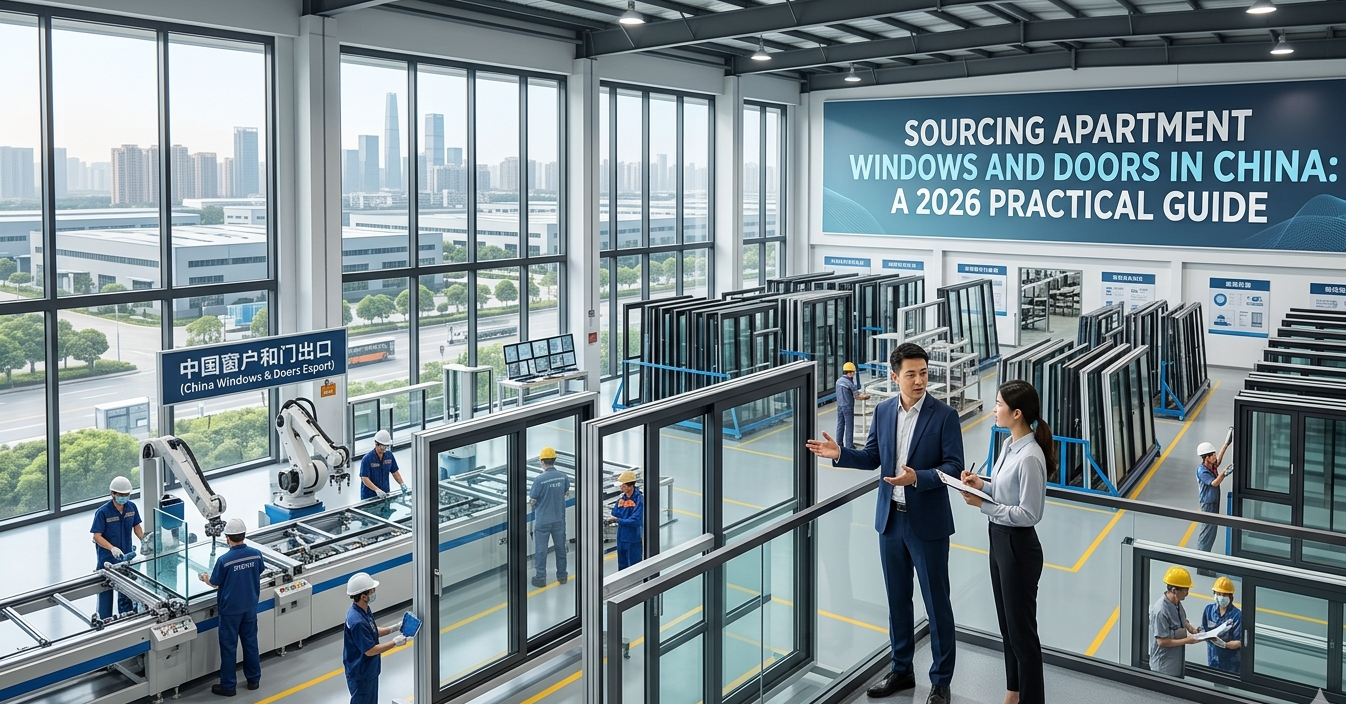
Sourcing windows and doors for a multi-unit apartment project is one of the highest-risk procurement tasks for any developer. Unlike sourcing loose furniture, window failure results in water leaks, failed building inspections, and massive structural repair costs.
In Foshan—China’s primary manufacturing hub for building materials—there are thousands of window suppliers. However, less than 10% actually understand international building codes or thermal efficiency standards. If your procurement strategy is simply comparing prices on Alibaba, you are guaranteed to face compliance and installation issues on-site.
Here is the technical reality of sourcing commercial-grade windows and doors for apartment buildings.
What do 2026 industry trends reveal about window sourcing?
B2B search trends over the past 12 months show a significant shift in buyer priorities. Developers are no longer searching for “cheap aluminum windows.” Instead, the highest-growth search terms are “PA66 thermal break,” “STC 40 acoustic windows,” and “hurricane-impact glass.”
This shift is driven by stricter global energy codes and the growing demand for soundproofing in urban apartments. Consequently, sourcing now requires a strict engineering approach. You must dictate the material specifications to the factory, rather than accepting their standard catalog items.
How should you specify aluminum profiles and glass for apartments?
To prevent “Quality Fade” during a large production run, your purchasing contract must define the structural materials down to the millimeter.
- Aluminum Wall Thickness: Standard residential windows often use 1.2mm or 1.4mm aluminum. For high-rise apartments, building codes typically require a minimum wall thickness of 1.8mm to 2.0mm for structural integrity against wind loads. Specify 6063-T5 aluminum alloy for the best balance of strength and extrusion quality.
- Thermal Breaks: If your project is in a climate with distinct seasons, do not buy standard aluminum frames. Specify Thermal Break Aluminum using PA66 nylon strips. This separates the interior and exterior metal, preventing heat transfer and interior condensation.
- Glass Specifications: Do not accept generic “double glazing.” Specify 5mm + 12A + 5mm (or thicker) tempered glass. The “12A” represents a 12mm argon gas spacer. For strict energy codes, mandate a Low-E (Low Emissivity) coating to block UV rays and reduce HVAC loads.
Why is hardware the most common failure point?
The most frequent complaint in apartment projects is not the glass breaking, but the windows failing to close properly after six months. This is entirely due to cheap, unbranded hardware.
Chinese factories will lower their quotes by using domestic, lower-grade hinges and friction stays. You must explicitly specify the hardware brand in your Bill of Materials (BOM).
- Premium Options: German brands like Siegenia or Hopo are the global standard for durability.
- High-Quality Domestic: If budget is a concern, specify top-tier Chinese brands like Kinlong.
- Load Capacity: Ensure the friction stays are rated for the actual weight of the double-glazed sash. A heavy acoustic window requires heavy-duty 304 stainless steel hinges, not standard residential ones.
How do you prevent damage during international shipping?
Windows and doors are heavy, fragile, and essentially transport “dead air.” A single broken pane ruins the installation schedule for an entire apartment unit.
- Packaging Mandates: Never accept standard cardboard packing. Contractually require fully enclosed plywood crates (fumigated or artificial wood to pass customs). Between each window, there must be EPE foam or pearl cotton to prevent aluminum-on-aluminum scratching.
- Consolidation: If you are also sourcing interior doors, bathroom tiles, and kitchen cabinetry for the apartment project, ship them together. A local consolidation hub in Foshan can safely load heavy tiles at the bottom of a container and secure the fragile window crates on top, maximizing container space and reducing freight costs.
Key Takeaways
- Dictate the Specs: Never buy “off-the-shelf.” Specify 1.8mm+ 6063-T5 aluminum, PA66 thermal breaks, and Low-E double glazing.
- Brand the Hardware: Lock in high-quality hardware brands like Hopo, Siegenia, or Kinlong to prevent operational failures.
- Focus on Acoustics: For urban apartments, ensure the supplier understands STC (Sound Transmission Class) ratings and uses appropriate acoustic seals.
- Demand Plywood Crating: Protect your investment from ocean transit damage by enforcing strict, structural packaging rules.
Why Choose HSY Sourcing?
Sourcing structural building materials requires engineering oversight, not just translation. HSY Sourcing operates directly out of Foshan, the epicenter of China’s window, door, and tile manufacturing.
- Technical Verification: We do not just look at aesthetics. We physically measure aluminum wall thickness with digital calipers, verify the PA66 thermal strips, and inspect the argon gas seals before authorizing shipment.
- Whole-Project Consolidation: We specialize in apartment developments. We can consolidate your exterior windows, interior wooden doors, flooring, and cabinetry into a single, highly optimized shipping container at our Foshan facility.
- Direct Factory Access: We bypass trading companies. Ando and our team negotiate directly with Tier-1 extrusion and glass tempering facilities, securing factory-direct pricing for your project.
- Strict Quality Control: We conduct mid-production and pre-shipment inspections to ensure no “quality fade” occurs between your approved sample and the mass production run.
FAQ
Q1: What is the typical lead time for custom apartment windows and doors?
A: For standard aluminum profiles, production takes 25 to 35 days. If you require custom powder-coating colors or specialized acoustic glass, expect 40 to 45 days.
Q2: Can Foshan factories meet US, Australian, or European building codes?
A: Yes, but only the top-tier factories. You must specify whether you need AS2047 (Australia), NFRC/AAMA (USA), or CE (Europe) compliance. We audit factories to ensure they hold the actual, valid certification reports for these specific regions.
Q3: Is it cheaper to assemble the windows in China or ship the frames and glass separately?
A: It is almost always cheaper and more reliable to have the windows fully assembled and glazed in the Chinese factory. Their specialized machinery ensures a perfect, weather-tight silicone seal that is difficult to replicate on a dusty construction site.
Q4: How do we handle custom measurements for different apartment units?
A: We require your architectural door and window schedules. We then work with the factory’s CAD engineers to produce highly detailed shop drawings for every unique opening. Mass production only begins after your engineers sign off on these drawings.