
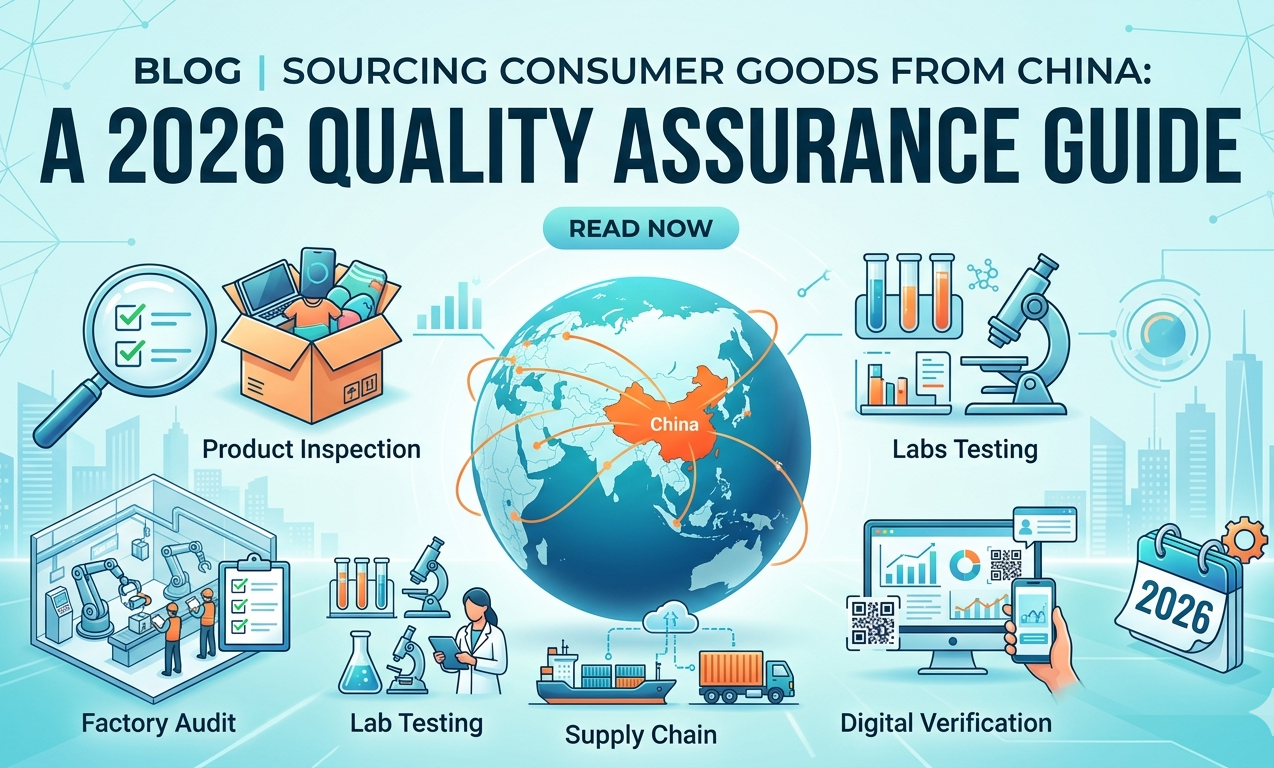
The era of browsing Alibaba, placing a bulk order, and hoping for the best is over. In 2026, consumer expectations for durability and safety are too high, and the cost of international returns is too severe, to treat quality control as an afterthought.
When international brands and Amazon FBA sellers experience high defect rates, they often blame the Chinese manufacturer. However, the root cause is usually a flawed procurement strategy. Sourcing consumer goods—whether it is apparel, home decor, or outdoor equipment—requires a technical framework to lock in material specifications and enforce accountability before the first deposit is paid.
Why is relying solely on online B2B platforms risky?
Search trends over the past year show a sharp increase in buyers searching for “third-party factory audits” and “how to verify a China supplier.” This reflects a growing awareness of the “Trader vs. Manufacturer” problem.
Many online profiles that present themselves as massive consumer goods factories are actually trading companies operating out of small offices. While traders can aggregate different products, they have zero authority over the physical assembly line. If a batch of goods fails a quality check, a trader cannot stop the machines; they can only negotiate after the fact.
To guarantee quality, you must trace the supply chain down to the physical workshop. You need a partner on the ground who can verify the business license, check the factory’s ISO certifications, and physically walk the production floor to confirm their capacity.
How do you lock in quality standards before production begins?
Quality assurance does not start when the goods are finished; it starts with the contract. The most common mistake buyers make is approving a prototype without defining the exact parameters of mass production.
To prevent misunderstandings, you must establish a “Golden Sample” protocol:
- Detailed Bill of Materials (BOM): Never use vague terms like “high-quality plastic” or “soft fabric.” Specify the exact material grade (e.g., ABS plastic, 12oz 100% cotton denim, HR foam).
- Physical Sign-off: The factory must produce a final, perfect sample. This sample is physically signed, dated, and sealed. One copy stays with the factory production manager, and one stays with your local sourcing agent.
- Tolerance Limits: Specify acceptable deviations. For example, in garments, what is the acceptable size tolerance? +/- 1 cm? If this is not in the contract, you cannot reject the goods later.
What are the physical steps to assure quality during mass production?
Chinese factories operate on tight margins. If you do not monitor them, “Quality Fade” can occur—where the factory quietly substitutes cheaper materials to increase their profit. To prevent this, implement the following inspection phases:
- Mid-Production Inspection (DUPRO): This occurs when 10% to 20% of the goods are finished. Your agent physically visits the line to check the raw materials and initial assembly. If the stitching is wrong or the color is off, it can be corrected now without delaying the entire shipment.
- Pre-Shipment Inspection (PSI): When 100% of the goods are manufactured and at least 80% are packed, an inspector visits the factory using the AQL (Acceptable Quality Limit) standard.
- AQL Execution: The inspector pulls a mathematically random sample of boxes from the warehouse and checks for Critical, Major, and Minor defects. If the defect rate exceeds your contracted limit (typically AQL 2.5 for major defects), the entire batch is rejected for factory rework.
How do packaging and logistics impact final consumer quality?
You can manufacture a flawless product, but if it is packed poorly, it will arrive as garbage. Ocean freight subjects cargo to extreme humidity, temperature swings, and physical drops.
- Drop Testing: For any fragile consumer goods, your sourcing partner must conduct standard carton drop tests (e.g., dropping the master carton from a specified height onto its corners and flat sides) before the container is loaded.
- Moisture Control: If you are shipping textiles, garments, or wood products, mandate the inclusion of desiccant packs in every carton to prevent mold during the 30-day ocean transit.
- Container Loading Supervision: Do not let the factory load the container unsupervised. A physical presence during loading ensures boxes are not crushed, space is optimized, and the container seal is legitimately locked.
Key Takeaways
- Verify the Source: Bypass trading companies and audit the physical manufacturing facility to ensure they have the machinery and capacity to meet your order.
- Define the Specs: Use signed Golden Samples and exact material data (BOM) to eliminate gray areas in production expectations.
- Inspect Before Completion: Utilize Mid-Production Inspections to catch errors early, saving time and preventing total batch rejections.
- Enforce AQL Standards: Never authorize final payment until a random, statistically valid Pre-Shipment Inspection proves the defect rate is within acceptable limits.
Why Choose HSY Sourcing?
Assuring the quality of consumer goods from 5,000 miles away is a high-risk gamble. HSY Sourcing serves as your technical procurement team and quality control engineers on the ground in China.
- Direct Factory Access: We operate in key manufacturing hubs, including Guangdong and Guangxi. We cut through the digital noise to connect you directly with verified, Tier-1 manufacturers.
- Sector Expertise: Whether it is complex textile manufacturing (like denim wash tolerances at Xinen Garment) or consolidating home goods, we understand the physical engineering required for your specific product.
- Strict QC Protocols: Our dedicated inspection team, we do not rely on factory photos. We physically visit the assembly lines with calipers, Pantone books, and AQL charts to enforce your standards.
- Logistics & Consolidation: We manage the final mile of export, supervising the packaging, performing drop tests, and consolidating your goods safely for ocean transit to ensure a zero-defect arrival.