
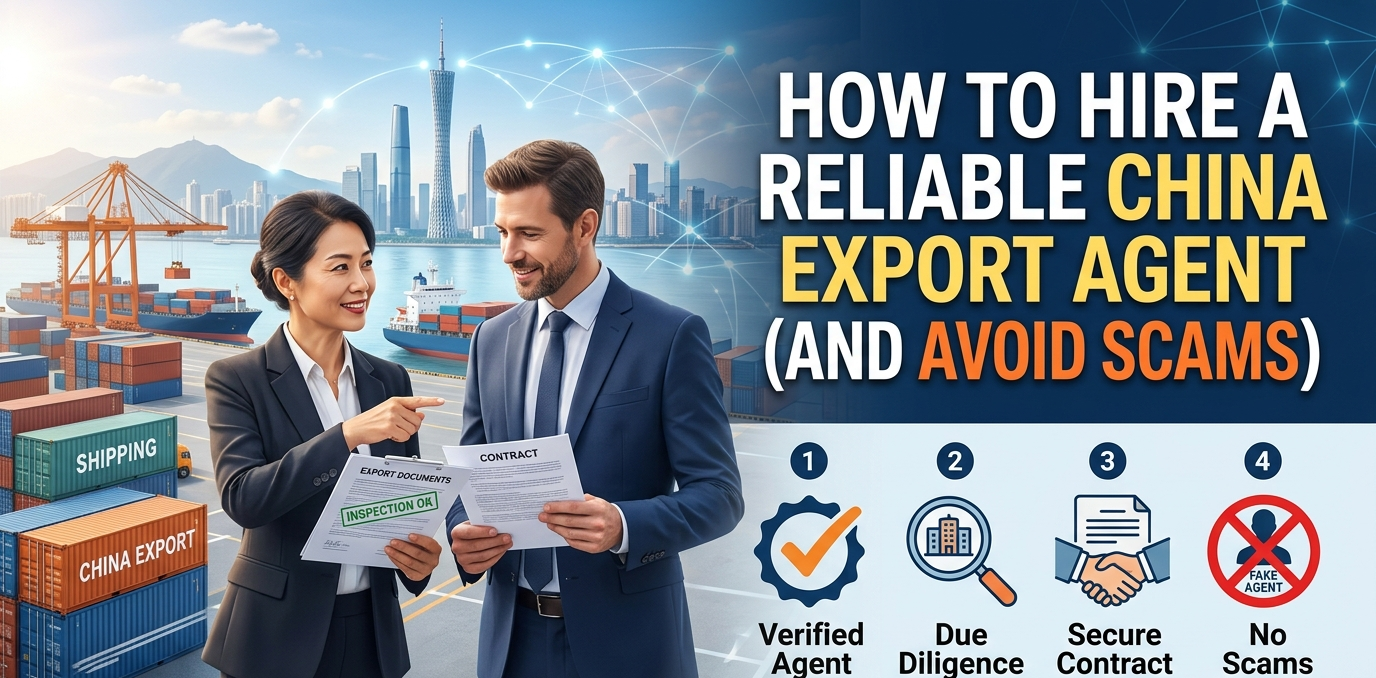
Key Takeaways:
- Always verify an agent’s business license and physical office location before transferring any funds.
- Hidden kickbacks (bribes from factories to agents) are the most common hidden cost; transparency in fee structures is essential.
- Specify quality standards, inspection protocols, and liability clauses clearly in a written sourcing contract.
- Choose an agent located near the industrial cluster of your target products (e.g., Foshan for building materials and furniture).
Hiring an export agent in China can streamline your supply chain, overcome language barriers, and secure better factory pricing. However, the industry is largely unregulated, which exposes overseas buyers to risks ranging from hidden margins to outright fraud.
This guide outlines practical, logical steps to evaluate sourcing agents, verify their legitimacy, and protect your procurement budget.
What Are the Most Common Scams by Bad Export Agents?
Understanding how bad actors operate is the first step in risk management. While outright theft of deposits happens, the most common “scams” are subtler and erode your profit margins over time.
- The Hidden Kickback (Factory Bribes): The agent quotes you a “low” service fee (e.g., 1-2%) to win your business. However, they secretly demand a 5-10% commission directly from the factory. The factory recovers this cost by raising your product price or using inferior raw materials.
- The “We Own the Factory” Claim: Many trading companies or individual agents claim they own the manufacturing facility to appear more capable. In reality, they are simply middlemen with no control over production schedules or quality standards.
- Bait-and-Switch Quality: The agent sends a perfect “golden sample” for your approval. Once the bulk order is placed and the deposit is paid, they switch to a cheaper, unverified factory to increase their own margin, resulting in high defect rates.
How Can You Verify a China Sourcing Agent’s Legitimacy?
Do not rely solely on a well-designed English website. You must conduct basic due diligence before signing a contract.
- Request their Chinese Business License: Ask for a copy of their Business License . Check the date of establishment, registered capital, and the legal scope of business.
- Conduct a Video Audit: Ask for a live video call via WeChat or Zoom during Chinese working hours. Have them walk through their office. If an agency claims to have a team of 50 but can only show a co-working desk, that is a red flag.
- Check Client References: Ask for references from clients in your specific industry or country. A reputable agent will have long-term B2B buyers willing to vouch for their transparency and problem-solving skills.
What Should Be Included in Your Sourcing Contract?
A clear contract prevents disputes. Never rely on verbal agreements or informal chat logs. Your agreement with the agent must explicitly state:
- Fee Structure: Is it a flat project fee, a percentage of the total order value, or a retainer? State clearly that the agent is prohibited from accepting factory kickbacks.
- Payment Terms: Never pay 100% upfront. Standard terms often involve a deposit (e.g., 30%) with the balance paid only after a successful third-party quality inspection before shipment.
- Quality Tolerances and Rejection Rules: Define exactly what constitutes a defect and who bears the financial responsibility if a batch is rejected (e.g., rework costs, delayed shipping penalties).
How Does the Agent’s Location Impact Your Sourcing Success?
China is vast, and manufacturing is highly localized into regional hubs. Hiring an agent based in Beijing to source products manufactured in Guangdong adds unnecessary travel costs and delays.
If you are a project buyer sourcing tiles, custom windows, or furniture, your agent should be physically located in Foshan or the wider Pearl River Delta. Local agents have established networks with regional factory bosses, can perform surprise factory visits within an hour, and understand the specific logistical nuances of that industrial cluster.
Why Choose HSY Sourcing for Your Projects?
At HSY Sourcing, we don’t just act as middlemen; we function as your localized procurement office and technical partner in China. We specialize in serving B2B customers, real estate developers, and project buyers globally.
- Location Advantage: Based in Foshan, the heart of China’s building materials and furniture manufacturing. We have direct, daily access to top-tier factories producing tiles, windows, doors, and custom fixtures.
- Zero-Kickback Policy: We operate on a strictly transparent fee structure. We negotiate the absolute lowest factory-direct price for you, and our earnings come solely from the agreed-upon service fee with you.
- Rigorous Risk Management: We conduct thorough background checks on all suppliers before placing orders, ensuring they have the financial stability and technical capability to deliver complex project requirements.
- End-to-End Control: From technical drawing verification to on-site quality inspections and container loading supervision, our team ensures your bulk order matches the approved sample exactly.
Visit www.hsysourcing.com to discuss how we can secure your supply chain and optimize your next procurement project.
Frequently Asked Questions (FAQ)
Q: What is a standard commission rate for a China sourcing agent?
A: Standard rates typically range from 5% to 10% of the total order value, depending on the complexity of the product, the volume of the order, and the level of service required (e.g., engineering support vs. simple product consolidation).
Q: Can I pay Chinese suppliers directly instead of going through the agent?
A: Yes. A transparent sourcing agent will encourage you to pay the factory directly to ensure financial clarity. The agent should only invoice you for their specific service fees.
Q: Do I need a sourcing agent if I buy from Alibaba?
A: While Alibaba is a useful directory, an on-the-ground agent provides critical quality control. They conduct physical factory audits, handle customized product development (OEM/ODM), consolidate shipments from multiple vendors, and ensure the goods are not “bait-and-switch” before they leave the port.