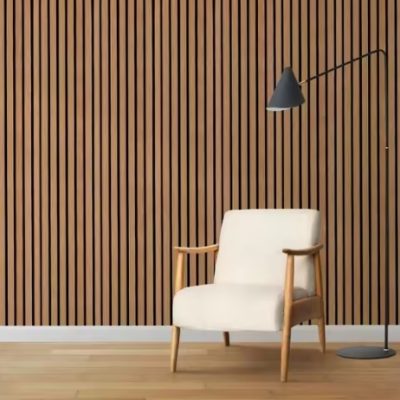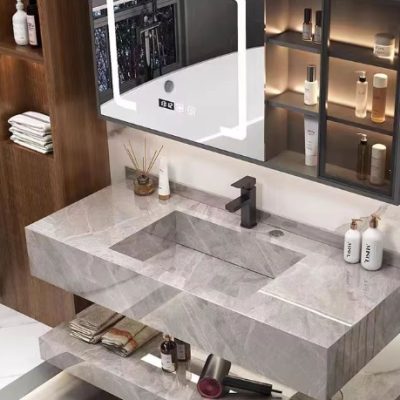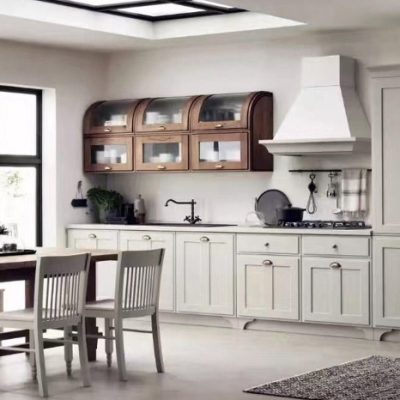

Managing the interior procurement for large-scale real estate—such as a 300-room hotel, a multi-story apartment complex, or a luxury villa development—involves coordinating dozens of product categories. When buyers attempt to source wall panels from one province, lighting from another, and furniture from a third, the result is often timeline delays, mismatched finishes, and inflated shipping costs.
Foshan has established itself as a primary hub for building materials and interior furnishings. By utilizing a one-stop procurement strategy within a single geographic cluster, commercial buyers can consolidate their supply chain, enforce strict quality controls, and significantly reduce total landed costs.
Key Takeaways
- Geographic Consolidation: Sourcing all interior categories (furniture, ceramics, fenestration) within a 50-kilometer radius in Foshan minimizes domestic freight costs and simplifies quality control.
- Synchronized Production: A one-stop strategy allows buyers to align the production schedules of different factories, ensuring all goods are ready for container loading simultaneously.
- Technical Consistency: Centralized sourcing ensures that materials, color palettes, and finish tolerances match perfectly across different product categories before shipping.
Why is fragmented sourcing a risk for large interior projects?
Procuring interior packages through a fragmented supply chain introduces multiple points of failure. If your custom wooden doors are manufactured in a different region than your WPC wall panels, matching the exact wood grain and finish becomes nearly impossible without extensive, time-consuming sample exchanges.
Furthermore, decentralized sourcing complicates logistics. If a factory finishes production two weeks late, your partially filled shipping containers sit idle, incurring demurrage charges, or you are forced to pay for LCL (Less than Container Load) shipping, which heavily cuts into project margins.
How does the Foshan industrial cluster support one-stop procurement?
The fundamental advantage of Foshan is its industrial density. It is not just a furniture manufacturing center; it is an integrated ecosystem for interior fit-outs.
Within a short driving distance, procurement teams can access specialized manufacturing zones:
- Shunde District: High-volume commercial furniture, hotel room case goods, and compression sofas designed specifically for apartment projects.
- Nanhai District: Aluminum extrusion, heavy-duty commercial windows, doors, and architectural hardware.
- Chancheng District: Commercial-grade porcelain tiles, ceramics, and sanitary ware.
This proximity allows buyers to execute a unified procurement plan. An agent can physically take a material sample from the furniture factory directly to the lighting or flooring factory on the same day to ensure exact design alignment.
What are the critical steps to manage a consolidated procurement strategy?
Executing a one-stop procurement plan requires rigid project management. Relying on basic catalog orders is insufficient for commercial real estate.
- Bill of Quantities (BOQ) Review: The process starts by breaking down your architectural drawings into a precise BOQ. Every item must be specified regarding material substrate, fire-retardant rating (e.g., BS5852 or ASTM E84), and environmental compliance.
- Factory Auditing and Allocation: Not all factories handle commercial volume. The procurement team must assign specific categories to verified factories—matching heavy custom villa woodwork to specialized carpentry workshops, and standard apartment fixtures to highly automated production lines.
- Mock-Up Room Assembly: For hotel and apartment projects, a complete prototype room must be built. This allows the buyer to verify the structural integrity of the furniture, the alignment of the wall panels, and the functionality of the sanitary ware before greenlighting mass production.
- Synchronized Logistics: Production timelines must be managed so that heavy building materials (tiles, doors) and volumetric items (sofas, mattresses) are completed concurrently. This allows for calculated container loading, placing heavy items at the base to maximize space and prevent transit damage.
Why choose HSY Sourcing for your project procurement?
Managing an integrated supply chain remotely is high-risk. HSY Sourcing functions as your dedicated, on-the-ground purchasing department in Foshan. We provide factual, data-driven procurement management without the middleman markups.
- Direct Factory Access: We connect your project directly with audited OEM factories for all interior categories, from acoustic wall panels to commercial fenestration.
- Technical Oversight: We verify that factory shop drawings match your project’s structural requirements, eliminating guesswork.
- Rigorous On-Site QC: Our team conducts in-person inspections at multiple production stages to ensure material thickness, moisture content, and finish consistency meet your commercial standards.
- Centralized Logistics: We consolidate all your project materials in our local facilities, strategically packing containers to lower your per-unit shipping cost and simplify customs clearance at your destination.
Frequently Asked Questions (FAQ)
What is the typical lead time for a consolidated commercial interior order?
Lead times vary based on customization. Generally, the engineering drawing and sample approval phase takes 3 to 4 weeks. Mass production for a complete hotel or apartment package (including furniture, doors, and materials) takes 45 to 60 days. Synchronizing these timelines is part of our procurement management service.
How do you handle quality control across completely different material categories?
We use category-specific inspection protocols. For instance, we test moisture content and joint stability for timber furniture, measure micron-level coating thickness for aluminum windows, and check dimensional tolerances and film adhesion for wall panels. We provide detailed, photo-documented reports for every category.
Can I consolidate goods from my own suppliers with goods sourced by HSY?
Yes. If you have already established relationships with specific factories in China, we can coordinate with them to collect your goods and combine them with the interior packages we source for you, optimizing your final container loading.
What are the Minimum Order Quantities (MOQ) for one-stop residential and commercial projects?
Because we manage the procurement across multiple categories, factories are often more flexible. For highly customized items requiring new molds, MOQs may be around 20-50 units. For standard apartment building materials or compression sofas, we can often negotiate lower thresholds based on the total overall volume of your project order.