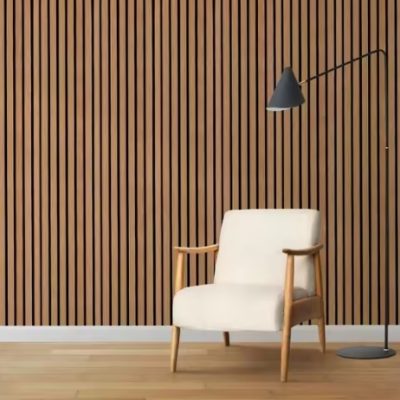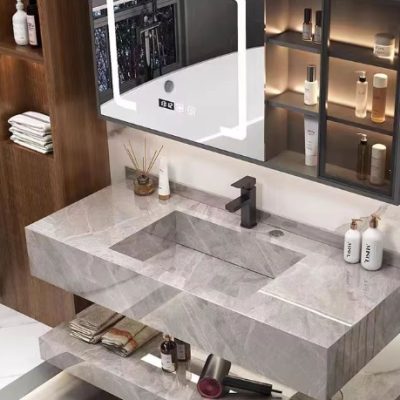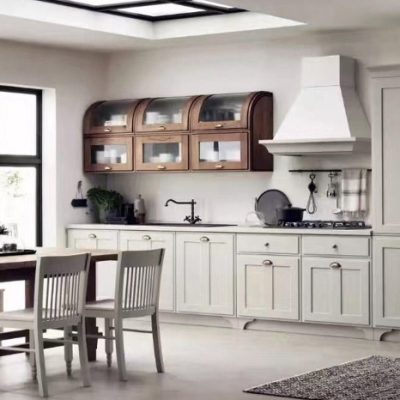

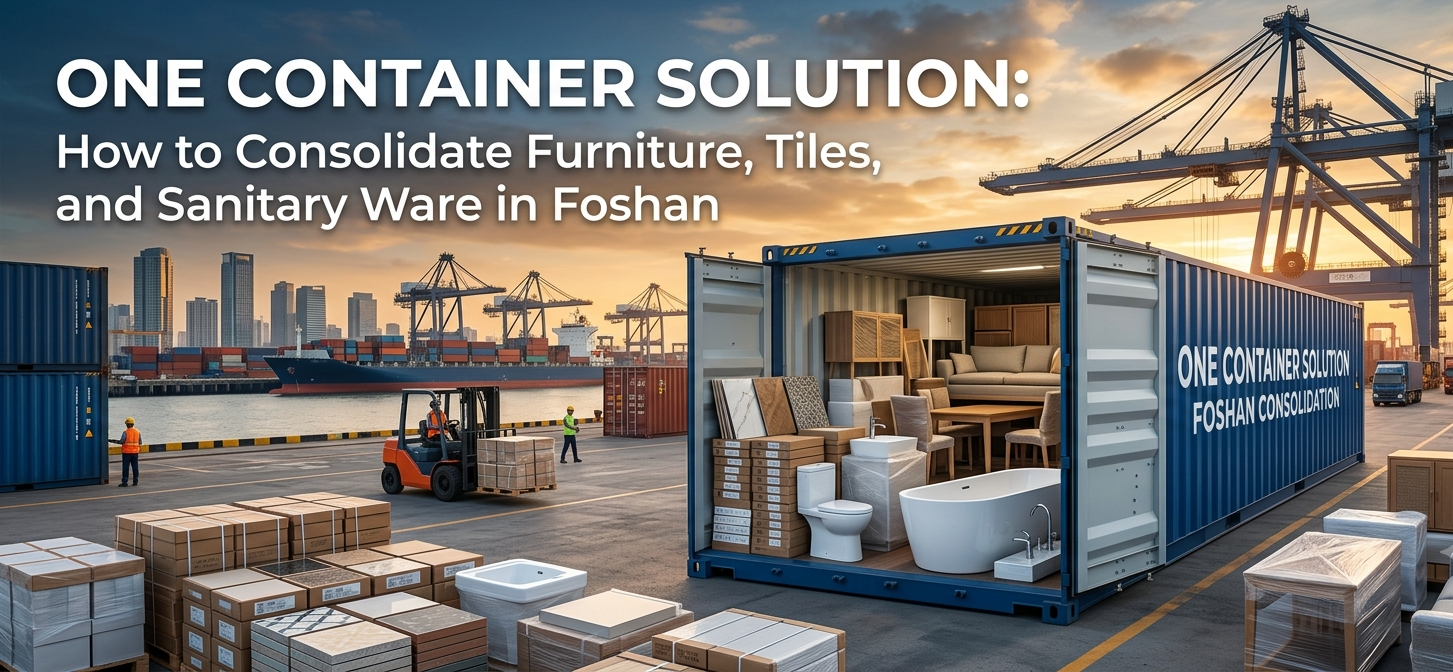
Sourcing building materials and furnishings directly from Foshan offers significant cost advantages for real estate developments, villas, and hotel projects. However, a typical project requires products from multiple specialized clusters: porcelain tiles from Nanhai, sanitary ware from Gaoming, loose furniture from Shunde, and custom cabinetry from local industrial parks.
When items are shipped separately via Less than Container Load (LCL), buyers face multiplied ocean freight rates, higher port handling fees, complex customs clearance for multiple shipments, and an increased risk of cargo damage due to multiple transfer points.
A One Container Solution aggregates products from multiple factories into a single Full Container Load (FCL). This guide explains the technical mechanics, logistics workflow, and load optimization rules required to safely consolidate mixed building materials in Foshan.
Key Takeaways
- Freight Cost Reduction: Transitioning from multiple LCL shipments to a consolidated FCL reduces total ocean freight and port handling charges by 20% to 35%.
- Optimized Load Density: Balancing heavy, dense cargo (tiles, stone) on the container floor with lighter, voluminous cargo (sofas, cabinetry, lighting) maximizes both weight capacity and cubic meter (CBM) space.
- Single-Window Customs: Combining items under one unified packing list and Bill of Lading (B/L) eliminates fragmented customs clearance fees and import documentation delays at the destination port.
- Staging Warehouse Control: Staging goods in a central Foshan warehouse allows for mandatory pre-loading inspections, packaging verification, and defect correction before goods leave China.
Why Do Multi-Factory Orders Fail Without a Centralized Consolidation Strategy?
When managing a project purchase across 3 to 10 different Chinese factories, shipping logistics quickly become a bottleneck if handled individually.
+-----------------------------------------------------------------------------------+
| TRADITIONAL LCL SHIPPING (UNCONSOLIDATED)                                         |
| Factory A (Tiles)     ---> LCL Warehouse A ---> Multiple Port Fees  ---> High     |
| Factory B (Bathroom)  ---> LCL Warehouse B ---> Multiple Customs    ---> Risk of  |
| Factory C (Furniture) ---> LCL Warehouse C ---> Separate Deliveries ---> Damage   |
+-----------------------------------------------------------------------------------+
| CONSOLIDATED FCL SOLUTION (ONE CONTAINER)                                         |
| Factory A + B + C ---> Central Staging Warehouse ---> Unified FCL Container Loading|
|                        (Single B/L & Single Clearance)                            |
+-----------------------------------------------------------------------------------+
1. Excessive LCL Fees and Double Handling
LCL shipping charges are calculated per CBM, but destination ports add substantial local charges (CFS fees, documentation, terminal handling). Shipping three separate LCL crates often costs more in total logistics than booking one 20ft or 40ft High Cube (HC) container. Furthermore, LCL cargo is handled by forklift multiple times across shared warehouses, drastically increasing breakage rates for fragile items like sanitary porcelain or glass shower enclosures.
2. Unsynchronized Production Timelines
Factories rarely finish production on the same calendar day. If Factory A finishes tiles two weeks before Factory B finishes cabinets, shipping without a local staging strategy forces buyers to pay factory storage penalties or accept staggered site deliveries overseas, disrupting construction schedules.
3. Administrative Complexity
Receiving four separate shipments means managing four sets of commercial invoices, packing lists, customs entries, and local trucking dispatches. A single error in an HS code or quantity declaration can trigger customs holds and demurrage charges.
How Does Weight and Volume Optimization Work in a Mixed Container?
Container loading is governed by two strict physical limits: Cubic Capacity (CBM) and Maximum Payload Weight (kg). Building materials vary widely in density, making intelligent load distribution essential.
+-----------------------------------------------------------------------------------+
| HIGH CUBE CONTAINER (40ft HC) LOAD LAYOUT                                         |
| +-------------------------------------------------------------------------------+ |
| | TOP LAYER: Lightweight Cargo (Mattresses, Sofas, Lighting, Foam Packaging)   | |
| | MIDDLE LAYER: Medium Weight Cargo (Flat-Pack Cabinets, Vanities, Hardware)   | |
| | BOTTOM LAYER: Heavy Cargo (Palletized Porcelain Tiles, Sintered Stone)        | |
| +-------------------------------------------------------------------------------+ |
| [Floor Load Limit Checked]                       [Gross Weight Checked]           |
+-----------------------------------------------------------------------------------+
| Product Category | Density Profile | Primary Loading Consideration | Stacking Position |
| Ceramic / Porcelain Tiles | Heavy & Dense | Hits container weight limits quickly before filling space. | Container floor on reinforced pallets. |
| Sanitary Ware (Toilets, Sinks) | Fragile & Medium Density | Requires rigid crate protection to support top loads. | Bottom/Middle tier with timber framing. |
| Flat-Pack Cabinetry (CKD) | Medium Density | Flat profile; excellent for bridging structural gaps. | Middle tier directly over pallet bases. |
| Loose Furniture (Sofas, Chairs) | Voluminous & Light | Takes up space quickly without adding excessive weight. | Upper tier or packed around framed structures. |
The “Tile-to-Furniture” Balancing Formula
A standard 40ft High Cube container provides roughly 76 CBM of volume and a maximum payload of approximately 22,000 to 26,000 kg (depending on shipping line and road transport regulations at the destination port).
If you fill a 40ft container entirely with ceramic tiles, you will reach the weight limit at roughly 25 to 30 CBM, leaving half the container empty. Conversely, filling it entirely with sofas hits the 76 CBM volume limit at only 6,000 kg.
A consolidated solution pairs approximately 15–20 CBM of heavy tiles/stone (bottom payload) with 45–50 CBM of furniture and sanitary items (upper payload), utilizing both maximum weight and maximum volume limits efficiently.
What Is the Step-by-Step Workflow for a One-Container Solution in Foshan?
Executing a smooth multi-category consolidation requires a structured process on the ground in Foshan.
Step 1: Procurement Sync & Delivery Scheduling
During order placement, production lead times across all factories are aligned. Factories with shorter production cycles are instructed to hold raw assembly until a unified target delivery window is established.
Step 2: Receiving at a Central Staging Warehouse
Instead of loading directly at individual factories, suppliers send their finished goods to a central Foshan staging facility. Here, cargo is held securely, allowing all items to arrive before the ocean container is called.
Step 3: Unification Quality Inspection & Packaging Audit
Before loading, technicians inspect incoming goods at the staging warehouse:
- Checking tile shade batches and edge flatness.
- Trial-assembling cabinet samples and hardware alignments.
- Ensuring export-grade packaging (corrugated corner guards, bubble wrap, reinforced wooden crates for stone and sanitary ware).
Step 4: Load Calculation & Professional Stowing
Using container loading software, cargo is arranged systematically. Heavy palletized crates are stowed first along the centerline to distribute weight across the container chassis. Timber dunnage, air bags, and cargo netting are installed to lock items in place and prevent shifting during ocean transit.
Step 5: Export Documentation Consolidation
A single master Packing List, Commercial Invoice, Certificate of Origin, and Bill of Lading are generated, categorizing all SKUs correctly under their respective HS codes for fast import clearance at destination.
How Can You Prevent Damage When Shipping Mixed Heavy and Fragile Goods?
Combining heavy stone or tiles with fragile sanitary ceramics and upholstered furniture requires strict cargo securing protocols:
- Bottom-Weight Palletization: Ceramic tiles must be strapped to ISPM-15 compliant fumigated wooden pallets. Pallets are anchored to the container floor ring bolts using heavy-duty polyester webbing.
- Inflatable Dunnage Airbags: Empty spaces between pallets and container side walls are filled with industrial air bags to absorb lateral forces caused by ship movement.
- Vertical Separation Barriers: Plywood sheets or honeycomb cardboard dividers are placed between rough wooden crates and soft upholstered furniture to prevent punctures or scuffing.
- Moisture Control: Mixed containers carrying wood cabinetry and stone/ceramic materials are vulnerable to container rain (condensation caused by temperature shifts during sea transit). Desiccant bags (silica gel or calcium chloride) are hung inside the container walls to absorb ambient humidity.
Why Partner with HSY Sourcing for Your Foshan Project Consolidation?
Managing multi-factory coordination, warehouse staging, quality checks, and custom container loading without local representation often leads to costly errors. HSY Sourcing acts as your dedicated procurement and logistics office in Foshan.
- Local Staging Warehouse Facility: We provide dedicated warehouse space in Foshan where your goods from different factories can be collected, consolidated, and staged safely free of storage penalties during the collection window.
- Physical Quality Inspection Before Loading: Our inspectors audit every shipment upon arrival at our warehouse—checking dimensions, finish quality, quantities, and packaging—catching defects while the supplier is still locally accessible.
- Expert Load Optimization: We calculate exact weight-to-volume ratios and supervise the entire loading process in person, providing complete photo and video reports for every container closed and sealed.
- End-to-End B2B Documentation: We consolidate complex multi-factory orders into one simplified set of import documents, ensuring compliance with your country’s customs regulations and tariff classifications.
Frequently Asked Questions
Is it legal to combine different product categories like tiles, furniture, and plumbing fixtures in one container?
Yes. Customs authorities allow mixed-category containers provided every SKU is accurately declared on the packing list with its corresponding HS code, commercial value, and country of origin certificate.
How much storage time is needed at the staging warehouse before loading?
Typically, a 7-to-10-day staging window is sufficient to receive goods from 3 to 6 different factories. HSY Sourcing coordinates supplier delivery dates to minimize warehouse dwell time while ensuring no factory holds up the shipping schedule.
What happens if a defect is found during the staging warehouse inspection?
Because the goods are inspected at our local Foshan warehouse before container loading, defective or damaged items can be returned directly to the factory for immediate repair or replacement without delaying ocean transport or causing overseas return disputes.
How do you prevent cargo shifting inside a container with uneven item shapes?
We use export-standard cargo securing methods, including timber blocking nailed to the container floor, ratcheted cargo straps attached to tie-down rings, vertical plywood buffer walls, and inflatable dunnage bags to fill empty voids.