
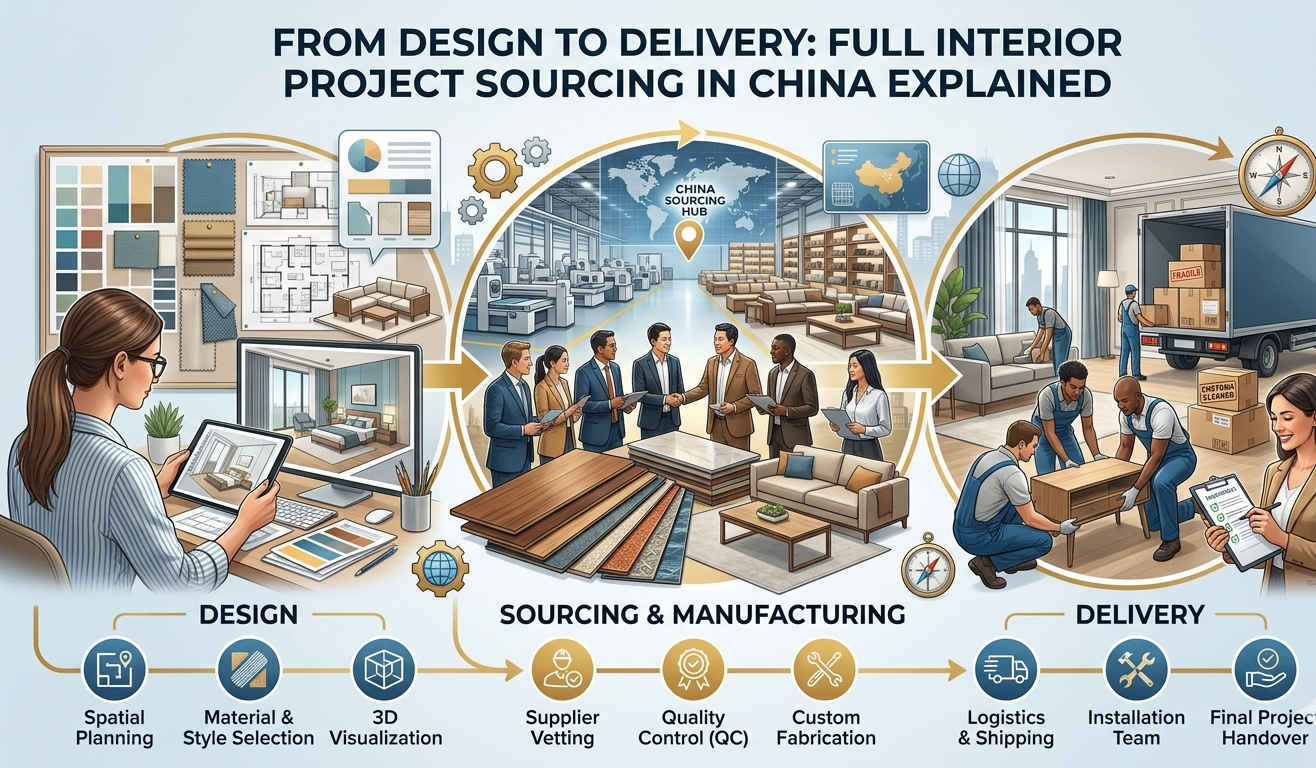
For property developers and hospitality groups, the path from a 3D render to a finished building is rarely a straight line. When sourcing a Full Interior Project from China, the complexity isn’t just in the manufacturing; it’s in the transition between stages.
Moving a project from the designer’s desk in London or Dubai to a factory floor in Foshan, and finally to a shipping container, requires a technical roadmap. Here is the reality of how the “Design to Delivery” process actually functions in the Chinese supply chain.
What is the actual roadmap for a full interior project?
A successful procurement project isn’t a single transaction; it is a four-stage cycle that typically spans 3 to 6 months:
- The Specification Phase: Converting your interior design package into a detailed Bill of Quantities (BOQ) and technical Spec Sheet.
- The Engineering Phase: Factories translate your designs into “Shop Drawings.” This is where dimensions are finalized against the “as-built” reality of the construction site.
- The Production & QC Phase: Raw material sourcing, carcass construction, upholstery, and—critically—the trial assembly.
- The Logistics Phase: Staging all goods in a central warehouse, professional container loading, and export documentation.
Why is the “Shop Drawing” phase the most dangerous for developers?
The most common cause of project failure is the “Translation Gap.” A designer might specify a beautiful custom wardrobe, but if the factory’s shop drawings don’t account for the placement of the site’s air conditioning vents or electrical outlets, the furniture will be useless upon arrival.
In the China sourcing model, the factory’s engineering team will produce Shop Drawings for your approval. As a buyer, your responsibility (or that of your agent) is to cross-reference these drawings with the actual site measurements. You are not just buying a product; you are approving an engineered solution. Once those drawings are signed, the CNC machines start cutting—and there is no “undo” button.
How do you verify quality when you are thousands of miles away?
You cannot manage quality by looking at photos of finished boxes. Professional project sourcing relies on Milestone Inspections:
- Material Verification: Checking the actual wood veneer, fabric rub-counts, and stone slabs before production starts.
- The “First Article” Inspection: Inspecting the very first unit off the line to ensure the finishes match the master sample.
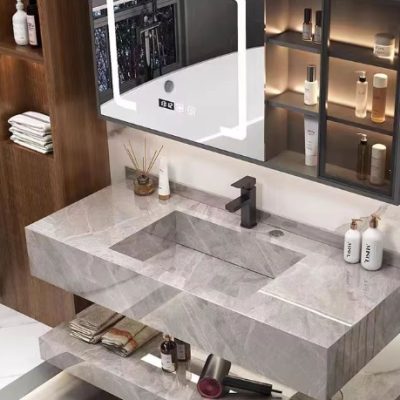
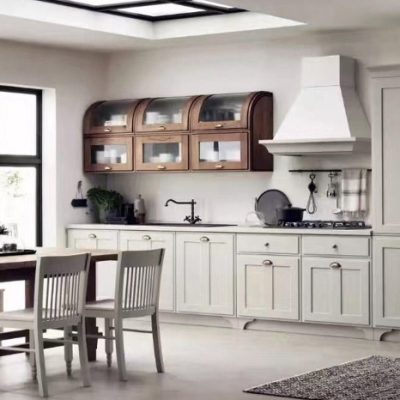
- The Trial Assembly: For kitchens, vanities, and built-in wardrobes, the factory must assemble the units on their floor. We check for “Gap & Flush”—ensuring door margins are consistent and hardware operates smoothly.
If you skip the trial assembly in China, you are essentially paying for your local contractors to do the “quality control” on-site, which costs five times as much in labor and delays.
What does the “Delivery” phase look like for a multi-category project?
Delivery is more than just booking a ship. For a full interior project, you are likely dealing with 10 to 15 different specialized factories.
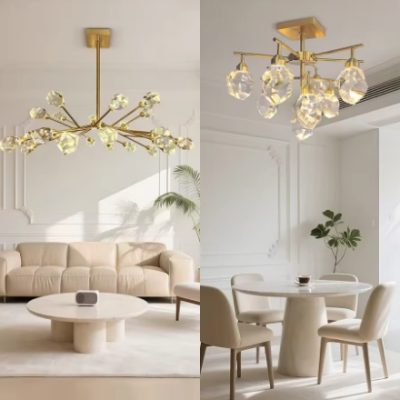
The Consolidation Hub in Foshan acts as the “buffer.” As the tiles from Shiwan, the lighting from Guzhen, and the furniture from Lecong arrive, they are staged in a single warehouse. This allows for:
- Final Integration Check: Seeing the sofa next to the rug and the cabinet to ensure the palette is unified.
- Volumetric Loading: Using heavy building materials as the base and delicate FF&E on top to prevent crushing and maximize container space.
- Unified Documentation: One Bill of Lading and one commercial invoice for the entire interior package, which simplifies customs clearance at your destination port.
Key Takeaways
- Shop Drawings are Law: The factory’s CAD drawings override your initial design renders. Review them with technical precision.
- Trial Assembly is Mandatory: Never ship custom joinery without seeing it fully assembled on the factory floor first.
- The Foshan Advantage: Centralizing your suppliers in one region allows for physical material matching and lower domestic trucking costs.
- Timeline Buffer: Always allow for a 2-week “consolidation window” in your warehouse to account for staggered factory deliveries.
FAQ: Managing the Project Lifecycle
Q: At what stage of construction should I start sourcing from China?
A: Ideally, you should begin the specification phase when the building’s structural shell is nearly complete. This allows you to take “as-built” measurements, which are essential for custom cabinetry and flooring orders.
Q: How do we handle design changes once production has started?
A: Once raw materials are cut, changes are expensive and cause significant delays. This is why we insist on a “Frozen Design” period where all shop drawings and material samples are signed off before a single dollar is spent on production.
Q: Who is responsible for the installation of a full interior package?
A: While the factory provides 3D installation guides and technical support, the physical installation is handled by your local contractor. We recommend sharing the factory shop drawings with your local team early so they understand the joinery methods and hardware used.
Engineering Your Success with HSY Sourcing
At HSY Sourcing, we don’t just “buy furniture”—we manage the entire design-to-delivery pipeline. Based in Foshan, we act as your technical project office, ensuring that the vision your designer created is the reality that arrives in your container.
From CAD review to the final container seal, we bridge the gap between Chinese manufacturing and international project standards.