
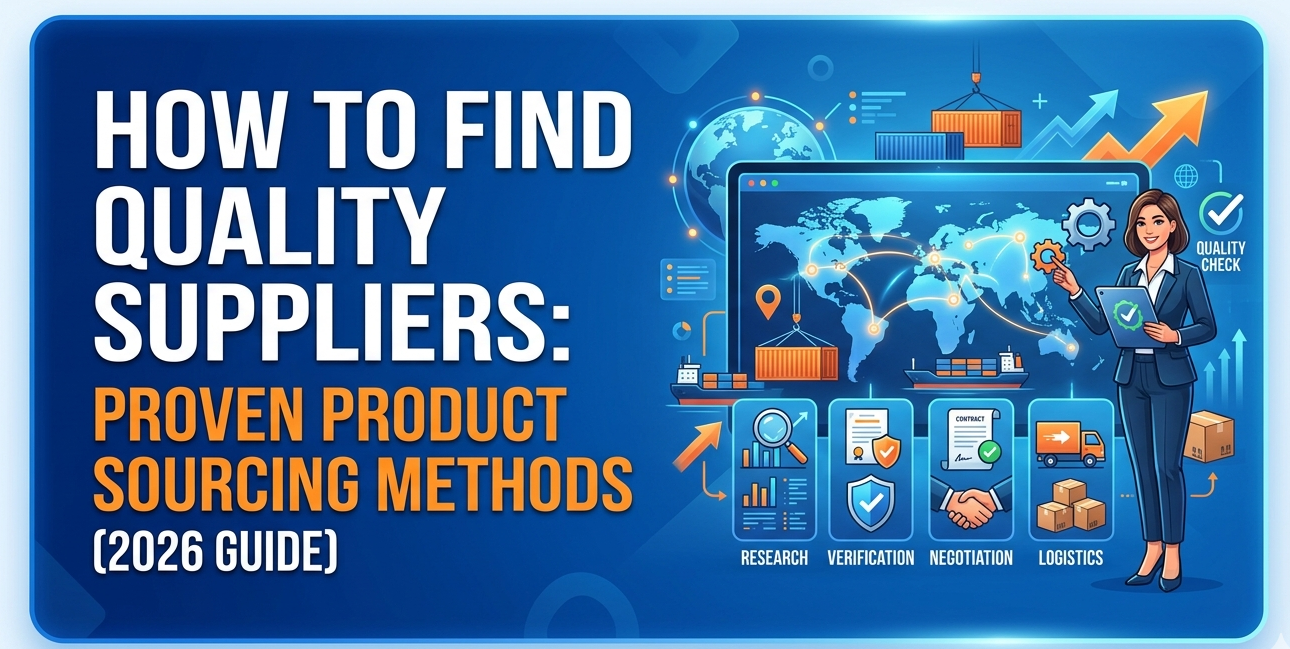
Finding a reliable supplier is the backbone of any successful physical product business. Whether you are scaling an Amazon FBA brand, launching a custom streetwear line, or importing heavy building materials, your manufacturing partner dictates your product quality, profit margins, and brand reputation.
Navigating the global supply chain can feel overwhelming, but utilizing a strategic, multi-channel approach significantly reduces your risk of encountering scams or substandard production.
Key Takeaways
- Verify Before You Buy: Always conduct background checks, request company licenses, and order samples before committing to bulk production.
- Leverage Local Expertise: Using on-the-ground sourcing agents in specific manufacturing hubs (like Foshan for furniture or specific textile regions for garments) can bypass language barriers and quality control issues.
- Diversify Sourcing Channels: Do not rely solely on online directories; combine platforms like Alibaba or Made-in-China with physical trade shows and industry-specific networks.
- Prioritize Communication: A supplier’s responsiveness, transparency regarding their processes, and willingness to answer technical questions are strong indicators of reliability.
5 Proven Methods for Sourcing Quality Products
1. Attend Major Industry Trade Shows
While digital sourcing is convenient, nothing replaces face-to-face interaction and physical product inspection. Exhibitions are the gold standard for finding established, export-ready manufacturers. Events like the Canton Fair bring thousands of verified suppliers under one roof, allowing you to compare materials, inspect build quality, and negotiate terms directly with factory representatives.
If you cannot attend international fairs in person, hiring a local sourcing agent to walk the floor, visit booths, and represent your business is a highly effective alternative.
2. Partner with a Local Sourcing Agent
A professional sourcing agent acts as your eyes and ears on the ground. This is especially critical when dealing with complex, high-stakes orders like custom textiles or specialized building materials. A dedicated agent can:
- Identify factories that do not advertise online.
- Negotiate better local pricing.
- Conduct surprise factory audits to verify production capabilities.
- Manage complex logistics, including customs codes and export documentation.
3. Master B2B Sourcing Platforms
Platforms like Alibaba, Global Sources, and Made-in-China remain powerful tools if used correctly. To filter out low-quality traders and find direct manufacturers:
- Filter for “Verified Suppliers” or “Gold Suppliers” who have undergone third-party background checks.
- Look for detailed product descriptions, clear factory photos, and downloadable technical specifications (like Material Test Certificates).
- Check their transaction history and export markets to ensure they have experience shipping to your specific region.
4. Conduct Rigorous Sample Testing
Never skip the sampling phase. Requesting a sample allows you to evaluate the exact quality of the materials—whether you are checking the precise weight of denim fabric or the durability of woven decor.
- Pro Tip: Always pay for your samples. Suppliers are more likely to take you seriously, and it establishes a professional transaction history from day one.
5. Utilize Advanced Google Search Operators
Many excellent, highly specialized factories have outdated websites and poor SEO, meaning they won’t appear on the first page of a standard Google search. Use advanced search operators to dig deeper. Try queries like:
"product name" + "manufacturer" + "country""product name" + "wholesale" -alibabasite:.com "custom manufacturing" "your niche"
Frequently Asked Questions (FAQ)
How can I tell the difference between a direct factory and a trading company?
Direct factories usually specialize in one specific category of products (e.g., only producing denim garments or only manufacturing lighting fixtures). Trading companies tend to have a massive, unrelated catalog of goods. You can also ask for their ISO certifications or request a live video tour of their production floor.
What is a Minimum Order Quantity (MOQ) and can it be negotiated?
MOQ is the smallest number of units a supplier is willing to produce in a single production run. While factories set MOQs to cover their setup costs, they are often negotiable. You can offer to pay a slightly higher per-unit price for a smaller initial batch, or ask if they have “ready-to-ship” inventory from overruns.
How do I protect my payments to overseas suppliers?
Never wire money directly to a personal bank account. Use secure payment gateways provided by B2B platforms (like Alibaba Trade Assurance), PayPal (for samples), or Letters of Credit (LC) for large corporate orders. Always tie your final payment to a successful quality control inspection before the goods are shipped.