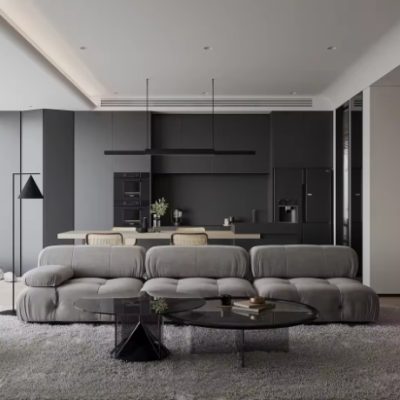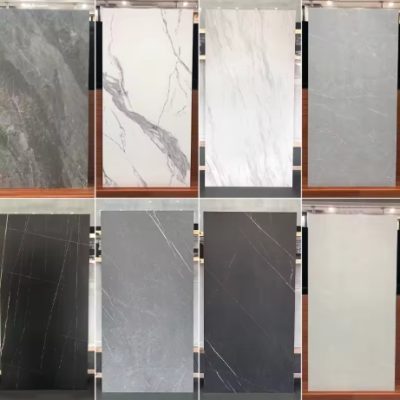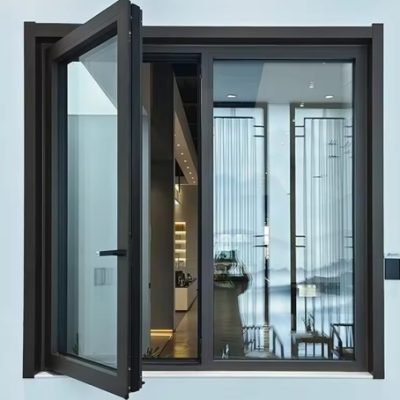

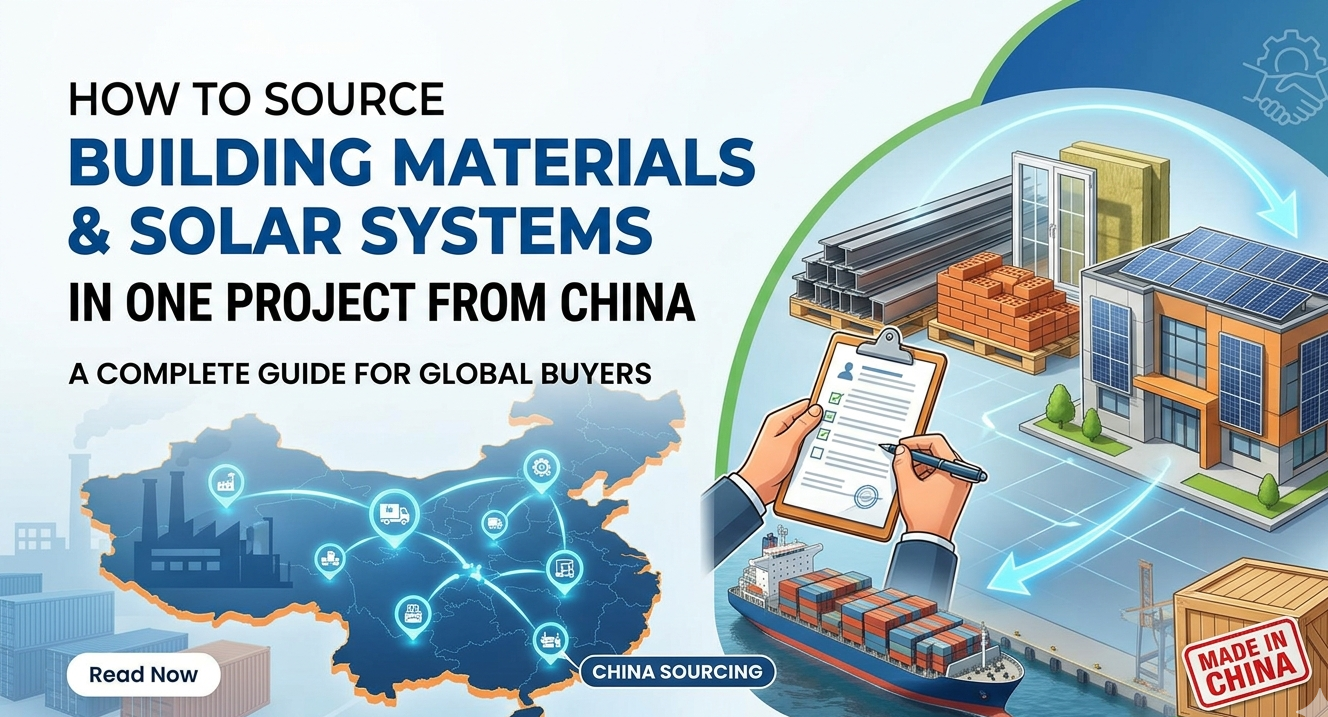
For commercial developers and contractors, building specifications have changed. A modern construction project requires heavy structural materials (tiles, aluminum, cabinetry) and high-tech energy systems (solar panels, inverters, lithium batteries).
Many buyers try to split these into two separate procurement channels. In practice, buying them separately from different regions in China leads to double the logistics fees, delayed project timelines, and components that do not fit together on site.
Combining them into a single, synchronized procurement project is highly efficient, but it requires strict technical oversight. Here is how to manage the process based on actual factory-floor realities.
Why source building materials and solar systems as a single project?
Direct Answer: Sourcing them together through a localized supply chain allows you to consolidate your shipments into fewer containers, drastically cutting ocean freight costs. It also forces structural factories and solar manufacturers to align their production schedules and technical specifications before manufacturing begins.
When you treat them as separate projects, you lose control over the timeline. If your roofing materials arrive on-site in October, but your solar mounting racks are delayed until December, your labor costs increase. By managing them as one project—preferably concentrated in the Guangdong manufacturing hub—your sourcing team can coordinate the production schedules so everything is ready for consolidation at the exact same time.
What are the engineering risks of combining structure and solar?
Direct Answer: The primary risk is dimensional incompatibility. Solar hardware and building structures must physically connect. If the solar mounting brackets do not match the specific profile of the roofing metal, or if the BIPV (solar glass) is too thick for the custom aluminum window frames, the installation will fail.
You cannot rely on verbal confirmations from sales reps. To mitigate this risk, you must force a “technical handshake” between the two factories.
- CAD Verification: Your sourcing agent must take the shop drawings from the building material factory and cross-reference them with the engineering drawings from the solar factory.
- Load Bearing: The weight of the solar panels and racking systems must be communicated to the structural steel or roofing supplier to ensure the building meets safety codes.
- Cable Routing: Pre-drilling or designing conduits in custom cabinetry or wall panels for solar wiring saves days of labor on the job site.
How do you handle shipping for heavy materials, fragile panels, and batteries?
Direct Answer: Shipping these items together requires a staged consolidation warehouse. You must strategically load heavy items (like tiles) at the bottom, secure fragile solar panels vertically, and declare energy storage systems (lithium batteries) strictly according to Class 9 Dangerous Goods regulations.
Loading a mixed container is a physical engineering task, not just a paperwork exercise.
- Fragility and Weight: Ceramic tiles and marble will crush anything beneath them. Solar panels are highly sensitive to micro-cracks and must be shipped in their original vertical wooden crates. They cannot be stacked flat to save space.
- Battery Compliance: Lithium batteries (Energy Storage Systems) are heavily regulated. You cannot simply hide them in a container of furniture. They require specific UN38.3 test reports, MSDS documents, and must be booked with shipping lines that explicitly accept mixed Dangerous Goods (DG) cargo.
- The Warehouse Factor: You cannot ask a tile factory to load a battery. You need an independent warehouse in China to receive all the goods, inspect them, and load the container under professional supervision.
Key Takeaways
- Consolidate Locally: Focus your sourcing in one region (like Guangdong) to minimize domestic trucking costs and make container consolidation viable.
- Demand CAD Cross-Checks: Never approve production until the structural dimensions and the solar hardware dimensions have been verified against each other.
- Respect the DG Rules: Energy storage batteries dictate how the entire container is shipped. Handle the Dangerous Goods paperwork early.
- Use a Staging Facility: A mixed project requires a central warehouse to physically organize and safely load heavy, fragile, and regulated goods.
FAQ: Managing Mixed Procurement Projects
Q: Can I find one factory in China that manufactures both building materials and solar systems?
A: No. Legitimate, high-quality factories specialize. A tile factory does not make solar panels. If a supplier claims they make both, they are a trading company. You need an agent to bridge the actual specialized factories.
Q: What happens if the solar factory finishes production weeks before the furniture factory?
A: This is common. Your agent’s consolidation warehouse will store the finished solar components safely until the furniture is completed, ensuring you only pay for ocean freight once.
Q: How do warranties work when sourcing from multiple factories?
A: Warranties remain with the individual manufacturers (e.g., a 25-year performance warranty from the solar panel factory, and a 5-year hardware warranty from the window factory). Your agent keeps these records and facilitates any future claims.
Real Supply Chain Management with HSY Sourcing
Executing a mixed procurement project requires actual ground-level work, not just forwarding emails. It requires someone to check aluminum thickness, verify battery communication protocols, and stand inside a shipping container to supervise the loading.
At HSY Sourcing, we handle the practical realities of importing from China. Operating out of Foshan—the heart of China’s building material industry and adjacent to the Shenzhen/Guangzhou tech corridor—we manage the exact intersection of construction and renewable energy.
We provide our clients with:
- Technical Drawing Reviews: We ensure your structural and solar components actually fit.
- Factory Floor Audits: We verify the quality of your goods mid-production.
- Complex Logistics: We manage our own warehouse consolidation, handling heavy freight, fragile glass, and Class 9 DG paperwork legally and safely.