
If you are lounging by the pool at a five-star resort in Dubai or browsing a premium patio furniture catalog in California, there is a very high probability that the furniture you are looking at was manufactured in Foshan, China.
For decades, buyers assumed “Made in China” simply meant cheaper. But in the outdoor furniture sector, Foshan—particularly the Shunde district—has evolved far beyond basic manufacturing. Today, it is the global command center for high-end, designer-grade outdoor living.
If you are a resort developer, a furniture wholesaler, or an ecommerce brand, understanding the mechanics of this city is the key to protecting your margins and your reputation. Here is the reality of why Foshan dominates the outdoor furniture industry.
What makes Foshan’s industrial cluster impossible to replicate?
Manufacturing outdoor furniture requires multiple distinct industries to work perfectly together. You need extruded aluminum for the frames, specialized powder coating to prevent rust, hand-woven PE (polyethylene) rattan or synthetic marine-grade rope for the seating, and UV-resistant fabrics (like Sunbrella or high-quality acrylics) for the cushions.
In Foshan, all of these sub-industries exist within a 50-kilometer radius. If an outdoor sofa factory needs a custom aluminum extrusion, the supplier is literally down the street. This hyper-concentrated supply chain means faster prototyping, lower inland transportation costs, and the ability to solve production issues in days, rather than weeks. No other country has replicated this specific, localized ecosystem for outdoor goods.
How do Foshan manufacturers achieve “designer-grade” quality?
High-end outdoor furniture faces a brutal environment: saltwater, chlorine, intense UV rays, and heavy rain. The top-tier factories in Foshan have shifted from mass-producing cheap plastic chairs to acting as ODM (Original Design Manufacturer) partners for luxury global brands.
They invest heavily in automated welding robots for seamless frame joints and operate in-house testing labs. A genuine high-end Foshan factory will routinely put their materials through 3,000-hour UV exposure tests and salt-spray tests to guarantee the furniture won’t fade or rust after one summer. Furthermore, the hand-weaving of complex rope and rattan designs relies on a skilled local labor force that has been honing this craft for over twenty years.
Why is distinguishing between a real factory and a trading company so difficult here?
For an overseas buyer, this is the biggest trap. A trading company will outsource your order to the cheapest available workshop to maximize their margin. When the rattan starts unraveling six months later, the trading company will vanish. Securing high-end quality requires physically walking the factory floor, verifying their welding equipment, checking their raw material storage, and ensuring they aren’t outsourcing your project to a shadow factory.
How does sourcing locally in Foshan lower your landed cost for bulky items?
Outdoor furniture is notoriously difficult to ship because you are essentially “shipping air.” A fully assembled outdoor daybed takes up a massive amount of cubic meters (CBM) in a shipping container.
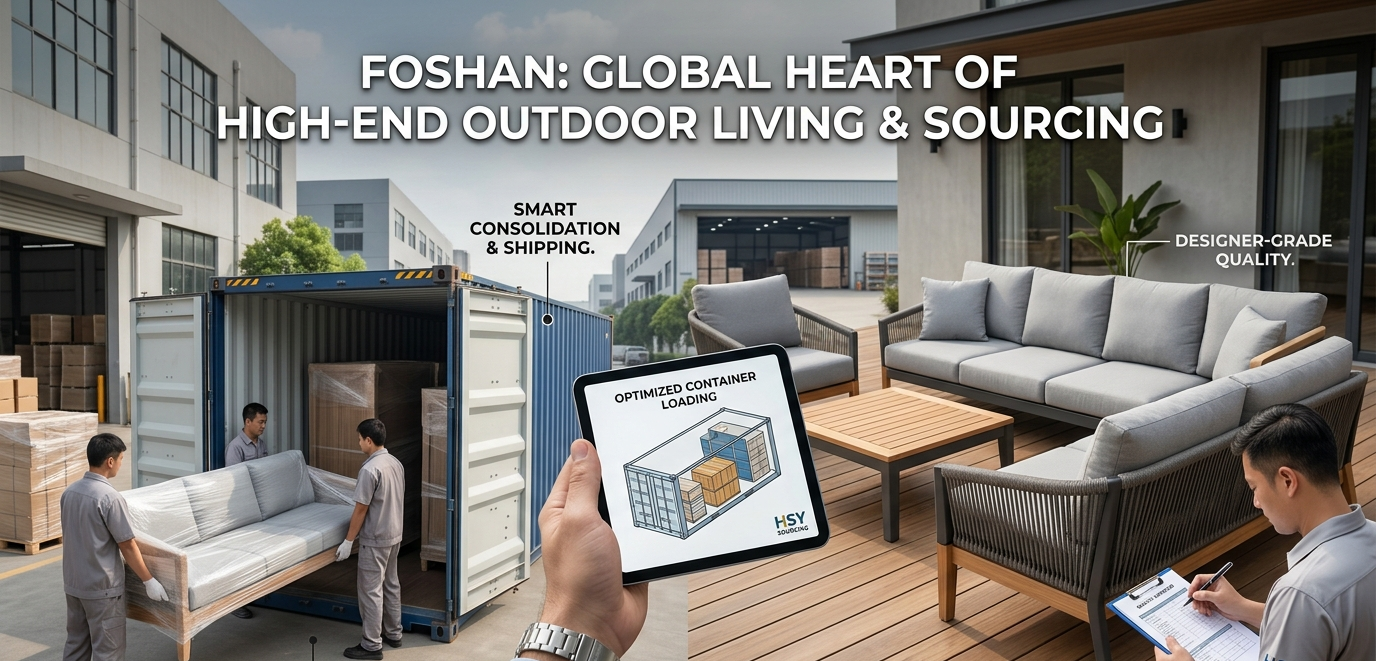
If you are sourcing from scattered suppliers across different provinces, your logistics costs will destroy your profit margin. By sourcing entirely within the Foshan ecosystem, a local agent can consolidate your cushions, aluminum frames, and teak tables into a single warehouse. We can then optimize the container loading—stacking chairs efficiently and mixing bulky items with flat-packed goods—to ensure you utilize every inch of the container, drastically reducing your freight cost per unit.
Key Takeaways
- The Power of the Cluster: Foshan’s strength lies in its complete supply chain—aluminum, coating, weaving, and textiles are all sourced within the same city limits.
- Quality is Proven, Not Promised: High-end sourcing requires verifying a factory’s salt-spray and UV testing capabilities, not just looking at a showroom sample.
- Beware the Middleman: Many “factories” online are trading companies. Physical factory audits are non-negotiable for high-end outdoor procurement.
- Master the Container: For bulky outdoor goods, strategic container consolidation in a local Foshan hub is the most effective way to lower your final landed cost.
FAQ: Sourcing Outdoor Furniture
Q: Are MOQs (Minimum Order Quantities) high for Foshan outdoor furniture?
A: It depends on the customization. For standard designs using in-stock rattan and fabric, factories often accept 10-20 sets. However, if you require custom-extruded aluminum frames or custom-dyed fabrics, the MOQ will jump significantly to justify the raw material setup.
Q: How long does it take to produce a custom outdoor furniture collection?
A: Generally, prototyping takes 15-20 days. Once the sample is approved, mass production usually takes 35-45 days. Always factor in extra time if you are ordering before the Chinese New Year or the peak spring shipping season.
Q: Can Foshan factories work with imported materials like Sunbrella fabric or Burmese Teak?
A: Yes. The top-tier factories frequently import premium raw materials for high-end hotel and resort projects. A local sourcing agent can verify the authenticity of these imported materials before production begins.
Meet the HSY Sourcing Team: Your Eyes on the Ground in Foshan
Sourcing high-end outdoor furniture requires more than just sending emails; it requires a physical presence on the factory floor.
At HSY Sourcing, we are headquartered right here in Foshan. We know which factories actually manufacture the goods, and which ones are just trading companies playing with your budget.
- Direct Factory Access: We bypass the showrooms and take you straight to the source, negotiating directly with the factory owners.
- In-Line Quality Control: We monitor the welding, the powder-coating thickness, and the weaving tension during production, ensuring your goods survive the harshest outdoor environments.
- Smart Consolidation: We specialize in gathering bulky outdoor items from multiple local vendors and packing them into consolidated containers to maximize your freight efficiency.