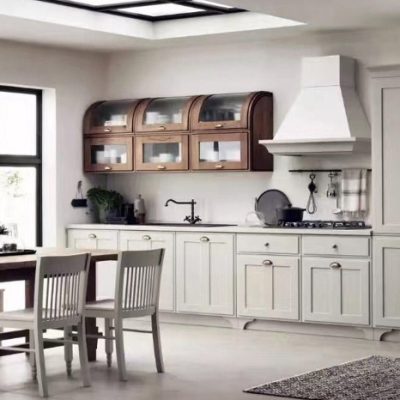


Imagine this scenario: Your custom kitchen, walk-in wardrobes, and bathroom vanities have just arrived at your villa site from Foshan, China. When the local installers unpack the crates, you notice that the kitchen island is ten centimeters too wide, a tall pantry cabinet blocks a light switch, and the finish on the wardrobe doors looks significantly lighter than the wood veneer sample you approved.
You paid for bespoke joinery based on your architect’s plans and 3D renders. Yet, what arrived on-site does not match your expectations.
Immediately, the questions arise: Is the Chinese manufacturer at fault? Did your interior designer miss something? Was there a measurement error on-site, or did approving the factory’s shop drawings shift the responsibility onto you?
Before assigning blame or demanding immediate remanufacture, you need to understand how responsibility is assessed when delivered cabinets differ from villa drawings. This article explores how to untangle the sequence of decisions, identify where the discrepancy originated, and determine which documents dictate what was actually agreed for production.
Who Is Responsible When Custom Cabinets Do Not Match the Drawings?
Responsibility depends on which drawings and specifications were contractually or commercially agreed, what the relevant parties approved, what the factory was instructed to manufacture, and where the discrepancy originated.
When custom cabinets do not match expectations, multiple parties may be involved in the design, procurement, and installation chain:
- Cabinet Manufacturer: Responsible for producing joinery in accordance with the final approved production drawings and specifications.
- Architect or Interior Designer: Responsible for the original design intent, spatial planning, and aesthetic vision.
- Homeowner or Authorized Representative: Responsible for making final decisions, signing off on drawings, and providing project parameters.
- Person Responsible for Site Measurement: Responsible for capturing exact dimensions, wall out-of-squareness, and finished floor levels.
- Sourcing or Procurement Service Provider: Responsible for coordination, supplier communication, and specified quality checks.
- Local Installer or Installation Contractor: Responsible for on-site assembly, scribing, adjustments, and final fitting.
These parties do not automatically share equal responsibility. Each party’s liability depends entirely on its agreed scope, instructions, approvals, and actions.
Summary of Discrepancies and Potential Origins
| Type of Discrepancy | What to Check First | Party Whose Work or Instructions May Be Relevant |
| Incorrect Cabinet Dimensions | Compare delivered units against approved shop drawings vs. final site measurements. | Factory, site measurer, or designer |
| Wrong Door Finish or Color | Compare delivered product against approved physical samples and material sign-off sheets. | Factory, designer, or homeowner |
| Missing Panels or Components | Check packing lists, bill of quantities, and factory shipping records. | Factory or procurement agent |
| Incorrect Hardware Models | Cross-reference hardware specifications in the order confirmation and approved quotation. | Factory or sourcing agent |
| Layout Differences | Verify whether original design intent was fully detailed into production shop drawings before manufacturing. | Designer, factory, or homeowner |
| Installation Gaps and Misfits | Check if wall conditions, floor levels, or on-site changes differed from preliminary data supplied to the factory. | Installer, site measurer, or builder |
Note: These are illustrative scenarios, not automatic legal conclusions. Contractual terms, documented evidence, jurisdiction, and the actual facts determine liability.
Which Drawings Should Be Used to Determine Whether the Cabinets Are Wrong?
A central challenge in international procurement is distinguishing between the original design concept and the final manufacturing documentation. Documents serve different purposes along the way:
- Architectural Floor Plans: Define room layouts, wall locations, and structural boundaries.
- Interior Design Drawings and Elevations: Illustrate aesthetic intent, general proportions, appliance placements, and cabinet styles.
- 3D Renders: Communicate visual atmosphere, color schemes, and spatial feel. However, renders rarely specify exact board thicknesses, internal joinery construction, or precise construction clearances.
- Cabinet Layout Drawings: Show where individual cabinets sit within the room.
- Factory Shop Drawings or Production Drawings: Provide exact manufacturing dimensions, construction details, door swing clearances, filler panels, hardware positions, and material specifications.
- Final Approved Revisions and Written Change Records: Document any modifications made after initial drafting.
A discrepancy cannot be assessed fairly without establishing which version was approved and what information each party was expected to verify. A 3D render can show appearance and proportions without fully specifying how a cabinet should be manufactured. When evaluating a dispute, parties must examine:
- Drawing numbers and revision dates.
- Dimensions and units of measurement.
- Material and finish reference codes.
- Cabinet construction methods.
- Hardware models and fixing positions.
- Finished floor and ceiling levels.
- Wall conditions, fillers, scribes, and end panels.
- Written exceptions or agreed deviations.
One document does not automatically override every other document. The contract, order confirmation, formal approval process, and documented hierarchy of documents establish the legal and commercial baseline.
Five Common Reasons Chinese-Made Cabinets Do Not Match Villa Drawings
1. The Factory Did Not Follow the Approved Production Drawings
If a factory manufactures cabinets contrary to the final signed-off production drawings—such as building a drawer unit 20 centimeters narrower than specified or installing the wrong hinge type—the discrepancy rests primarily with the factory. Establishing this requires comparing the delivered product against the approved shop drawings, order specifications, production records, and physical measurements.
2. The Original Design Was Not Fully Developed for Manufacturing
An architect’s drawing or 3D design may leave certain construction details unresolved (e.g., how a corner column is finished or how integrated lighting channels are housed). Foshan factories often need to develop additional details before production. If unresolved assumptions are silently decided by the factory without confirmation from the designer or homeowner, mismatches occur. Conversely, factories are not automatically entitled to alter structural or aesthetic designs without explicit approval.
3. The Production Drawings Were Incorrectly Prepared or Approved
An incorrect dimension or layout can pass into production if nobody identifies it during the drawing review. It is essential to distinguish between the person who prepared the drawing (often the factory draftsman), the person responsible for checking it (such as a designer or sourcing agent), and the person who approved it. Formal approval does not automatically eliminate liability for technical errors introduced by other parties, but it complicates the attribution of fault.
4. The Site Dimensions or Conditions Changed
Cabinets manufactured precisely to an approved dimension may still fail to fit if site conditions change. Common causes include:
- Finished floor levels differing from preliminary assumptions.
- Walls being out of square or plumb.
- Openings changing during rough construction.
- Measurements being taken before wall tiles, plastering, or stone thresholds were finished.
- Missing information about skirting boards, ceiling heights, stone thicknesses, or appliance clearances.
Unless overseas site measurement was specifically contracted, scheduled, and executed by the factory or its agent, factories rely on the dimensions provided to them.
5. A Material, Finish, or Specification Was Changed or Misunderstood
Discrepancies often involve wood veneers, lacquer sheens, edge-banding, or hardware brands. Distinguishing between natural variation within an agreed material (such as natural wood grain patterns) and a genuine deviation from agreed specifications requires referencing approved physical samples. Natural materials will naturally exhibit color and grain variations across components.
Does Approving the Factory’s Shop Drawings Mean the Homeowner Is Responsible?
Approving shop drawings usually confirms the information shown on those drawings for the agreed production process. It does not automatically mean the homeowner accepts every undisclosed defect, unapproved material substitution, manufacturing deviation, or error outside the scope of the approval.
At the same time, if a discrepancy was clearly and legibly shown on the approved drawing, that sign-off becomes highly relevant when parties assess how the problem arose. The legal and commercial effect of approval depends entirely on the wording of the agreement, the clarity of the information presented, and the responsibilities assigned to each party.
To avoid confusion, separate these distinct milestones:
- Design approval: Agreement on the intended layout, style, and visual appearance.
- Production drawing approval: Formal confirmation of manufacturing details, dimensions, and construction methods.
- Material sample approval: Sign-off on a physical reference finish, color, or material swatch.
- Pre-shipment inspection: Examination of selected product characteristics before goods leave the factory floor.
These steps serve entirely different purposes and should not be treated as interchangeable.
What If the Factory Says the Drawings Were Approved?
When a supplier insists that production followed approved drawings, adopt a calm, methodical approach rather than reacting defensively:
- Request the exact drawing version used for production.
- Compare it with the approved version and the original design intent.
- Identify the specific dimension, material, component, or finish that differs.
- Gather dated approval messages, order specifications, sample records, and change requests.
- Photograph the delivered products and measure discrepancies where practical.
- Ask the factory for a written explanation and proposed corrective action.
- Keep communications factual and retain all relevant documentation.
Separate two fundamental questions: Does the delivered cabinet differ from the agreed production requirement? And if it does, which party’s action, omission, or instruction caused the difference? Avoid threatening legal action, withholding all payments, or making public accusations as a default response, as this often hardens positions and delays practical solutions.
Who Is Responsible for Measurement, Installation, and Site Coordination?
Cabinet manufacturing, site measurement, and installation are related but distinct operational phases. Clarifying boundaries prevents costly disputes:
- Initial dimensions: Usually supplied by the architect, designer, or homeowner.
- Dimension verification: Who checks critical dimensions before production begins?
- Final site measurement: Is on-site verification included in the factory’s or procurement service’s scope?
- Site condition checks: Who verifies finished floor levels, wall angles, and utility stub-outs?
- Cross-trade coordination: Who aligns cabinets with countertops, built-in appliances, windows, and doors?
- Installation and adjustment: Who manages assembly, scribing, and on-site trimming?
Overseas factories rely on the drawings and measurements supplied by the project team unless on-site measurement is specifically included in the procurement contract. Furthermore, a sourcing agent does not automatically assume the legal responsibilities of the factory, architect, installer, or site surveyor.
What Can a China Sourcing Agent Actually Do if Cabinet Drawings Are Wrong?
Working with a Foshan-based procurement and coordination service like HSY Sourcing provides structured support during manufacturing and procurement, but it has defined boundaries.
What HSY Sourcing Can Do:
- Check whether quotations, specifications, approved drawings, and material samples appear consistent.
- Identify obvious discrepancies or missing information before production starts, within the agreed service scope.
- Coordinate drawing revisions and written confirmations between the homeowner, designer, and factory.
- Follow up on agreed production milestones.
- Arrange or conduct specified pre-shipment inspections based on the service agreement.
- Record visible discrepancies with photographs, measurements, and inspection notes.
- Communicate with the supplier regarding corrective options and remediation steps.
Limitations to Keep in Mind:
- A sourcing agent is not the original designer, structural engineer, or licensed architect.
- Reviewing a drawing does not guarantee that every technical or hidden error will be detected.
- A visual pre-shipment inspection cannot verify every internal construction detail or hidden joint.
- Quality inspection does not replace accurate site measurement or professional installation supervision.
- A sourcing agent cannot legally guarantee that a third-party factory will accept a claim, provide financial compensation, or execute a remedy without dispute.
How Should a Villa Owner Document Cabinet Requirements Before Production?
A robust pre-production documentation checklist prevents ambiguities:
- A clearly identified final production drawing set with revision dates.
- A written cabinet schedule and agreed dimensions.
- Materials and finishes with reference codes or approved physical samples.
- Hardware brand, model, and specification details.
- Internal fittings, pull-outs, and accessory schedules.
- Explicit lists of included and excluded items (e.g., countertops, integrated lighting, appliances, installation labor).
- Clear assignment of responsibility for site measurement and verification.
- Written confirmation for any deviation from the original architectural design.
- A formalized change-order process for modifications made after manufacturing begins.
- Agreed inspection scope and clear acceptance criteria.
- Packaging, crating, and delivery requirements.
Written records significantly reduce ambiguity, though they cannot eliminate every manufacturing, shipping, or installation challenge.
What Should You Do If the Cabinets Have Already Arrived and Are Wrong?
If discrepancies are discovered upon delivery, follow a structured action plan:
- Avoid modifying or discarding affected components before documenting the issue thoroughly.
- Identify each discrepancy individually rather than treating the shipment as a total failure.
- Compare the actual product with applicable approved documents and specifications.
- Photograph the issue alongside tape measures or clear reference points.
- Review the order history, approval trail, and written scope of responsibility.
- Notify the supplier or service provider in writing within any applicable contractual notification windows.
- Request a practical remedy (e.g., replacement parts, remanufactured doors, missing hardware) and a written proposal.
- Evaluate whether the solution involves replacement, adjustment, or supplementary supply.
- Agree in writing on who will bear additional logistics, shipping, or installation costs before proceeding.
Available remedies depend on contract terms, the cause and severity of the discrepancy, shipping feasibility, and applicable law. Replacement or financial compensation is never automatically guaranteed.
How Can You Reduce Disputes Before Ordering Cabinets From China?
Minimizing overseas procurement risk relies on three core practices:
- Establish which documents define the final production requirement before releasing deposits.
- Assign measurement, drawing review, approval, and installation responsibilities in writing among all project participants.
- Record revisions, physical samples, specifications, and design deviations before manufacturing commences.
These disciplines are vital when homeowners, designers, factories, and installers operate across different countries and time zones.
Frequently Asked Questions
If Chinese-made cabinets do not match my drawings, is the factory responsible?
The factory is responsible if it manufactured joinery contrary to the final approved production drawings and specifications. However, if the factory followed an approved drawing that contained an error originating from the design team, homeowner, or site measurement, liability shifts accordingly.
Does approving shop drawings make the homeowner responsible for errors?
Approving shop drawings confirms the manufacturing details shown for production. While sign-off makes the approver relevant to the review process, it does not automatically transfer liability for unapproved material substitutions, undisclosed structural defects, or manufacturing deviations introduced by the factory.
What if the factory followed its approved drawing but the cabinets do not fit my villa?
If cabinets match approved production drawings but fail to fit the room, the issue typically stems from site measurement discrepancies, wall conditions, floor level variations, or changes made during construction after preliminary dimensions were supplied.
Is a factory responsible for mistakes in the architect’s original design?
Generally, no. Factories manufacture according to finalized production specifications. If an architectural plan contained an unresolvable dimension conflict that was not caught and corrected during shop drawing preparation and review, liability depends on who was contracted to check and coordinate the details.
Who is responsible if the cabinet color or veneer differs from the approved sample?
If the delivered finish deviates from the signed physical sample reference, the factory or supplier is responsible for verifying the batch. However, natural materials like wood veneer naturally exhibit grain and color variations that fall within acceptable commercial standards.
Can a China sourcing agent be held responsible for incorrect cabinets?
A sourcing agent’s liability depends strictly on its service agreement and actual scope of work. If an agent agreed to perform specific drawing reviews or inspections and failed to execute those agreed tasks negligently, it may share commercial responsibility. Agents do not act as manufacturers or insurers.
What evidence should I collect if custom cabinets arrive with discrepancies?
Collect approved production drawings, order confirmations, written correspondence, signed sample tags, dated photographs with measurements, and inspection reports documenting the exact nature of the mismatch.
Can I claim compensation or request replacement cabinets from a Chinese supplier?
Yes, if a verified manufacturing defect or deviation from approved specifications is established under the terms of your commercial agreement. Success depends on clear evidence, contract terms, cooperation from the supplier, and practical logistics.
Key Takeaways
- Different documents serve different purposes: Original villa designs communicate intent, while shop drawings dictate manufacturing.
- Trace the root cause: Responsibility is determined by comparing agreed requirements against delivered products and identifying where the discrepancy originated.
- Approval matters: Shop drawing sign-offs carry commercial weight but do not automatically absolve factories of production errors or unapproved material substitutions.
- Separate operational scopes: Clearly distinguish between design, measurement, manufacturing, sourcing, and installation responsibilities.
- Documentation is your best protection: Maintain clear, written records of drawings, specifications, change orders, and approved samples before production begins.
Why Work With HSY Sourcing on a Custom Villa Cabinet Project?
Sourcing custom joinery from Foshan, China, offers access to extensive manufacturing capabilities and craftsmanship. However, coordinating communication between international designers, local installers, and Chinese suppliers requires careful oversight.
HSY Sourcing acts as an on-the-ground Foshan procurement and coordination service supporting private villa owners. We help homeowners communicate technical requirements, cross-reference documentation, track drawing revisions, and arrange agreed pre-shipment inspections.
Our value lies in structured coordination, improved documentation, and transparent visibility throughout the procurement process—ensuring clarity from initial drawings to final factory dispatch.
Plan Your Villa Cabinet Procurement
If you are planning custom kitchens, wardrobes, or whole-house joinery from China, share your project details for an initial discussion about procurement requirements.
Useful documents for review include:
- Floor plans and interior elevations.
- Cabinet layouts or preliminary shop drawings.
- Material and finish schedules.
- Hardware specifications.
- Bill of quantities or joinery schedules.
- Expected production and installation timelines.