

Sourcing natural marble and sintered stone for a luxury villa from China involves much more than selecting an appealing material from a catalogue and requesting a price per square metre. When building or renovating a high-end residence, successful stone procurement requires a careful understanding of the relationship between material selection, intended application, supplier quotations, actual stock confirmation, fabrication details, quality control, shipping, and local installation.
Whether you are planning a grand kitchen island, bathroom vanity tops, wall-to-wall flooring, or striking feature walls, buying stone from Chinese suppliers—particularly from manufacturing hubs like Foshan—offers access to vast variety and advanced processing capabilities. However, avoiding costly surprises requires a structured approach to each stage of the procurement process.
Marble vs Sintered Stone: What Should a Villa Owner Consider?
Natural marble and sintered stone possess fundamentally different characteristics, and neither material is universally superior. Your choice should depend on the application, design priorities, maintenance expectations, and visual preferences.
Appearance and Characteristics
- Natural Marble: Formed geologically, natural marble features unique veining, color tones, and mineral movement. No two slabs are identical, which gives genuine stone its characteristic character. However, this natural variation means that color, veining, and pattern will differ between slabs, even when purchased under the same commercial name.
- Sintered Stone: Manufactured under high heat and pressure, sintered stone combines natural minerals using advanced technology. The degree of visual consistency depends on the specific product line. While some ranges mimic natural marble with striking fidelity, a small printed sample or photograph should not be assumed to look identical to every slab or installation format.
Slab Selection and Format
- Marble: For major applications like large kitchen islands, bookmatched feature walls, or expansive open-plan flooring, selecting the actual slabs is critical. Vein direction and continuity dictate how the stone flows across the space.
- Sintered Stone: It is essential to confirm the exact product model, surface finish, thickness, and available slab dimensions. Sintered stone often comes in large formats, but availability varies by manufacturer and batch.
Maintenance and Use
Homeowners must evaluate the practical demands of daily use. Natural marble is a softer, porous stone that requires proper sealing and prompt cleaning of acidic spills to prevent staining or etching. Sintered stone generally offers high resistance to heat, scratching, and staining, making it popular for heavy-use areas, though specific care instructions still depend on the exact finish and manufacturer specifications.
Total Cost Considerations
The raw material price represents only part of the investment. A complete stone budget must account for:
- Cutting and precision fabrication
- Edge profiles and specialized finishes
- Sink, basin, and cooktop cut-outs
- Bookmatching or custom pattern alignment
- Protective crating and packaging
- International shipping and local freight
- Installation labor, adhesives, and waste margins
Which Stone Applications Should Be Planned First?
Different areas of a villa place different demands on stone. Clarifying your intended applications early helps define technical specifications.
Kitchen Countertops and Islands
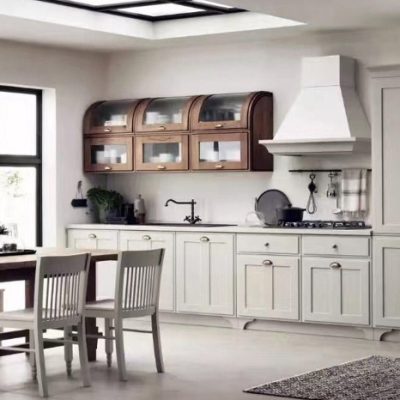
Large kitchen islands require careful consideration of slab dimensions, weight, structural support, sink integrations, and edge details. If you choose natural marble with prominent veining, actual slab selection and cutting layouts are paramount to ensure continuous visual flow across waterfall edges. For sintered stone, confirm fabricator capabilities regarding mitered edges and specialized cut-outs.
Bathroom Vanity Tops and Walls
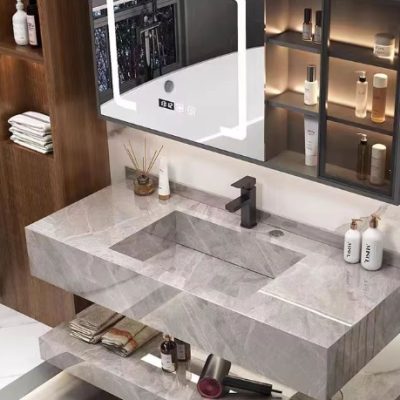
Bathroom surfaces involve exposure to moisture, cosmetics, and cleaning products. Coordination between the stone surface, undermount basins, tap holes, and surrounding tile or wall finishes must be established before production begins.
Flooring and Stairs
Flooring and staircases demand careful attention to piece dimensions, surface finishes (such as honed vs. polished for slip resistance), wear expectations, and edge nosing details. Consistency across large quantities is vital for flooring, whereas stairs often require custom cutting and matching tread lengths.
Feature Walls
Feature walls rely heavily on visual impact. Natural marble bookmatching creates mirror-image patterns across adjoining slabs, requiring meticulous planning. For sintered stone feature walls, panel dimensions, joint lines, and structural sub-framing must be coordinated with the interior designer.
What Information Do You Need Before Requesting Quotations?
While Chinese suppliers can initiate preliminary discussions with rough estimates, quotation accuracy depends directly on the clarity of the information provided. Before requesting prices, gather as much of the following project data as possible:
- Project Information: Location, project scope (new build or renovation), approximate villa size, and expected timeline.
- Design Information: Architectural drawings, interior elevations, 3D renders or reference photographs, material schedules, and preferred color directions.
- Quantity Information: A bill of quantities (BOQ) if available, approximate square metres, or estimated slab/piece counts with dimensions.
- Product Information: Specific marble varieties or sintered stone product lines, required thicknesses, surface finishes (e.g., polished, leathered, honed), edge requirements, and any special fabrication details.
Having these details ready separates a vague budget estimate from a reliable, comparable quotation.
How to Compare Marble and Sintered Stone Suppliers in China
Two quotations for stone can look drastically different on paper even when they reference a similar material. To compare proposals effectively, check the following details:
- Exact Material Specification: Is it a specific natural marble variety (with quarry reference) or an exact sintered stone manufacturer model?
- Actual Availability: Are the materials in stock, or must they be quarried/manufactured to order?
- Dimensions and Thickness: Verify exact slab sizes and thicknesses (e.g., 18mm vs. 20mm for marble; 6mm, 12mm, or 20mm for sintered stone).
- Surface Finish and Grade: What grade of selection is quoted, and what finish is applied?
- Scope of Supply: Does the quote cover raw slabs, cut-to-size material, or fully fabricated pieces with finished edges and cut-outs?
- Fabrication and Layout Services: Are bookmatching, dry-lay assembly photos, or edge profiling included?
- Packaging and Logistics: Are sturdy wooden crates included, and what are the delivery terms?
- Exclusions, Lead Times, and Payment Terms: Understand local port fees, production timelines, and deposit requirements.
Comparing quotes item-by-item ensures you evaluate true equivalents rather than selecting an artificially low price that excludes essential fabrication steps.
Why Samples, Photos and Actual Slabs Matter
Evidence plays different roles during remote procurement, and understanding their limits prevents misunderstandings:
- Catalogue Images: Useful for identifying general color directions, but they rarely reflect current quarry batches or exact production runs.
- Supplier Photographs: Helpful for initial screening. Always confirm whether photographs show current stock or general reference images.
- Samples: Essential for checking color tone, texture, finish, and coordination with cabinetry or flooring samples. However, a small tile sample cannot display the full veining pattern of a large marble slab.
- Actual Slabs: Crucial when selecting prominent natural stone surfaces or bookmatched walls. When physical inspection in Foshan is not practical, request full-slab photographs, close-up details, and precise dimensions. For sintered stone, review larger sample formats when overall pattern continuity matters.
What Should Be Confirmed Before Cutting and Fabrication?
Approving a material does not mean finished pieces are ready for the factory floor. Before manufacturing begins, confirm:
- Final site-verified dimensions
- Cutting layouts and nesting diagrams
- Selected slab identification numbers
- Vein direction and bookmatching arrangements
- Thickness and exact edge profiles
- Sink, basin, and cooktop opening specifications
- Joint positions and seam locations
- Tolerances and quality acceptance criteria
- Crating and packing specifications
For natural marble, the relationship between the selected slab and the cutting layout dictates the final aesthetic. For sintered stone, fabricators must adhere strictly to manufacturer guidelines regarding handling, cutting bridges, and support backing. Final dimensions should always be verified on-site by your local project team or installer before production commences.
What Should Be Checked Before the Stone Is Shipped?
A professional pre-shipment inspection protects your investment by verifying goods before they leave the supplier. Depending on your agreed scope, inspections typically cover:
- Material and product identification against approved specifications
- Verification of total quantities and piece counts
- Dimensional accuracy and thickness checks
- Surface finish consistency and gloss levels
- Examination for visible cracks, fissures, or unapproved surface repairs
- Color and pattern consistency against approved sample criteria
- Edge quality, profile accuracy, and cut-out precision
- Labeling of individual pieces for straightforward site sorting
- Crating condition, fumigation markings (where applicable), and internal protective padding
Inspecting raw slabs differs fundamentally from inspecting fabricated countertops; a slab check cannot preview every detail of a finished edge profile. Furthermore, pre-shipment checks verify condition at the factory gate and cannot eliminate risks associated with ocean transit or rough handling during final installation.
Can Stone Be Consolidated With Other Villa Materials From China?
Many villa owners source stone alongside other interior and structural building products, such as custom kitchen cabinets, wardrobes, architectural doors, windows, tiles, sanitary ware, and freestanding furniture.
Consolidating multiple categories through a Foshan-based procurement partner can streamline logistics, but it requires careful scheduling. Natural stone fabrication timelines differ from custom cabinetry production schedules. Proper consolidation involves synchronizing manufacturing completion dates, organizing secure multi-category warehouse storage, and utilizing specialized crating to prevent heavy stone items from damaging delicate finishes like glass or lacquered woodwork.
When Does It Make Sense to Use a China Sourcing Partner?
Navigating international stone procurement remotely can introduce uncertainties regarding quality consistency, communication barriers, and logistics coordination. A specialized China sourcing and procurement partner helps bridge the gap between private villa owners and Chinese manufacturers.
Partnering with an on-the-ground team in Foshan assists with:
- Clarifying technical specifications and reviewing supplier quotations
- Coordinating communication between your design team and local manufacturers
- Requesting full-slab photographs, sample deliveries, and production updates
- Arranging independent pre-shipment quality inspections
- Managing warehouse reception, material consolidation, and export crating
A sourcing partner provides structural oversight, helping ensure that what gets ordered matches what arrives at your villa site.
Frequently Asked Questions
Can I source both marble and sintered stone from China for one villa? Yes. Many villa projects combine natural marble for feature areas or living room floors with sintered stone for heavy-use kitchen countertops and bathroom vanities, provided each material is sourced from specialized suppliers.
What is the difference between buying marble slabs and buying fabricated marble pieces? Buying raw slabs means purchasing large, un-cut stone blocks for local cutting, whereas buying fabricated pieces means the Foshan supplier cuts, edges, polishes, and pre-assembles the stone to your exact project dimensions prior to shipping.
What information should I send a Chinese stone supplier for a quotation? Provide architectural drawings, interior elevations, a material schedule or BOQ, desired stone varieties, estimated quantities, thicknesses, and required edge finishes to receive an accurate quote.
Should I inspect the actual marble slabs before purchasing? Yes, especially for large, prominent surfaces like bookmatched feature walls or open-plan living areas. If traveling to Foshan is impractical, request high-resolution full-slab photographs and reference numbers from the supplier.
Can I source marble and sintered stone before my villa interior design is complete? Preliminary budgeting is possible, but final orders and cutting should only occur after interior layouts, cabinet dimensions, and MEP (mechanical, electrical, plumbing) positions are fully finalized.
Can stone be shipped together with kitchen cabinets and other villa materials? Yes, stone can be consolidated with other villa materials, provided the warehouse utilizes specialized heavy-duty crating and synchronizes production schedules so all items arrive safely together.
What should I check before approving a stone order from China? Verify the exact material name, slab dimensions, thickness, finish, fabrication details, cutting layouts, packaging standards, and inclusion/exclusion terms in the final supplier contract.
Practical Takeaway
Sourcing luxury marble and sintered stone for a villa from China is a rewarding process that unlocks exceptional craftsmanship and material variety. Success depends on treating procurement as a complete workflow: defining precise applications, comparing detailed quotations, confirming actual material availability, verifying shop drawings, arranging inspections, and coordinating safe international transport. With clear preparation and structured oversight, your villa stone project will align seamlessly with your architectural vision.