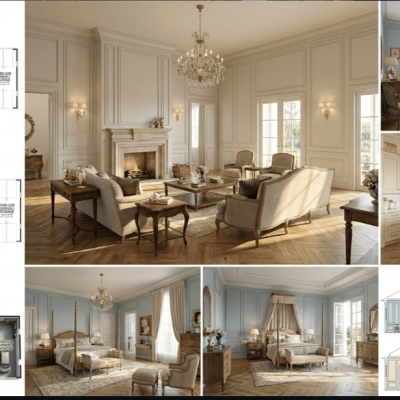


A luxury villa is not a single product purchase. Building or renovating a high-end property involves dozens—sometimes hundreds—of individual procurement decisions. From custom architectural millwork and structural windows to stone slabs, sanitary ware, lighting, and loose furniture, every category carries its own logistics, customization requirements, and financial logic.
Because of this complexity, the question “Is China cheaper?” is rarely useful. A Chinese factory quotation for a custom kitchen island or a batch of solid wood doors almost always looks dramatically lower than a local showroom estimate. However, headline manufacturing prices do not reflect the reality of international construction procurement.
Sourcing a luxury villa from China makes financial sense when the potential procurement advantage is large enough to offset the additional complexity, risk, and coordination overhead of international purchasing. For some projects, that threshold is easily met. For others, buying locally remains the more sensible financial decision.
The Wrong Way to Calculate the Savings
Comparing a Chinese supplier’s quotation directly with a local retail quotation often produces a misleading result because the two figures rarely measure the same scope.
A common pitfall is comparing products that differ in:
- Material specifications and core substrates: For example, marine-grade plywood versus standard particle board in cabinetry.
- Hardware and accessories: Blum, Grass, or Hafele hinges versus unbranded alternatives.
- Finishes and coatings: Multi-layer polyurethane automotive paint versus standard melamine laminates.
- Dimensions and tolerances: True custom sizing built to exact site architectural drawings versus modular standard sizing.
- Packaging and crating: Heavy-duty export-grade plywood crates versus light domestic wrapping.
- Delivery terms and responsibilities: Ex-Works (EXW) or Free on Board (FOB) versus Delivered Duty Paid (DDP) or local site offloading.
- Warranty scope and installation responsibility: Factory warranty versus local contractor-backed installation and service.
A Chinese supplier may quote a custom kitchen at a fraction of a local price, but that difference does not automatically represent pure savings. A valid financial comparison must evaluate equivalent material specifications, hardware grades, and final project delivery costs.
Calculate the Landed Cost, Not Just the Factory Price
To determine whether international procurement is viable, homeowners and project managers must evaluate the real landed project cost. The financial equation extends far beyond the supplier’s invoice.
While exact percentages vary widely depending on the destination country, container configurations, product classifications, and applicable trade policies, a comprehensive landed cost model typically accounts for:
- Supplier Product Price: The baseline manufacturing cost based on approved shop drawings and specifications.
- Customization and Engineering Fees: Tooling, specialized mold creation, or complex CAD/CAM programming for custom joinery.
- Export Packaging and Crating: Heavy-duty protective packaging required for international maritime transit.
- Inland Transportation in China: Trucking from manufacturing hubs (such as Foshan, Shenzhen, or Zhejiang) to the consolidation warehouse or port.
- International Freight: Ocean or air freight rates, which fluctuate based on container volume (LCL vs. FCL) and global shipping routes.
- Marine Cargo Insurance: Protection against transit damage or loss.
- Import Duties and Tariffs: Country-specific customs tariffs determined by the Harmonized System (HS) code of each product category.
- Taxes, VAT, or GST: Destination-market consumption taxes applicable to imported building materials.
- Customs Clearance and Port Charges: Brokerage fees, terminal handling charges, and port documentation costs.
- Local Delivery and Site Transport: Drayage from the destination port to the villa site or local storage facility.
- Inspection and Quality Control (QC): Independent factory audits, pre-shipment inspections, and sample sign-offs.
- Warehouse and Consolidation Costs: Storage fees for holding multi-category shipments until an entire container is ready for dispatch.
- Procurement Coordination Fees: Professional sourcing, communication, and project management support.
- Replacement and Rectification Reserves: Contingency capital allocated for remanufacturing, air-freighting replacement parts, or local site adjustments if an error occurs.
Tariffs, customs rules, and tax treatments vary significantly by destination country. International trade guidance consistently emphasizes that landed cost encompasses the entire journey from factory floor to final installation site.
Which Villa Products Are More Likely to Make Financial Sense to Source From China?
Suitability for China sourcing varies dramatically by product category.
Custom Kitchen Cabinets and Joinery
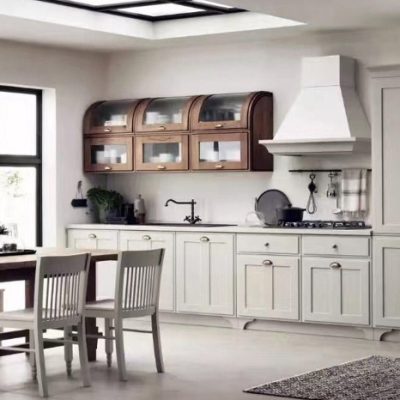
Custom kitchens and architectural wardrobes represent some of the highest-value packages in a luxury villa. Because these items involve extensive custom engineering, repetitive modular sizing, and high-end hardware integration, manufacturing them in specialized production hubs can yield meaningful financial advantages.
- The Opportunity: High overall order value, substantial customization flexibility, and the ability to coordinate cabinetry carcasses, doors, internal accessories, and integrated lighting packages together.
- The Risks: Final site dimensions must be verified with absolute precision. Any discrepancy between architectural drawings and as-built walls can create costly installation delays.
- For more details on navigating custom joinery and cabinetry procurement, explore our Custom Kitchen & Cabinet Sourcing capabilities.
Windows and Doors
Architectural windows and sliding glass doors are critical performance elements of a modern luxury villa, influencing thermal insulation, acoustic rating, and wind-load resistance.
- The Opportunity: Substantial price differentials on high-end aluminum thermal-break systems and architectural glass packages.
- The Risks: Compliance with strict local building codes, energy-efficiency certifications (such as NFRC, CE, or local equivalents), and heavy shipping volumes. Windows and doors are highly site-dependent and require meticulous shop drawing sign-offs before production begins.
- Learn more about system requirements and project coordination on our Villa Windows & Doors Sourcing page.
Loose and Built-In Furniture
Furniture packages—including sofas, dining tables, custom beds, and occasional seating—are among the most straightforward categories to source internationally when ordered in volume.
- The Opportunity: Avoiding steep local retail markups on designer-inspired or fully custom upholstery and case goods.
- The Risks: Fabric durability, foam density standards, and freight volume. Shipping oversized, assembled furniture requires careful volumetric calculation to prevent shipping costs from eroding product savings.
Marble, Stone, and Sintered Surfaces
Natural stone and large-format porcelain slabs set the visual tone for luxury interiors and exterior hardscaping.
- The Opportunity: Access to vast stone processing hubs offering extensive slab selections, custom waterjet cutting, and specialized edge profiling.
- The Risks: Breakage risk during maritime transit, heavy cargo weight (which impacts local trucking and crane costs), and the necessity of managing dry-lay inspections for book-matched marble features prior to crating.
Lighting and Sanitary Ware
Decorative lighting fixtures, bathtubs, vanities, and plumbing rough-ins are frequently evaluated for international projects.
- The Opportunity: Wide stylistic variety and competitive pricing on decorative chandeliers, architectural recessed lighting, and designer sanitary fixtures.
- The Risks: Technical compliance with destination-market electrical standards (e.g., UL, CE, SAA) and plumbing thread compatibility (e.g., NPT vs. BSP standards). Decorative fixtures are generally easier to source than technically regulated electrical components.
When Sourcing the Whole Villa Makes More Sense Than Sourcing One Product
For many property owners, the strongest economic case emerges not from importing a single isolated item, but from consolidating multiple categories into a unified procurement strategy.
Combining categories—such as kitchen cabinets, wardrobes, interior doors, windows, furniture, lighting, and bathroom fixtures—creates distinct operational advantages:
- Optimized Shipping Capacity: Filling a 40-foot high-cube container (40HC) maximizes freight efficiency, lowering the per-unit shipping cost significantly compared to importing small, fragmented LCL (Less than Container Load) shipments.
- Consolidated Supplier Management: Working with a central coordination partner reduces the number of international counterparties the homeowner or architect must communicate with.
- Synchronized Delivery Schedules: Aligning production timelines ensures that finishes, joinery, and loose items arrive in logical sequence rather than trickling onto the job site at random intervals.
However, whole-villa sourcing also increases project complexity. Managing multiple categories simultaneously raises the stakes for accurate scheduling, drawing sign-offs, and pre-shipment inspections.
To explore how multi-category consolidation is managed in practice, view our Whole-Villa Building Materials Sourcing & Consolidation framework.
When China Sourcing May Not Be Worth It
Direct international procurement is not a universal solution. Buying locally is often the more rational financial and operational choice under specific conditions:
- Small Purchase Total: If the total order value is relatively low, fixed costs such as export documentation, international freight, customs clearance, and local drayage can easily consume any potential savings.
- Standard Products Available Locally: If a required material or fixture is readily available locally at competitive market rates, importing it introduces unnecessary risk and logistical friction.
- Urgent Project Timelines: If manufacturing lead times and international shipping windows conflict with an immediate site requirement, local stock is essential.
- Unfinished Architectural Designs: Ordering custom manufactured products while floor plans, ceiling heights, or MEP (Mechanical, Electrical, Plumbing) locations are still subject to change almost always leads to expensive site modifications.
- Complex Local Regulatory Approvals: If a product requires strict local structural engineering certification, union sign-offs, or municipal code approvals that foreign factories cannot easily provide, local sourcing is safer.
- Installation-Sensitive Products: Items that require specialized local craftsmanship for installation or ongoing warranty maintenance can become liabilities if imported without local installer backing.
The Biggest Hidden Cost Is Sometimes Coordination
The most frequently overlooked expense in international procurement is the time and management burden placed on the owner, architect, or designer.
If a homeowner must personally handle factory communication, translate technical joinery drawings, compare mismatched supplier quotations, track production milestones, arrange third-party inspections, resolve damaged cargo claims, and coordinate port logistics, the apparent financial savings come with a severe administrative cost.
Procurement coordination support makes financial sense when the management friction is high enough that delegating supplier oversight to an on-the-ground team protects the project’s schedule and sanity.
This is where a Foshan-based coordination partner like HSY Sourcing fits into the equation. HSY is not a manufacturer; HSY acts as a local procurement coordination and quality control partner on the ground in China. Services typically include:
- Supplier research and background verification.
- Apples-to-apples quotation comparison based on equivalent specifications.
- Technical drawing and specification communication with factories.
- Sample organization and material sign-off coordination.
- Production progress tracking and milestone reporting.
- Independent Quality Control & Factory Inspection.
- Warehouse & Cargo Consolidation prior to container loading.
- Export documentation and shipping coordination.
A sourcing service fee is an additional line item in the budget. The correct financial comparison is not Local Price vs. Chinese Factory Price, nor is it Local Price vs. Chinese Factory Price + Sourcing Fee. The true comparison is Local Total Project Cost versus Landed Project Cost plus Professional Coordination Fees.
A Simple Decision Test for Villa Owners
Before committing to international procurement, evaluate your project against these practical questions:
- Is the potential price difference meaningful after factoring in international freight, insurance, tariffs, taxes, and local delivery?
- Are the products sufficiently customized, high-value, or voluminous to justify managing an overseas supply chain?
- Are the architectural and interior design drawings 100% finalized, with all dimensions and finishes locked in?
- Can the products be manufactured reliably to your required specifications without ongoing ambiguity?
- Are local technical, electrical, and building code requirements fully understood for the destination market?
- Is there sufficient project lead time to allow for manufacturing, quality inspection, ocean transit, and customs clearance?
- Who will manage supplier follow-ups, quality checks, and logistics coordination on both ends?
- What is the contingency plan if an item arrives damaged or incorrectly dimensioned?
A “yes” answer to most of these questions suggests that China sourcing is worth evaluating. Several “no” answers indicate that purchasing locally or waiting until designs are fully mature is the safer financial path.
What Information Should You Prepare Before Comparing China Suppliers?
To secure accurate, comparable quotations from Chinese manufacturers, comprehensive documentation is essential. Vague inquiries produce low-ball estimates that inevitably escalate later. Prepare a structured procurement package including:
- Architectural floor plans and elevations.
- Detailed cabinet and joinery shop drawings.
- Door and window schedules with swing directions and glass specifications.
- A complete Bill of Quantities (BOQ) with itemized models and counts.
- Material specifications, color codes, and finish schedules (e.g., RAL color numbers, veneer types, stone grades).
- Reference images or target brand benchmarks.
- Project location, target delivery port, and required site installation date.
For site-dependent products—particularly windows, doors, and built-in cabinetry—drawings alone are never a substitute for final on-site measurements taken by qualified project professionals prior to production release.
The Bottom Line — China Sourcing Is a Project Decision, Not a Country Discount
Sourcing a luxury villa from China makes financial sense when the expected procurement advantage is large enough to justify the cost, time, and complexity of international purchasing.
For a large, highly customized luxury villa with multiple product categories, structured oversight, and clear lead times, sourcing from China can yield a powerful economic outcome. For small orders, urgent purchases, highly regulated assemblies, or projects with fluid designs, local purchasing remains the more prudent financial decision.
The goal should never be to source every single item from China simply because it is overseas. The objective is to evaluate which parts of the villa project genuinely benefit from international procurement, calculate the true landed project cost, and manage the process with precision from concept to container delivery.