
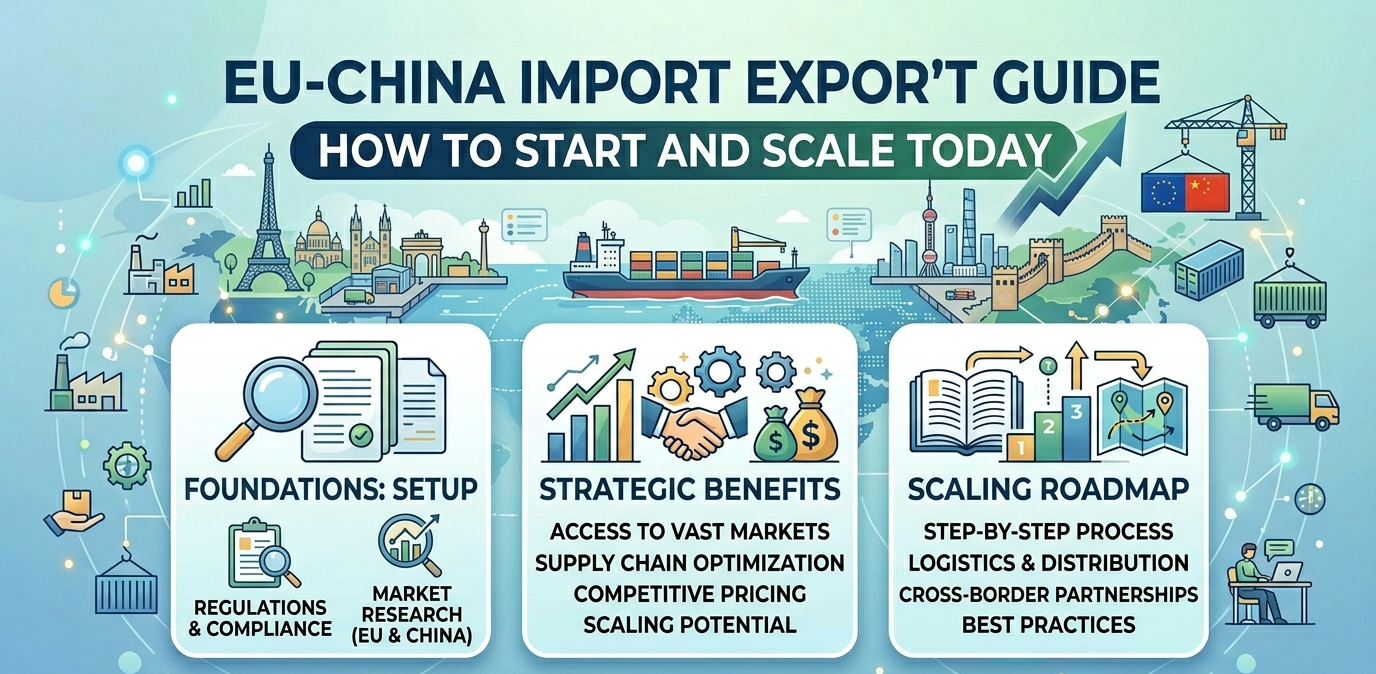
The trade corridor between the European Union and China remains one of the most significant economic engines in the world. However, the days of simply “buying low and selling high” are over. Today’s successful EU-China trade requires a sophisticated understanding of compliance, carbon footprints (CBAM), and supply chain transparency.
Whether you are a developer looking for building materials or a retailer expanding your product line, starting an import-export business in 2026 requires a structured roadmap.
How do I navigate the regulatory landscape for EU-China trade?
The EU is known for its rigorous safety and environmental standards. Before you place an order, you must ensure your products comply with the CE Marking requirements, which indicate that a product meets EU health, safety, and environmental protection standards.
Additionally, the CBAM (Carbon Border Adjustment Mechanism) is becoming a critical factor. If you are importing materials like steel, cement, or aluminum from China, you must report the embedded carbon emissions. Working with a sourcing agent in Foshan who can verify a factory’s environmental certifications is no longer optional—it is a business necessity for legal entry into the European market.
What is the most efficient logistics route from China to Europe?
Efficiency is no longer just about speed; it is about resilience.
- Sea Freight: Still the most cost-effective for large-volume interior projects (furniture, tiles, cabinetry). Shipping from ports like Shenzhen or Guangzhou to Rotterdam or Hamburg remains the industry standard.
- Rail Freight (The New Silk Road): A middle ground between sea and air. It is significantly faster than the ocean but more expensive, ideal for high-value fashion or electronics.
- Air Freight: Reserved for high-margin, time-sensitive goods or urgent replacement parts.
A key strategy is Consolidation. By using a centralized warehouse in a hub like Foshan, you can combine goods from multiple factories into a single container, drastically reducing your per-unit shipping cost and simplifying customs clearance at the EU border.
How can I find and vet reliable Chinese suppliers?
The risk of “Quality Fade” is real. Finding a supplier on a B2B platform is only the first step. To build a sustainable business, you must move toward Direct Sourcing.
This involves:
- Factory Audits: Verifying that the facility actually exists and has the capacity to meet your volume.
- Sample Testing: Sending physical samples to certified labs to ensure they meet EU-specific chemical and structural standards.
- On-the-ground QC: Having a representative inspect the goods before they are loaded. Once a container is on the water, your leverage with the factory disappears.
Key Takeaways
- Compliance is King: Ensure CE, RoHS, and CBAM documentation are ready before the goods leave the factory.
- Geographic Advantage: Leverage hubs like Foshan for interior projects to benefit from industrial density and easier consolidation.
- Logistics Diversity: Have a backup plan (Sea vs. Rail) to mitigate geopolitical or weather-related supply chain disruptions.
- Trust but Verify: Use local sourcing agents to perform in-person inspections and bridge the cultural/language gap.
FAQ: EU-China Trade Basics
Q: Do I need a specific license to import from China to the EU?
A: You need an EORI number (Economic Operators Registration and Identification), which is required for all businesses moving goods into or out of the EU.
Q: How do I handle VAT and Import Duties?
A: Duties depend on the HS Code of your product. VAT is typically paid at the point of entry into the EU, although many countries allow for deferred VAT accounting to improve your cash flow.
Q: Can a sourcing agent help with EU-specific labeling?
A: Yes. Professional agents in Foshan can coordinate with factories to ensure that packaging, labeling, and user manuals are printed in the required European languages and include the necessary compliance symbols.
Bridge the EU-China Gap with HSY Sourcing
Starting an import business from China doesn’t have to be a gamble. At HSY Sourcing, we specialize in helping international buyers navigate the complexities of the Foshan building materials and furniture market.
From technical compliance checks to consolidated shipping to major EU ports, we provide the infrastructure you need to scale your trade business with confidence.