

Sourcing building materials for a private luxury villa project presents a distinctly different technical challenge than procuring for high-density apartments or commercial hotels. While mass developments rely on high-volume, standardized SKUs, luxury residences demand bespoke whole-house joinery, large-format sintered stone slabs, custom architectural glazing, and coordinated interior finishes across dozens of specialized manufacturers.
Foshan, Guangdong is the world’s primary manufacturing hub for high-end architectural finishes, ceramic tiles, custom millwork, and fenestration systems. However, executing a luxury villa procurement plan requires strict technical oversight, shop drawing verification, finish synchronization, and pre-shipment trial assemblies. Without on-the-ground management, minor dimensional variances or finish discrepancies can derail site installation schedules and result in costly field modifications.
This guide outlines the practical steps, technical standards, and quality control protocols required to source luxury villa materials from Foshan efficiently.
What Are the Key Takeaways for Sourcing Luxury Villa Materials from China?
- Customization Over Bulk Volume: Luxury villa sourcing focuses on low-volume, highly complex custom items requiring strict CAD shop drawing verification rather than mass-produced off-the-shelf goods.
- Cross-Supplier Finish Synchronization: Physical master samples (wood veneers, lacquer shades, PVD metallic coatings, and natural stones) must be formally approved and distributed to all participating factories before production begins to prevent mismatched finishes.
- Mandatory Workshop Pre-Assembly: Bespoke cabinetry, walk-in wardrobes, vanity units, and minimalist aluminum door systems must undergo a 100% trial assembly on the factory floor to check hardware alignment, soft-close dampening, and overall tolerances.
- Equilibrium Moisture Content (EMC) Testing: Solid timber, engineered wood, and veneer wall panels destined for dry or tropical international climates must be kiln-dried and verified to an 8% to 12% moisture limit before finishing and packaging.
- Specialized Export Crating: Oversized sintered stone slabs ($1600 \times 3200\text{ mm}$) and architectural glass require custom ISPM 15 compliant, fumigated A-frame steel or heavy plywood crates to withstand ocean transit forces.
Why Is Sourcing for Luxury Villas Different From Standard Commercial Projects?
High-end private residences demand lower production volumes per item, but significantly higher manufacturing precision. In a single residential layout, every finish is closely inspected by the property owner, interior designer, and site builder, leaving zero room for material flaws or alignment errors.
| Project Parameter | Standard Commercial Procurement | Luxury Villa Material Procurement |
| Order Structure | High volume per SKU; standardized repeat units. | Low volume per SKU; highly customized across every room. |
| Dimensional Tolerance | Standard commercial tolerance ($\pm 2\text{ mm}$ to $\pm 3\text{ mm}$). | Strict engineering tolerance ($\le \pm 1\text{ mm}$). |
| Finish Coordination | Suppliers work independently with standard factory colors. | Requires master sample matching across millwork, doors, and metal trims. |
| Inspection Threshold | ISO 2859-1 (AQL 2.5) statistical sampling. | 100% visual, functional, and dimensional inspection for custom items. |
| Packaging Requirements | Standard corrugated export cartons and standard pallets. | Custom ISPM 15 plywood crates, EPE foam padding, and A-frame glass racks. |
What Are the Essential Villa Material Categories Available in Foshan?
Foshan’s industrial power comes from its specialized manufacturing clusters located within short distances of one another.
1. Large-Format Sintered Stone & Porcelain Slabs (Chancheng & Nanzhuang)
Foshan is a leading exporter of continuous-grain sintered stone slabs ($1200 \times 2700\text{ mm}$ and $1600 \times 3200\text{ mm}$). These non-porous panels replace natural marble for kitchen islands, bathroom wall cladding, book-matched feature walls, and exterior facades. Key technical metrics include zero water absorption ($< 0.1\%$) and a Mohs hardness rating above 6.
2. Whole-House Custom Joinery & Millwork (Shunde & Longjiang)
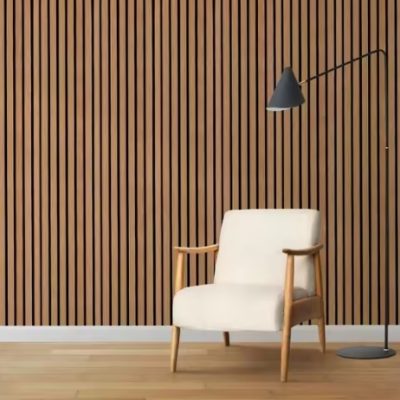
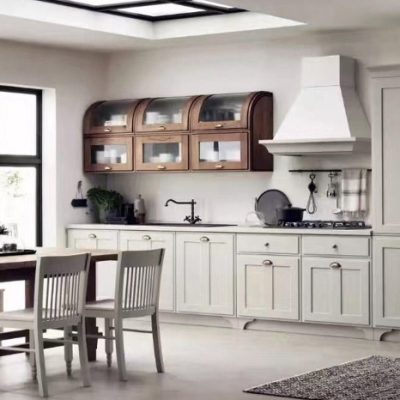
Shunde specializes in bespoke timber joinery, including flush floor-to-ceiling interior doors, concealed pivot doors, lacquered wall panels, and walk-in closet systems. Advanced CNC cutting and PUR hot-melt edge-banding ensure water-resistant, seamless joints on moisture-resistant MDF and multi-layer plywood cores.
3. Minimalist Architectural Glazing & Aluminum Systems (Nanhai)
Nanhai produces ultra-slim frame sliding glass doors (visible sightlines as thin as $16\text{ mm}$ to $20\text{ mm}$), thermal-break casement windows, and glass balustrades. Luxury specifications require double or triple-glazed tempered glass units with Low-E coatings, argon gas filling, and heavy-duty concealed hardware (e.g., German-engineered GU or Siegenia systems).
4. Bespoke Sanitaryware & PVD Hardware (Nanzhuang & Gaoming)
Custom bathroom packages feature solid surface freestanding bathtubs, stone composite basins, concealed thermostatic shower systems, and solid brass faucets. Physical Vapor Deposition (PVD) coating allows custom matching for fixtures in brushed gold, gunmetal grey, rose gold, or matte black.
How Do You Ensure Color, Material, and Hardware Consistency Across Multiple Suppliers?
When sourcing doors from one factory, wardrobes from another, and bathroom vanities from a third, managing visual and physical compatibility requires a structured, step-by-step technical process.
1.1. Architectural Plan & Specification Audit:Step 1: Architectural Review.
Review the project’s Bill of Quantities (BOQ), material schedules, and interior design drawings. Convert client design concepts into detailed CAD shop drawings that clearly define dimensions, core substrates, hardware brand requirements, and surface finish codes.
2.2. Master Sample Approval & Distribution:Step 2: Sample Lock-In.
Produce physical master samples for every custom finish (e.g., lacquered wood panel, anodized aluminum profile, stone slab, and brassware). Split approved samples into identical sets: keep one set with the client team, retain one set with HSY Sourcing, and distribute the remaining sets to the respective factories for color-matching.
3.3. Raw Material & Substrate Verification:Step 3: Pre-Production Check.
Prior to processing, inspect incoming raw materials at each facility. Test solid timber and veneer moisture levels with digital pin meters to ensure wood stays within the required 8%–12% range. Verify aluminum profile wall thicknesses against structural engineering requirements.
4.4. Factory Floor Pre-Assembly & Inspection:Step 4: Trial Assembly.
Require factories to conduct a full trial assembly of cabinetry modules, vanities, and sliding door frames. Check panel squareness, reveal gaps, soft-close hardware operation, integrated LED channel routing, and dimensional accuracy against CAD shop drawings.
5.5. Warehouse Consolidation & Final Audit:Step 5: Warehouse Staging.
Transfer completed goods to HSY Sourcing’s Foshan staging warehouse. Unbox and inspect incoming shipments, verify item tags (e.g., “Villa – Master Bedroom – Wardrobe B”), re-pack into custom export crates, and stage materials for container loading.
How Should Fragile and Oversized Villa Materials Be Packaged and Shipped?
Transit damage is a major risk for international luxury material sourcing. Standard factory packaging is rarely sufficient for multi-leg ocean transit.
┌────────────────────────────────────────────────────────────────────────┐
│                   VILLA MATERIAL PACKAGING & CRATING PROTOCOL           │
├────────────────────────────────────────────────────────────────────────┤
│ 1. Sintered Stone / Glass  ──> Heavy-duty A-frame steel/plywood racks  │
│ 2. Custom Joinery / Doors  ──> EPE foam edge guards + wooden crates    │
│ 3. Sanitaryware / Tubs    ──> Reinforced solid plywood boxes + pallets │
│ 4. Aluminum Window Frames ──> Protective PE film + wrapped bundle crates│
└────────────────────────────────────────────────────────────────────────┘
Essential Packaging Controls:
- A-Frame Crating for Slabs and Glass: Large-format sintered stone and double-glazed window units must be secured on heavy A-frame steel or ISPM 15 compliant fumigated plywood racks. Rubber dampening strips must line all contact points to absorb vibrations.
- Impact Cushioning for Millwork: Cabinetry doors and lacquered wall panels are wrapped in high-density EPE foam corner protectors, vacuum-sealed PE foil (to prevent ambient humidity absorption), and encased in solid plywood boxes.
- Moisture & Rust Prevention: Moisture-absorbing calcium chloride desiccant bags are distributed inside every timber crate and container to prevent mold growth, lacquer bubbling, or metal oxidation during ocean transport.
Why Choose HSY Sourcing as Your Villa Procurement Partner in Foshan?
Managing a complex luxury villa procurement project from overseas requires a dedicated, on-the-ground technical team that acts as your independent quality guardian. HSY Sourcing is headquartered directly in Foshan, giving us immediate, daily access to top-tier custom manufacturers.
What Sets HSY Sourcing Apart:
- In-House Engineering & Shop Drawing Support: We do not simply place purchase orders. Our technical team reviews CAD shop drawings, checks hardware specifications, and confirms architectural details before production begins.
- Cross-Category Finish Synchronization: We manage master sample sign-offs and physically cross-check veneer shades, paint finishes, and hardware coatings across independent factories to ensure visual consistency.
- Dedicated Foshan Staging Warehouse: We receive items from multiple suppliers at our central Foshan facility, where we conduct unboxing inspections, timber moisture checks, 100% trial assemblies, and custom crating.
- Strict Quality Control Standards: Our QC engineers conduct raw material audits, mid-production checks, and pre-shipment inspections to identify and rectify non-conformances locally in China.
- Transparent Logistics Execution: We consolidate your entire villa project into density-stratified full container loads (FCL), manage export declarations, and provide room-coded packing lists for organized job-site unloading.
What Are the Most Common Questions About Sourcing Villa Materials? (FAQ)
Q1: What is the typical lead time for custom luxury villa materials from Foshan?
Production lead time for bespoke villa orders generally ranges from 35 to 50 days, depending on the complexity of the design and materials required. CAD shop drawing reviews and physical sample sign-offs typically take an additional 10 to 15 days prior to mass production. Planning procurement 3 to 4 months ahead of your site installation schedule is recommended.
Q2: How do you guarantee wood veneers and metal finishes match across different factories?
We establish a Master Sample Protocol. Before factory production starts, physical master samples of wood veneer, lacquer paint, metal anodizing, and stone are approved by the client or interior designer. Identical sample chips are distributed to each factory, and our QC team inspects finished products under standardized lighting against these master control samples.
Q3: Can we source small quantities for a single private villa project?
Yes. Unlike standard mass-market trading companies that require large Minimum Order Quantities (MOQs), HSY Sourcing specializes in project-based procurement for private villas, boutique hotels, and luxury residences. We work with flexible custom manufacturers accustomed to low-volume, high-specification production runs.
Q4: What happens if a custom-made item arrives on site with dimensional errors?
By conducting a 100% factory floor trial assembly and staging inspection at our Foshan warehouse prior to container loading, dimensional errors are caught and corrected locally while the factory is easily accessible. If an error occurs, the factory re-manufactures or adjusts the part before the shipment leaves China.
Q5: How are oversized sintered stone slabs and glass panels protected during sea freight?
Oversized sintered stone slabs ($1600 \times 3200\text{ mm}$) and glass panels are packed vertically on custom-built, heavy-duty A-frame steel or ISPM 15 fumigated plywood racks. Rubber edge buffers cushion the stone, and the entire structure is strapped securely to the container floor using high-tensile steel banding and dunnage bags to prevent movement during sea transit.