
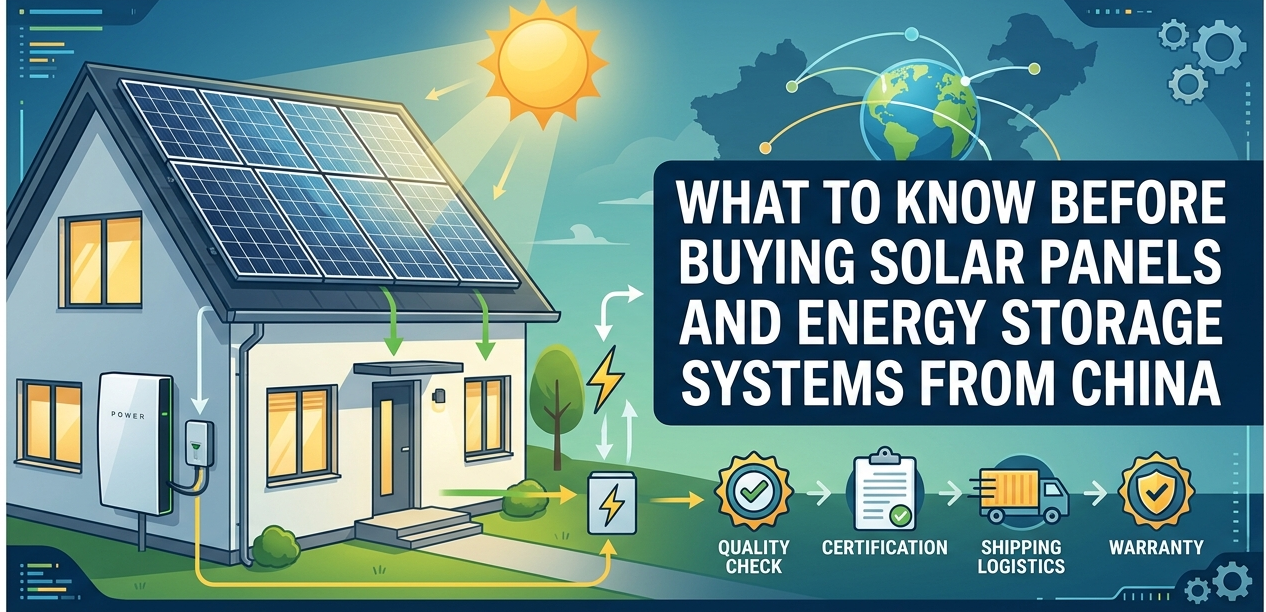
The transition to renewable energy is no longer a luxury—it is a strategic requirement for modern property development and commercial infrastructure. China currently controls over 80% of the global solar supply chain, making it the inevitable destination for sourcing.
However, the “solar gold rush” has its pitfalls. For the uninitiated buyer, the difference between a high-performing 25-year asset and a premature system failure often comes down to the decisions made before the container is even loaded. Here is the technical roadmap for sourcing solar and Energy Storage Systems (ESS) safely.
How do you verify “Tier 1” claims in a crowded market?
In the PV world, “Tier 1” is a term thrown around by almost every salesperson. However, Tier 1 is a ranking of bankability, not necessarily a certificate of a single panel’s quality.
When sourcing from China, you must verify that the manufacturer is vertically integrated. This means they produce their own silicon ingots and wafers, rather than just assembling components from third parties. Before signing a contract, demand the Flash Test Data and EL (Electroluminescence) images for your specific batch. These “X-rays” of the panels reveal micro-cracks that are invisible to the naked eye but can lead to hot spots and significant power degradation over time.
Why is technical compatibility the biggest risk in energy storage?
Buying a solar panel is relatively simple; buying an Energy Storage System (ESS) is an engineering challenge. The most common failure point in Chinese solar imports is the communication “handshake” between the Inverter and the Battery Management System (BMS).
If the inverter’s protocol does not perfectly match the battery’s BMS, the system will fail to charge correctly, or worse, bypass critical safety shut-offs.
Pro Tip: Do not source your inverter from one factory and your lithium batteries from another without a verified Communication Protocol Test Report. For construction projects, it is often safer to source a “Pre-integrated” solution where the hardware has been pre-tested for synchronization.
What are the hidden logistics and compliance hurdles?
Solar panels are fragile and voluminous; lithium batteries are classified as Class 9 Dangerous Goods (DG).
- Logistics: Solar panels must be packed in specialized vertical crates. If they are stacked flat, the bottom panels will develop micro-cracks under the weight of the stack during ocean transit.
- Compliance: You cannot simply ship batteries like standard furniture. You require a UN38.3 test report, a Material Safety Data Sheet (MSDS), and specialized “Dangerous Goods” packaging. Failure to provide this documentation can result in massive fines at the port or, in extreme cases, the shipment being rejected by the shipping line.
How do you manage the 25-year warranty from thousands of miles away?
A warranty is only as good as the company’s ability to honor it. For property developers, the 25-year linear power warranty is a key part of the project’s valuation.
To mitigate the risk of a factory disappearing or ignoring claims, ensure your sourcing agent verifies the Bankability of the supplier. Additionally, check if the manufacturer has “Third-Party Insurance” for their warranties (such as through Ariel or Munich Re). This ensures that even if the factory closes, your project’s energy yield remains insured.
Key Takeaways
- Demand Technical Data: Never accept “Tier 1” as a vague promise; demand Flash Test and EL reports for your specific order.
- Prioritize Integration: Ensure the Inverter and Battery BMS have been pre-tested for protocol compatibility.
- Verify DG Logistics: Confirm your supplier is experienced in Class 9 Dangerous Goods shipping to avoid port delays.
- Check Warranty Insurance: Look for bankable manufacturers with third-party insurance backing their 25-year performance claims.
FAQ: Sourcing Solar & ESS
Q: Is it better to buy N-Type or P-Type solar panels in 2026?
A: N-Type (TOPCon) has become the industry standard due to its higher efficiency and lower degradation rates compared to older P-Type PERC panels. For project ROI, N-Type is almost always the better investment.
Q: Can I consolidate solar panels with other building materials?
A: Yes, but it requires careful planning. Heavy items like tiles should be on the floor, and solar panels must be crated and braced to prevent shifting. Batteries, however, often require their own specialized DG space or a separate container depending on the total capacity ($kWh$).
Q: How do I handle local grid-tie regulations?
A: While the panels are universal, the Inverter must be specifically certified for your country (e.g., UL 1741, AS4777). Always provide your local grid code to your sourcing agent before quoting.
Power Your Project with HSY Sourcing
At HSY Sourcing, we understand that for developers and B2B buyers, solar is not a commodity—it is a critical technical infrastructure.
Managing the complexities of China’s energy supply chain requires a partner who knows the difference between a sales pitch and a technical specification. Based in the heart of China’s manufacturing hubs, we provide:
- On-site EL Testing: We verify the integrity of your panels before they leave the factory.
- BMS-Inverter Validation: We ensure your energy storage system is technically synchronized.
- Dangerous Goods Expertise: We manage the complex paperwork and specialized crating required for lithium battery logistics.
- Complete Project Consolidation: We seamlessly integrate your energy systems with your building materials, windows, and furniture into a single, managed supply chain.