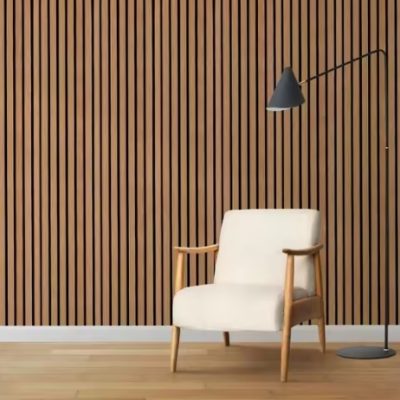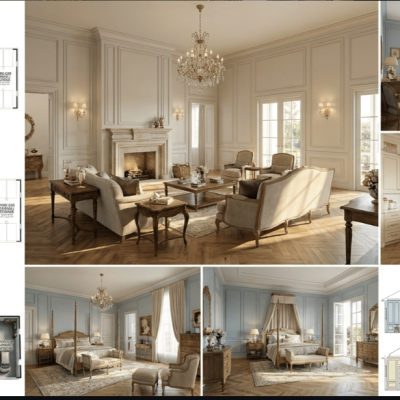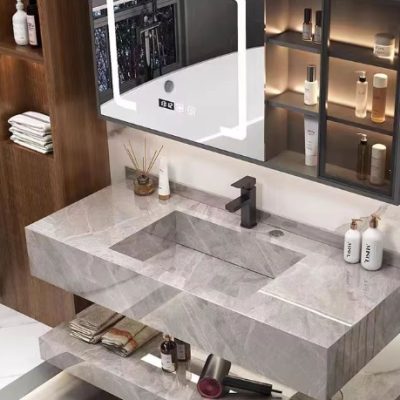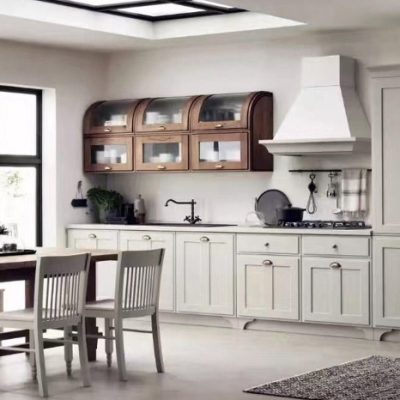

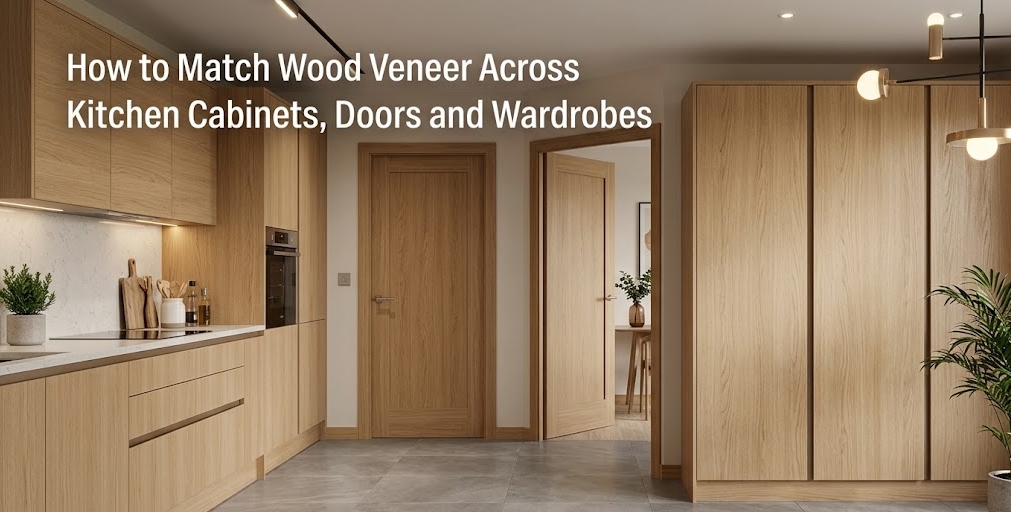
Matching wood veneer across kitchen cabinets, interior doors, and custom wardrobes is rarely as simple as telling three different suppliers to use “natural walnut” or “smoked oak.” Even when multiple products are ordered from the exact same timber species, variations in log batches, veneer cutting methods, grain orientation, surface finishes, and factory staining processes can make the final installed items look noticeably mismatched.
To achieve a visually cohesive interior throughout a luxury villa, “matching” should not be confused with forcing every surface to look identical. Natural wood is defined by its organic character. True visual coordination across different joinery elements comes from managing five core variables: veneer species, cut, grain direction, surface finish, and color undertone.
When specifying custom joinery across multiple rooms, the goal is visual continuity—a deliberate design language where the kitchen island, tall pantry units, bedroom wardrobes, and pass-through doors feel intentionally related rather than randomly combined.
Does Matching Veneer Mean Using Exactly the Same Wood Everywhere?
No. Forcing the exact same veneer pattern and tone onto every cabinet door, wall panel, and passage door across an entire residence can result in a flat, monotonous space that lacks depth.
Designers and homeowners typically choose one of three approaches to coordinate wood joinery across a villa:
┌─────────────────────────────────────────────────────────────┐
│             JOINERY COORDINATION STRATEGIES                 │
└──────────────┬──────────────┬──────────────┬────────────────┘
               │              │              │
               ▼              ▼              ▼
         [ Strategy 1 ] [ Strategy 2 ] [ Strategy 3 ]
         Identical      Hierarchy      Complementary
         Language       Variation      Contrast
- Identical Material Language (Unified Approach): Using the exact same veneer species, cut, and finish for high-visibility joinery within the same open-plan space—such as a kitchen island, adjacent tall pantry cabinets, and an integrated hidden door.
- Hierarchical Variation (Species Continuity with Tonal Shifts): Utilizing the same timber species throughout the villa, but altering panel formats, grain directions, or stain sheens between public living areas and private bedrooms.
- Complementary Contrast (Primary + Accent Species): Specifying a rich, dominant wood (like American Walnut) for primary focal points like kitchen islands and feature doors, paired with a lighter, neutral wood (like Rift-Cut White Oak) or matte lacquer for wardrobe interiors and secondary cabinetry.
Understanding how wood veneer is produced helps clarify why even identical specifications can yield different visual results on site.
Why Can the Same Wood Veneer Look Different Between Suppliers?
It is common for a homeowner to select a walnut sample for their kitchen cabinets from one supplier, order walnut interior doors from a second, and source walnut wardrobes from a third—only to find that the delivered products exhibit entirely different colors, grain figures, and reflectivity.
       [ Raw Timber Log ]
               │
       ┌───────┴───────┐
       ▼               ▼
[ Cut Method ]   [ Log Batch ]
(Plain / Rift)   (Color Shift)
       │               │
       └───────┬───────┘
               ▼
   [ Finishing & Sheen ]
   (Stain, UV, Matte)
               │
               ▼
    [ Final Installed Look ]
Several technical factors cause these discrepancies:
- Log Batch Variations: Wood is a natural product. Two trees of the same species harvested from different regions—or even different sections of the same trunk—display natural variations in sapwood ratio, density, and mineral streaking.
- Substrate & Adhesive Absorption: Veneer is bonded to substrates like MDF, blockboard, or plywood. Differences in core density and adhesive type can alter how topcoats lay across the surface.
- Finishing Chemistry: One factory may use a water-based polyurethane topcoat, while another uses a UV-cured acrylic finish. Even clear topcoats shift color over time and alter the warmth of the wood underneath.
- Surface Sheen: A 5% dead-matte finish scatters light, making the wood look lighter and drier. A 20% satin finish reflects light directly, deepening color saturation and highlighting grain contrast.
How Does Veneer Cut Affect Appearance?
How a log is sliced at the veneer mill fundamentally dictates its visual pattern. Specifying the timber species alone leaves the cutting method open to interpretation by the factory.
| Veneer Cut Method | Slicing Process | Visual Grain Character | Best Application |
| Plain Sliced (Flat Cut) | The log is sliced parallel to the center line, cutting across the annual growth rings. | Features a distinct cathedral pattern with repeating arches and varied flame figures. | Feature wall panels, classic doors, statement kitchen islands. |
| Quarter Sliced | The log is cut into quarters, then sliced perpendicular to the growth rings. | Produces a straight, uniform vertical grain with occasional flake or fleck patterns in oak. | Tall wardrobe runs, modern kitchen cabinets, seamless wall paneling. |
| Rift Cut | Sliced at a slight angle ($15^\circ$) relative to the growth rings to avoid ray fleck. | Yields an extremely linear, tight, pencil-straight grain pattern with minimal figure. | Contemporary minimal joinery, handleless doors, precise architectural paneling. |
| Rotary Cut | The log is spun on a lathe and peeled in a continuous sheet. | Wild, unpredictable, wide grain patterns with broad variance across panels. | Utility cabinetry interiors, commercial substrates (rarely used for high-end residential fronts). |
To maintain a consistent modern aesthetic across wardrobes, doors, and kitchen cabinets, specifying Rift-Cut or Quarter-Cut veneer ensures linear grain alignment across long runs of cabinetry.
Does Grain Direction Matter When Matching Veneer?
Grain orientation establishes horizontal or vertical movement across a room. Running grain horizontally on kitchen base units while applying vertical grain to full-height wardrobe doors can create visual confusion if both are visible from the same vantage point.
┌─────────────────────────────────────────────────────────────┐
│                    GRAIN ORIENTATION                        │
├──────────────────────────────┬──────────────────────────────┤
│    VERTICAL GRAIN            │    HORIZONTAL GRAIN          │
│    • Full-height doors       │    • Wide drawer stacks      │
│    • Tall wardrobe runs      │    • Continuous islands      │
│    • Architectural panels    │    • Low-slung sideboards    │
└──────────────────────────────┴──────────────────────────────┘
- Vertical Grain: Standard for full-height elements ($2.4\text{ m}$ to $3.0\text{ m}$ doors, tall pantry units, and wardrobes). Vertical grain draws the eye upward, reinforcing ceiling height.
- Horizontal Grain: Works well on wide drawer stacks, kitchen islands, or low credenzas. However, running horizontal grain across tall wardrobe doors requires wide veneer flitches and precise matching, increasing material waste and cost.
If a project combines vertical and horizontal grain applications, ensure the species, stain color, and topcoat sheen remain identical to keep the visual language cohesive.
What Are Book Matching, Slip Matching, and Sequence Matching?
When veneer leaves are laid side-by-side on a panel substrate, the arrangement technique dictates the repeating visual layout.
Book Matching
Every second leaf of veneer is turned over like the pages of a book. This creates a symmetrical, mirrored grain pattern along the joint line. Book matching highlights cathedral patterns in plain-sliced wood, making it popular for feature wall cladding, focal kitchen islands, and entry doors.
Slip Matching
Veneer leaves are laid side-by-side without flipping. The same face of each leaf points outward, resulting in a repeating, directional grain pattern. Slip matching avoids the light-reflection variation (zebra effect) that can occur in book-matched wood due to grain angle differences. It is ideal for rift-cut and quarter-cut veneers on wardrobe doors.
Sequence Matching
Veneer leaves are cut sequentially from the same log (flitch) and numbered in order. Panels produced using sequence-matched veneer display continuous, uninterrupted grain movement from one cabinet door to the next across an entire joinery elevation.
Coordinated Application: Kitchens, Wardrobes, and Interior Doors
Each joinery element presents distinct functional and manufacturing requirements:
                  ┌──────────────────────────────┐
                  │   OVERALL VILLA JOINERY      │
                  └──────────────┬───────────────┘
                                 │
     ┌───────────────────────────┼───────────────────────────┐
     ▼                           ▼                           ▼
[ Kitchen Cabinets ]     [ Wardrobes & Storage ]     [ Interior Doors ]
• Moisture resistance    • Large uninterrupted runs  • Heavy physical use
• High-wear topcoats     • Long vertical panels      • Edge-banding wear
• Heat/steam exposure    • Integrated lighting       • Multi-room visibility
Kitchen Cabinets
Kitchen veneers endure exposure to heat, steam, cleaning agents, and direct sunlight. Topcoats must be formulated for high chemical and UV resistance. Because kitchen layouts feature a mix of base drawers, wall units, and tall appliance banks, grain matching requires careful elevation planning to maintain alignment across appliance cutouts and corner junctions.
Wardrobes and Built-in Joinery
Wardrobes present large, flat, continuous vertical surfaces. A $2.7\text{-meter-tall}$ wardrobe door amplifies any slight bow, grain defect, or color variation. Sequence-matched, rift-cut veneer panels are commonly specified here to create clean, vertical lines that remain dimensionally stable.
Interior Doors
Interior doors act as transit boundaries between different zones of the house. A door leaf must look coordinated with the corridor wall paneling on one side and the interior bedroom joinery on the other. Solid wood edge lippings ($5\text{–}10\text{ mm}$) are applied around the perimeter of heavy-use door cores before veneering to protect exposed edges from impact.
Natural Veneer vs. Reconstituted / Engineered Veneer
Choosing between natural timber veneer and engineered (reconstituted) veneer is a foundational specification decision:
┌─────────────────────────────────────────────────────────────┐
│                 VENEER SPECIFICATION CHOICE                 │
└──────────────┬──────────────────────────────┬───────────────┘
               │                              │
               ▼                              ▼
    [ Natural Wood Veneer ]       [ Engineered / Reconstituted ]
               │                              │
               ▼                              ▼
   • Unique organic grain         • Consistent color & grain
   • Authentic character          • Low panel-to-panel variation
   • Natural color shifts         • Ideal for multi-factory projects
- Natural Timber Veneer: Sliced directly from logs. Offers authentic character, depth, and unique grain structures. However, natural variation between logs makes precise matching across multiple manufacturing runs more challenging.
- Reconstituted / Engineered Veneer: Produced by slicing dyed logs, laminating the sheets together into an engineered block, and reslicing that block. This creates highly consistent, repeatable grain patterns and colors with almost no natural defects. Engineered veneer is often chosen when large quantities of joinery are split among different specialized suppliers.
How to Coordinate Veneer Across Multiple Chinese Factories
When sourcing villa joinery from custom manufacturing hubs like Foshan, different joinery elements are frequently produced by specialized facilities: a dedicated cabinet factory for the kitchen, an architectural door plant for passage doors, and a custom joinery factory for wardrobes and wall cladding.
Sending the same text description (e.g., “Natural American Walnut, Matte Finish”) to three different factories will almost certainly result in mismatched joinery on site.
┌─────────────────────────────────────────────────────────────┐
│               MULTI-FACTORY COORDINATION FLOW               │
├─────────────────────────────────────────────────────────────┤
│  1. Establish Master Specification & Physical Control Sample  │
│  2. Distribute Sample Swatches to All Producing Factories   │
│  3. Factories Match Substrate, Stain, & Topcoat Chemistry   │
│  4. Pre-Production Counter-Samples Approved by Client Lead   │
│  5. On-Site Physical QC Inspection Against Master Control   │
└─────────────────────────────────────────────────────────────┘
To achieve visual consistency across multiple factories:
- Establish a Master Control Sample: Select a single physical veneer sample ($300\times 300\text{ mm}$) that represents the target wood species, cut, stain color, and topcoat sheen.
- Distribute Approved Physical Control Swatches: Provide an identical, signed control swatch to every producing factory.
- Require Pre-Production Counter-Samples: Before starting mass production, each factory must produce a counter-sample using their own in-house finishes, submitted for formal sign-off against the master control sample.
- Document the Finish Code & Sheen Percentage: Define the precise stain recipe, topcoat material, and gloss rating (e.g., $5\%\pm 2\%$ matte) in the written contract schedule.
Sample Veneer Specification Schedule
Including a complete specification table in your procurement documentation helps prevent misunderstandings during manufacturing:
| Specification Field | Requirement / Parameter | Project Example |
| Timber Species | Full Botanical / Commercial Name | American Black Walnut (Juglans nigra) |
| Veneer Type | Natural or Reconstituted | Natural Grade-A Crown & Quarter Mix |
| Slicing Cut | Cutting method across log | Quarter Cut / Rift Cut |
| Grain Orientation | Primary directional alignment | Vertical on all door fronts & tall units |
| Matching Technique | Layout method on panels | Slip Matched, Sequence Matched across elevations |
| Substrate Core | Core material & thickness | $18\text{ mm}$ E0-Grade High-Density MDF |
| Stain & Color Code | Custom tinting or natural clear coat | Light smoked tint (Reference Control Sample #VN-04) |
| Topcoat & Sheen | Finish chemistry & reflection level | Polyurethane 2-pack clear coat, 5% Dead-Matte |
| Edge Treatment | Lamination on exposed panel borders | $1.5\text{ mm}$ matching solid wood edge banding |
Why Lighting Changes Veneer Appearance
Wood surfaces reflect light dynamically. A veneer swatch that appears cool and grey under factory fluorescent lighting may shift to a rich, warm brown under $2700\text{K}$ residential architectural lighting.
┌─────────────────────────────────────────────────────────────┐
│                 LIGHTING CONDITION EFFECTS                  │
├──────────────────────────────┬──────────────────────────────┤
│  NATURAL DAYLIGHT (5000K)    │  WARM LED LIGHTING (2700K)   │
│  • Highlights cool tones     • Accentuates red/amber undertones
│  • Exposes open wood pores   • Deepens dark walnut values   │
│  • Accentuates sheen shifts  • Softens grain contrast       │
└──────────────────────────────┴──────────────────────────────┘
Always review physical veneer samples under lighting conditions that match the final residential environment:
- Color Rendering Index (CRI): High-CRI lighting ($\text{CRI} \ge 90$) accurately reveals natural timber undertones. Low-CRI lighting washes out subtle color differences between adjacent panels.
- Grazing LED Strips: Concealed cove lighting installed above wardrobe doors or wall panels grazes down the face of the wood, emphasizing surface sheen variations and minor panel bowing.
- Window Orientation: Direct sunlight accelerates natural UV oxidation in wood. Uncoated or lightly stained walnut lightens over time when exposed to UV light, while teak or oak can darken.
Quality Control and Pre-Shipment Inspection
Once joinery production is underway, verifying veneer alignment prior to container packing and shipment is critical. Pre-shipment quality control (QC) at the factory should focus on:
┌─────────────────────────────────────────────────────────────┐
│                 FACTORY QC CHECKLIST FOR VENEER             │
├─────────────────────────────────────────────────────────────┤
│  [ ] Color & Sheen Match against Master Control Sample      │
│  [ ] Sequence Continuity across adjacent cabinet fronts     │
│  [ ] Grain Orientation verified against approved elevation  │
│  [ ] Edge Banding Integrity (no glue lines, chips, lifting) │
│  [ ] Surface Smoothness (free of press marks or dust inclusions)│
└─────────────────────────────────────────────────────────────┘
Quality control checks cannot change the natural cell structure of timber, but they do prevent damaged panels, incorrect stain formulations, or mismatched grain orientations from being loaded for transport.
Sourcing Villa Joinery with HSY Sourcing
Coordinating custom building materials across multiple suppliers requires clear specifications, systematic sample approvals, and local oversight.
Operating from Foshan, China, HSY Sourcing provides procurement management services for private villa owners sourcing custom residential interiors from Chinese manufacturers. Rather than functioning as a vendor or factory distributor, HSY acts as an independent procurement partner coordinating project requirements across distinct suppliers.
┌─────────────────────────────────────────────────────────────┐
│                  HSY PROCUREMENT SERVICES                   │
├─────────────────────────────────────────────────────────────┤
│  • Supplier Research & Capability Screening                 │
│  • Specification & Drawing Reconciliation                   │
│  • Master Control Sample Distribution & Pre-Production Review│
│  • Factory Production Monitoring & In-Process Checks        │
│  • Pre-Shipment Quality Inspection & Dimensional Checks     │
│  • Multi-Supplier Warehouse Receiving & Container Loading   │
└─────────────────────────────────────────────────────────────┘
For villa projects where kitchens, wardrobes, doors, wall paneling, sanitary ware, and loose furniture are produced by different specialized factories, HSY coordinates material standards, tracks production timelines, and conducts pre-shipment inspections to ensure delivered goods conform to approved control samples.
Real-World Villa Joinery Scenarios
Scenario A: Sourcing All Joinery from One Integrated Factory
A villa owner contracts a single high-end custom joinery manufacturer in Foshan to produce the kitchen cabinets, bedroom wardrobes, wall panels, and interior doors.
- Outcome: The factory utilizes logs from the same veneer batch, applies a uniform polyurethane topcoat across all production lines, and handles sequence matching internally.
- Result: High material consistency across all joinery categories with a single point of quality control.
Scenario B: Split Sourcing Across Specialized Suppliers
To optimize budget and product-specific features, the owner sources kitchen cabinets from a specialized kitchen brand, interior doors from a dedicated door manufacturer, and bedroom wardrobes from a custom joinery shop.
- Outcome: Each factory receives a master physical control sample (
#VN-04, $5\%$ matte walnut). Each supplier submits a counter-sample for sign-off prior to production. - Result: Despite different production lines, the finished joinery maintains consistent color, grain structure, and sheen across all rooms.
Frequently Asked Questions
Can two different factories achieve an exact match on walnut veneer?
While two factories can achieve very close visual coordination, an absolute 100% match is rare due to differences in substrate absorption, finishing chemistry, and log batches. Using physical master control samples, identical veneer cut specifications, and verified topcoat sheens minimizes visible differences to an acceptable level.
Should kitchen cabinets and interior doors use the same wood veneer?
Not necessarily. While open-plan areas benefit from matching or closely related veneers on integrated kitchen doors and adjacent wall panels, interior doors leading to private bedrooms can transition to a complementary wood species or painted finish that suits the adjacent spaces.
Is book-matched veneer suitable for wardrobe doors?
Book matching creates strong, mirrored grain figures that work well on focal feature walls or double entrance doors. For large, multi-door wardrobe runs, slip-matched rift or quarter-cut veneer is generally preferred because it provides a cleaner, more continuous vertical line without optical light-reflection shifts.
How big should a veneer sample be before approving mass production?
Small $50\times 50\text{ mm}$ swatches are insufficient for evaluating wood grain structure. Pre-production veneer approval samples should be at least $300\times 300\text{ mm}$—and ideally a full-size cabinet door prototype for major feature elements like kitchen islands or entrance doors.
What is the difference between natural veneer and engineered veneer?
Natural veneer is sliced directly from natural timber logs, offering unique grain patterns and character, but with natural variations from panel to panel. Engineered (reconstituted) veneer is made from dyed, re-laminated wood blocks that are resliced, producing predictable, uniform color and grain across unlimited panel runs.
Key Takeaways
- Matching is not uniformity: Effective veneer matching across a villa creates visual continuity without forcing every room to look identical.
- Specify cut, grain, and sheen: Simply naming a wood species leaves critical visual decisions unguided. Always define the veneer cut (plain, quarter, rift), grain direction (vertical, horizontal), layout method (book, slip), and surface sheen ($5\%$ matte, satin).
- Control finishes across suppliers: When splitting production among multiple factories, distribute an approved physical master control sample and require pre-production counter-samples from each facility.
- Account for environmental lighting: Review physical wood swatches under light temperatures ($2700\text{K}\text{–}3000\text{K}$) and CRI levels that match the final residential interior design.
- Plan ahead of production: Finalize veneer specifications, shop elevation drawings, and sample approvals before releasing orders to the factory floor.
Contact HSY Sourcing
If you are planning a luxury villa build or major renovation and intend to source custom kitchens, wardrobes, doors, wall panels, or furniture from Chinese suppliers, contact the HSY team to discuss your project requirements.
Sharing your project documents—such as architectural floor plans, interior elevations, joinery shop drawings, or material schedules—allows us to review your joinery specifications and evaluate coordination requirements across custom manufacturers.
- Website: www.hsysourcing.com
- Services: Villa Building Material Sourcing, Custom Joinery Coordination, Quality Control & Inspection, Multi-Supplier Freight Consolidation.