
Key Takeaways:
- Profile Thickness Verification: Always measure the actual wall thickness of aluminum profiles using digital calipers; do not rely solely on the factory’s data sheet.
- Thermal Break Continuity: Inspect the PA66 nylon thermal break strips to ensure they are mechanically crimped correctly and show no signs of cracking.
- Glass Seal Integrity: Verify the dual-seal system on insulated glass units (IGUs) to prevent argon gas leakage and future internal condensation.
- On-Site Water Testing: Mandate a physical water-tightness test on a mock-up sample at the factory floor before bulk loading.
Sourcing customized aluminum windows and doors from the Foshan manufacturing cluster offers exceptional structural value for commercial developments. However, structural glazing is a highly engineered product category with zero tolerance for error. If a batch of windows arrives at a hotel or apartment site with structural defects, incorrect glass coatings, or failing seals, the financial loss and construction delays can be catastrophic.
For B2B project buyers, a disciplined, multi-stage Quality Control (QC) protocol on the factory floor is the only reliable way to safeguard your investment.
Why Should You Verify Aluminum Profile Thickness and Alloy Grade First?
In commercial construction, wind load resistance is determined by the structural integrity of the aluminum frame. Foshan factories primarily utilize 6063-T5 aluminum alloy, but variations in extrusion quality can occur if a factory mixes in recycled scrap metal to lower their raw material costs.
During a professional raw material inspection, you must check:
- Wall Thickness: Commercial-grade windows typically require a minimum profile thickness of 1.4mm for sliding systems and 2.0mm for heavy-duty casement or bifold systems.
- Hardness Testing: Use a Webster hardness tester directly on the extruded profiles to confirm that the tempering process matches the T5 technical specification. If the metal is too soft, the frames will deform under the weight of heavy double or triple glazing over time.
How Do You Audit the Thermal Break and Gasket Integration?
For projects aiming to meet modern energy efficiency standards (such as U-value and SHGC ratings), the thermal break is a critical component. The thermal break physically separates the exterior and interior aluminum profiles to prevent thermal bridging.
A thorough QC check requires examining the PA66 nylon fiberglass-reinforced strips. You must verify that the extrusion machine has crimped the nylon strip tightly into the aluminum channels. If the crimping is loose, the window sash will lose its structural rigidity. Furthermore, inspect the weather-stripping gaskets. Demand EPDM (Ethylene Propylene Diene Monomer) gaskets rather than cheap PVC alternatives. EPDM retains its elasticity under extreme heat and UV exposure, preventing air infiltration over a 20-year lifecycle.
What Common Defects Should You Look for in Insulated Glass Units (IGUs)?
The glass assembly accounts for the largest surface area of your order. A common factory error is poor execution of the secondary seal on double or triple-glazed units.
Our on-site QC inspectors use specialized tools to check for three critical factors:
- The Dual-Seal System: The primary seal must be butyl rubber, followed by a robust secondary structural silicone seal. Any gaps in these layers will allow moisture to enter the cavity, causing permanent internal fogging.
- Low-E Coating Orientation: If your specification calls for Low-E (Low-Emissivity) glass, the coating must be positioned on the correct surface cavity (typically surface #2 or #3 depending on your climate zone). We use a digital Low-E detector to verify this before assembly.
- Desiccant Verification: Ensure the hollow spacer bars are completely packed with molecular sieve desiccant to absorb any residual internal moisture.
+-------------------------------------------------------+
|  [Glass Pane 1]  <- Cavity (Argon Gas) ->  [Glass Pane 2] |
|                                                       |
|  [Primary Seal: Butyl]                                |
|  [Spacer Bar with Desiccant]                          |
|  [Secondary Seal: Structural Silicone]               |
+-------------------------------------------------------+
Why is Functional Hardware Testing Mandatory Before Bulk Packaging?
A window can have a perfect frame and flawless glass, but if the hinges, friction stays, or multi-point locks fail, the unit is non-functional. High-rise apartment and hotel projects require heavy-duty commercial hardware to handle frequent usage and structural wind loads.
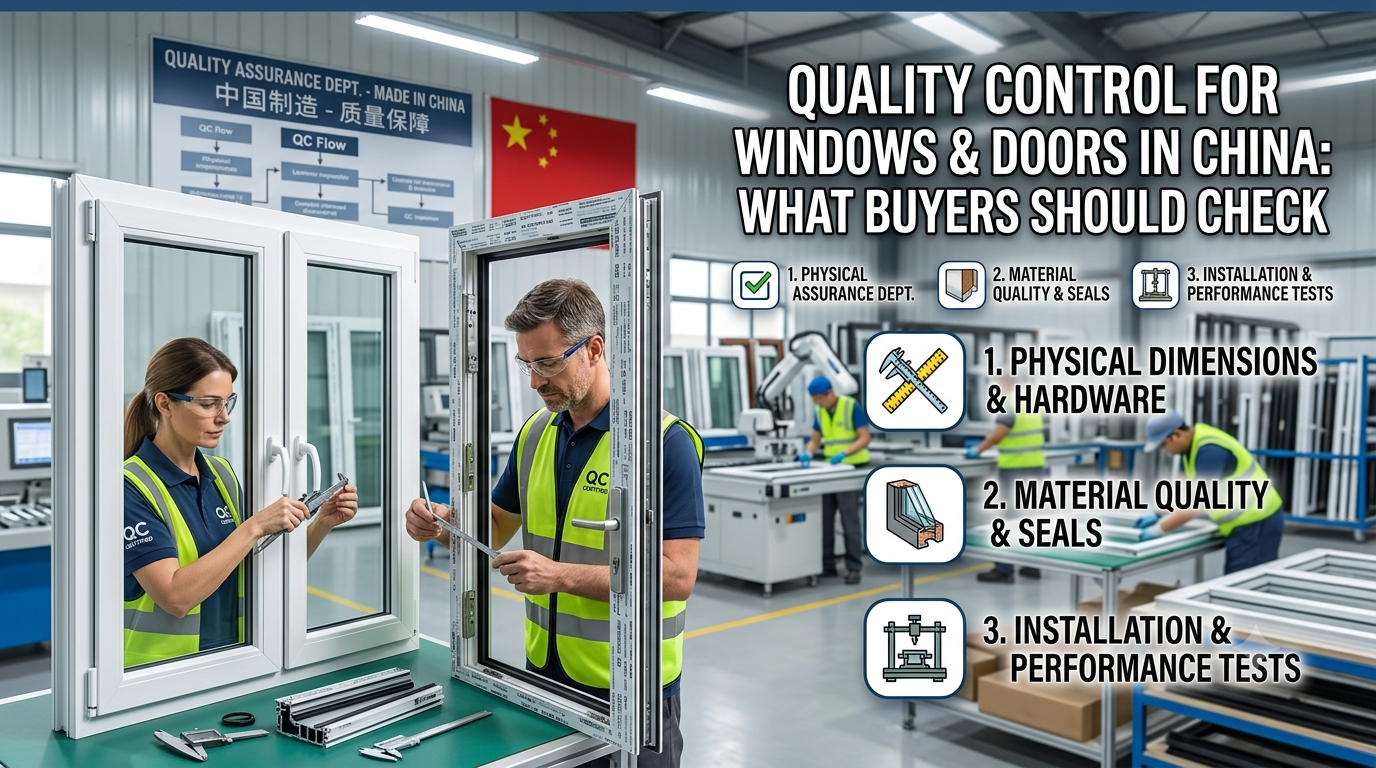
Never allow a factory to pack windows without a 100% operational cycle check on the assembled sashes. The QC team must physically open and close each unit, checking that the locking pins engage smoothly into the frame keeps. For heavy triple-glazed sashes, verify that the friction stays are rated for the actual weight of the glass to prevent the window from dropping or sagging over time.
Why Choose HSY Sourcing for Your Window Quality Control in Foshan?
At HSY Sourcing, we operate directly within the Foshan architectural glazing hub. We do not act as remote commission agents; we are your hands-on technical inspectors on the factory floor.
- Geographical Proximity: Our location allows us to perform unannounced inspections during critical phases of production—from initial aluminum extrusion to final glass glazing.
- Technical Instrumentation: Our inspectors do not rely on visual estimates. We carry digital calipers, Webster hardness testers, coating thickness gauges, and glass layer detectors to compile data-backed inspection reports.
- Water-Tightness Verification: We oversee localized spray-bar pressure testing at the factory to simulate driving rain, ensuring your window frames will not leak after installation.
- Transparent Reporting: We provide comprehensive Pre-Shipment Inspection (PSI) reports with high-resolution photography and video. If a batch fails the agreed AQL (Acceptable Quality Limit) standards, we halt the process until the factory completes the necessary re-work.
Visit www.hsysourcing.com to submit your window schedule and connect with a procurement team that understands engineering realities.
Frequently Asked Questions (FAQ)
Q: Can we perform glass testing on-site after the windows arrive at our construction site?
A: It is highly discouraged. Once the windows are loaded into a container and shipped internationally, your leverage with the factory drops to zero. All structural, thermal, and mechanical inspections must be finalized in Foshan prior to paying the financial balance.
Q: How do you verify that the argon gas is actually inside the double glazing?
A: We audit the factory’s production line to ensure they use automated gas-filling presses rather than manual plugs. For high-spec commercial contracts, we utilize non-invasive spark-emission gas analyzers to verify the exact argon concentration levels before the units leave the assembly line.
Q: What happens if a window frame gets scratched during factory assembly?
A: Minor surface blemishes in the powder coating or PVDF finish must be repaired using matching factory touch-up compounds. If a scratch penetrates down to the raw aluminum base on a structural component, our QC protocol rejects the profile entirely to prevent future oxidation and coating peel.