
Key Takeaways:
- Unit Price is Deceptive: Always calculate the “Landed Cost,” including duties, consolidation fees, and potential breakage.
- Technical Compliance is Non-Negotiable: Ensure materials meet your local building codes (fire ratings, STC ratings, and structural load).
- Shop Drawings are Vital: Never start production on custom items (windows, cabinetry) without signed-off technical drawings.
- Consolidation Saves Projects: Managing 10 vendors as 10 separate shipments is a logistical failure; centralized warehousing is essential.
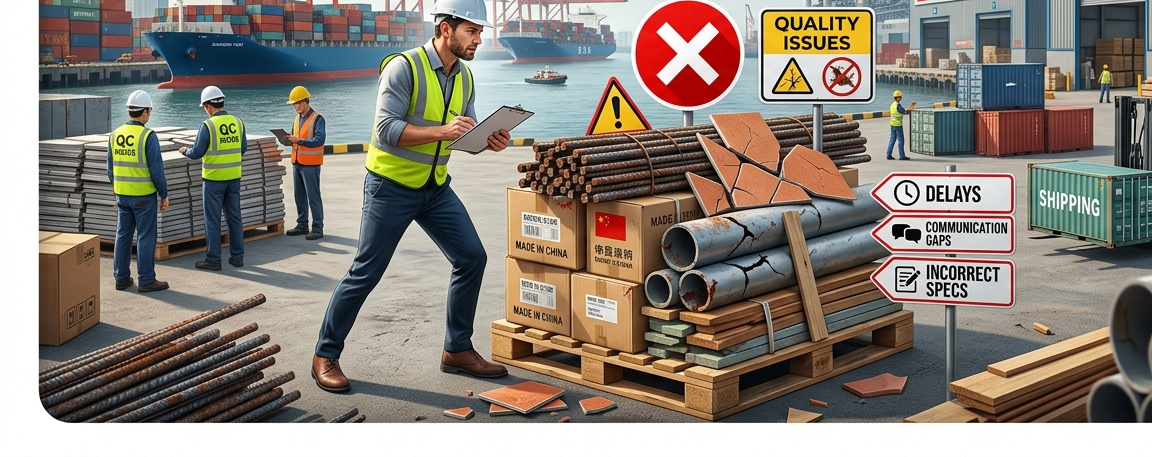
Sourcing from Foshan offers undeniable cost advantages for large-scale developments, but the process is fraught with risks that can easily wipe out your savings. For a hotel or apartment project, a mistake in the procurement phase doesn’t just cost money—it causes a domino effect of delays on the construction site.
Based on our years of managing procurement on the ground in Guangdong, here are the most common pitfalls to avoid.
Why is Focusing Solely on the Lowest Quote a Risk?
In the Foshan market, there is always a factory that can “do it cheaper.” However, in building materials, a lower price usually indicates a compromise in the raw materials that you cannot see from a photo.
For example, a cheaper aluminum window might use a thinner wall profile or a lower-grade thermal break. A cheaper porcelain tile may have higher water absorption or inconsistent sizing (rectification issues). When these materials arrive at your site, the cost of the “cheap” product doubles because of installation difficulties or premature failure. Logical procurement requires evaluating the Technical Data Sheet alongside the price.
How Do Technical Specification Gaps Cause Project Delays?
A frequent mistake is assuming that “Standard” in China means “Standard” in your country. Construction materials must comply with specific local regulations—such as AS2047 for Australian windows or specific fire-rated certifications for hotel doors.
If you do not explicitly state the required standards in the purchase contract, the factory will produce according to Chinese domestic standards. If the building inspector rejects the materials upon arrival, the financial loss is total. A professional procurement process involves verifying test reports and certifications before the deposit is paid.
Why is Skipping the Shop Drawing Stage a Fatal Error?
For custom items like kitchen cabinetry, wardrobes, or windows, a “Sample” is not enough. The most common cause of installation failure is a lack of Shop Drawings.
Factories often interpret measurements differently. A professional agent ensures a “Technical Loop” where the factory’s engineers create detailed drawings based on your architectural plans. These drawings must be reviewed and signed off by your project architect. Production should never begin until every millimeter is cross-verified. This prevents the “it doesn’t fit” scenario that plagues many direct-import projects.
What Are the Dangers of Fragmented Logistics?
A typical hotel project might involve 15 different suppliers for tiles, lighting, bathroom fixtures, and furniture. If you treat these as 15 separate shipments, your logistics costs and headaches will skyrocket.
The mistake is failing to use a Consolidation Model. Without a central warehouse in Foshan to collect, inspect, and load these goods into unified containers (FCL), you will pay multiple sets of export documents, LCL (Less than Container Load) fees, and higher insurance premiums. Furthermore, fragmented shipping makes it impossible to coordinate the arrival of materials with the construction phases on-site.
Why Choose HSY Sourcing for Your Next Project?
At HSY Sourcing, we act as your localized project office in Foshan. We specialize in the high-stakes procurement required for hotels, apartments, and real estate developments.
- Foshan-Based Oversight: We are located in the heart of the world’s building materials hub. We don’t just “email” factories; we visit the production lines to ensure your materials are being built to spec.
- Technical Expertise: Our team understands the complexities of BOQs (Bill of Quantities) and architectural drawings. We bridge the gap between your design intent and the factory’s manufacturing capability.
- Rigorous Quality Control: We perform inspections at three stages: Raw Material, Mid-Production, and Pre-Shipment. We provide transparent, data-backed reports so you are never surprised when you open a container.
- Strategic Consolidation: We manage our own warehouse operations in Foshan, allowing us to consolidate dozens of vendors into a single, phased shipping plan that matches your construction timeline.
Visit www.hsysourcing.com to secure your supply chain and optimize your project’s procurement budget.
Frequently Asked Questions (FAQ)
Q: How do you verify if a factory is legitimate or just a trading company?
A: We perform a physical audit of the facility. We check their Chinese business license, their production machinery, and their quality management certifications on-site.
Q: What is the biggest risk with custom-made furniture?
A: The “Sample vs. Bulk” gap. We manage this by performing a “First Article Inspection” (FAI), where the first unit off the production line is inspected and approved before the rest of the order is allowed to proceed.
Q: Can HSY Sourcing help if I have already found my own suppliers?
A: Yes. Many of our project clients find their own vendors at trade shows but hire us to manage the QC, technical verification, and logistics consolidation, as this is where most projects fail.