
For overseas buyers, one of the biggest concerns when sourcing from China is simple:
How do you control quality when you’re not there?
You can’t visit every factory. You can’t check every shipment yourself. But at the same time, you can’t afford mistakes like wrong products, poor workmanship, or missing quantities.
The reality is, most experienced importers don’t rely on trust alone. They rely on a process.
This article explains how overseas buyers actually manage quality control in China, step by step, without being on-site.
Why Is Quality Control So Important When Sourcing from China?
When you’re buying from overseas, small issues can turn into big problems.
Common risks include:
- products not matching the approved sample
- inconsistent quality across batches
- wrong specifications or materials
- missing accessories or packaging errors
If these issues are only discovered after the goods arrive, the cost of fixing them is much higher.
That’s why most importers treat quality inspection in China as a standard step, not an optional one.
What Does “Quality Control in China” Actually Include?
Quality control is not just one inspection. It usually includes several steps throughout the order process.
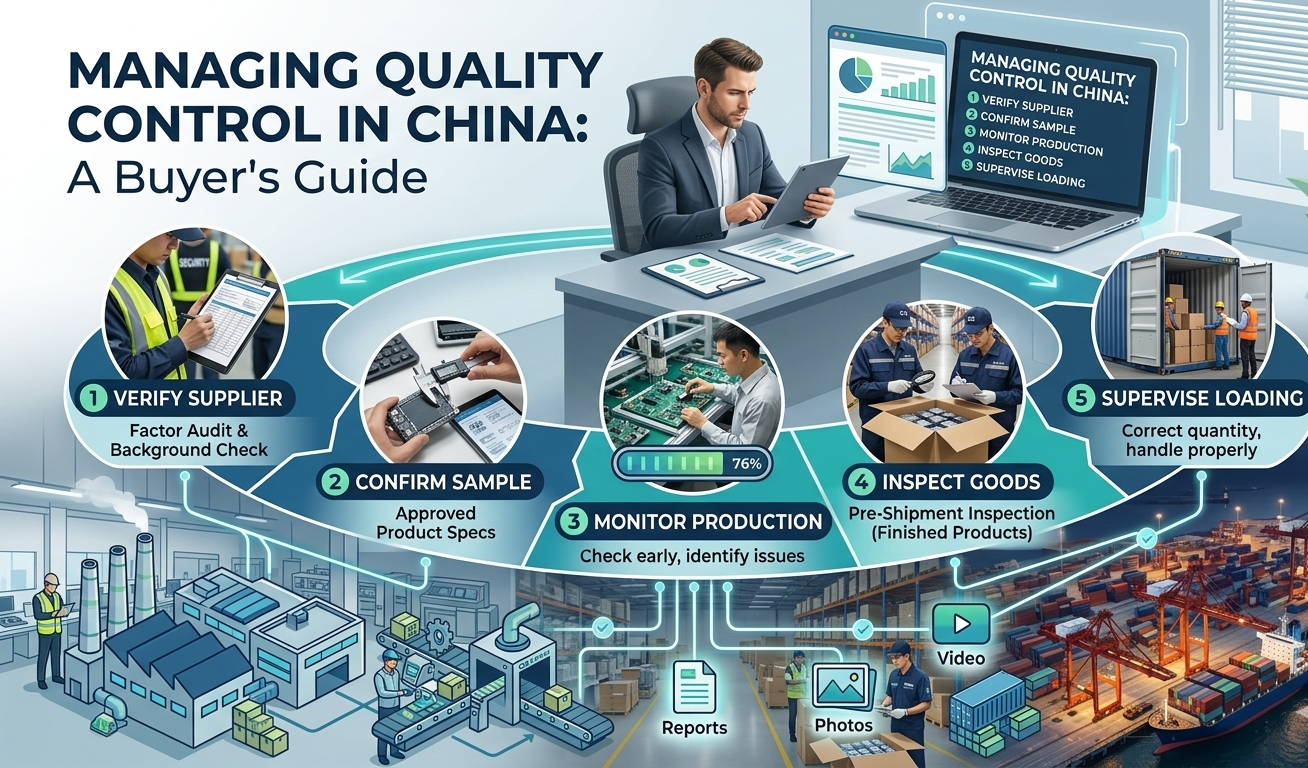
A typical quality control process for overseas buyers may include:
- checking supplier background before placing an order
- confirming samples and product specifications
- monitoring production progress
- inspecting finished goods before shipment
- supervising container loading
Each step helps reduce risk at a different stage.
How Do Buyers Check Suppliers Before Placing an Order?
Before production even starts, many buyers take time to verify the supplier.
This step is often called a factory audit in China.
It may include:
- checking business registration
- reviewing production capability
- confirming product experience
- understanding quality control systems
This doesn’t guarantee perfect results, but it helps avoid working with unreliable suppliers.
What Happens During Production Monitoring?
For larger or more complex orders, some buyers arrange during production inspection.
This usually happens when:
- 20%–50% of goods are completed
The goal is to:
- check if production follows the approved sample
- identify issues early
- avoid repeating the same mistakes for the entire order
This step is especially useful for new suppliers or new product development.
What Is a Pre-Shipment Inspection and Why Is It Critical?
A pre-shipment inspection in China is one of the most common and important steps.
It takes place when:
- production is finished
- goods are packed (or nearly packed)
- shipment has not been arranged yet
During this inspection, inspectors typically check:
- product quantity
- workmanship and appearance
- function and performance
- packaging and labeling
- carton condition
If problems are found at this stage, buyers can still ask the supplier to fix them before shipment.
What Is Container Loading Supervision?
Even after inspection, some buyers take one extra step: container loading supervision in China.
This ensures that:
- the correct goods are loaded
- the quantity matches the order
- cartons are handled properly
- the container is sealed correctly
Without this step, there is still a risk of:
- wrong goods being shipped
- cartons being mixed or replaced
For higher-value shipments, this extra check is often worth it.
Can Buyers Manage Quality Control Without Visiting China?
Yes, and most overseas buyers do exactly that.
Common ways include:
- hiring third-party inspection companies
- working with sourcing agents in China
- requesting detailed inspection reports
- using photos and videos for verification
This is now a standard approach for remote quality control in China.
What Role Does a Sourcing Agent Play in Quality Control?
For buyers who cannot travel, a local sourcing agent can help manage the entire process.
A sourcing agent may:
- visit factories
- follow up on production
- arrange inspections
- communicate with suppliers
- handle problems on the ground
This is especially helpful for buyers who want to source from China without visiting.
What Are Common Mistakes Buyers Make?
Even experienced buyers can run into problems if they skip key steps.
Some common mistakes include:
- relying only on supplier promises
- skipping inspections to save cost
- not confirming product specifications clearly
- waiting until shipment to check quality
In most cases, these mistakes lead to higher costs later.
How Can Buyers Build a Reliable Quality Control Process?
There is no perfect system, but a simple and consistent process works best.
A practical approach is:
Step 1
Verify supplier before ordering
Step 2
Confirm samples and specifications
Step 3
Arrange inspection during or after production
Step 4
Check goods before shipment
Step 5
Consider container loading supervision
This type of process is what most professional importers use when managing quality control for products made in China.
Final Thoughts
Managing quality control in China is not about eliminating all risks. That’s not realistic.
It’s about reducing risks to an acceptable level.
Most problems happen when there is no system in place. Once buyers follow a clear process—supplier verification, inspection, and shipment checks—many common issues can be avoided.
You don’t need to be in China to manage quality. But you do need a structured way to do it.
FAQ: Quality Control in China
How do overseas buyers check product quality in China?
Most buyers use third-party inspection services or sourcing agents to check products before shipment. Inspection reports, photos, and videos are commonly used for verification.
Is pre-shipment inspection necessary?
In most cases, yes. It helps identify problems before goods are shipped, which is much easier than dealing with issues after arrival.
How much does quality inspection in China cost?
Costs vary depending on product type and location, but a standard inspection service in China usually ranges from around $100 to $300 per day.
Can I trust suppliers without inspection?
Relying only on trust is risky, especially with new suppliers. Inspection adds an extra layer of protection and is widely used by experienced importers.
What is the difference between factory audit and inspection?
A factory audit checks the supplier’s capability before production. An inspection checks the actual goods during or after production.