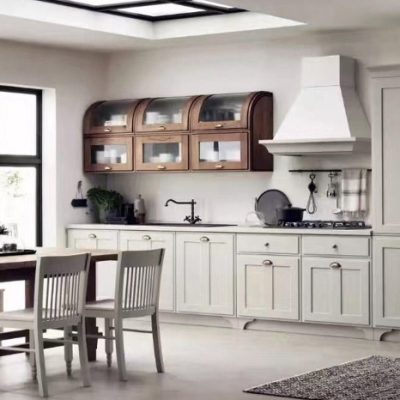

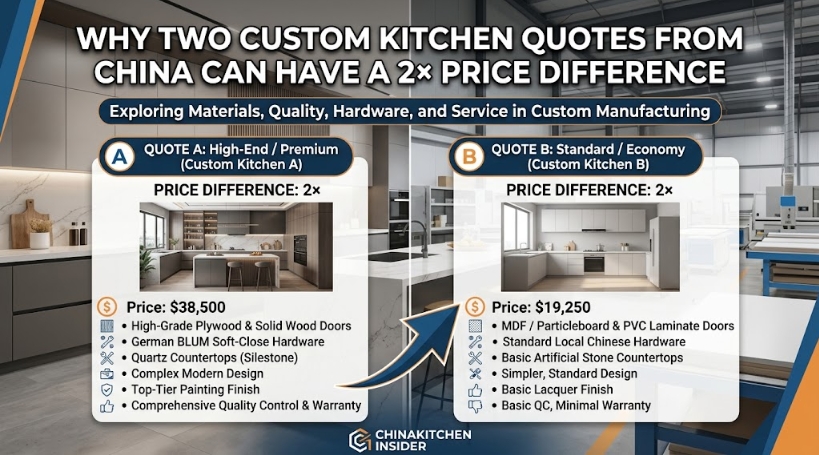
When sourcing a custom villa kitchen from China, receiving two quotations with a 2× price difference—for instance, one factory quoting $25,000 and another quoting $50,000 for the exact same layout—is a common experience.
It is easy to assume that one factory is overcharging or that the other is offering an extraordinary bargain. In reality, a large price gap between two Chinese custom kitchen quotes is rarely driven by factory profit margins alone. The primary cause is almost always a specification mismatch.
Before asking, “Which factory is cheaper?” you must first ask, “Are these two factories actually quoting the same kitchen?”
Underneath identical-looking 3D renderings and generic quotation descriptions like “Custom Walnut Kitchen Cabinetry,” two suppliers may be pricing completely different structural materials, door constructions, finish processes, hardware series, internal accessories, engineering depths, and shipping scopes.
Why Can Two Custom Kitchen Quotes From China Have a 2× Price Difference?
The headline price of a custom kitchen quote reflects the total sum of dozens of manufacturing choices, material grades, and service boundaries. A 2× price difference occurs when two factories interpret your design drawings through different manufacturing lenses.
+-----------------------------------------------------------------------+
|                       THE SPECIFICATION GAP                           |
+-----------------------------------------------------------------------+
|  FACTORY A QUOTE: $25,000                 FACTORY B QUOTE: $50,000   |
|  ------------------------                 ------------------------    |
|  - 16mm Particleboard Carcass             - 18mm Plywood Carcass      |
|  - Reconstructed Wood Veneer              - Natural Book-Matched Veneer|
|  - Standard Soft-Close Hinges             - Premium Drawer Systems    |
|  - Basic Internal Shelving                - 15+ Integrated Accessories|
|  - Ex-Factory (Production Only)           - Export Crating & Freight  |
|  - Countertop Excluded                    - Countertop Included       |
+-----------------------------------------------------------------------+
| RESULT: Both quotes match the same 3D render, but Factory B includes  |
| higher material grades, hardware upgrades, and broader scope.         |
+-----------------------------------------------------------------------+
To understand where that price gap comes from, you must evaluate how each factory specifies the following 12 core cost drivers:
- Cabinet Box Construction: Board material type, carcass thickness, and back panel framing.
- Door Materials & Finishes: Natural wood veneer versus engineered laminate or acrylic.
- Veneer Matching & Finishing: Sequence matching, clear lacquers, and panel finishing.
- Hardware & Drawer Systems: Standard soft-close hinges versus heavy-duty drawer slides.
- Internal Accessories: Open shelving versus integrated pull-out pantries and organizers.
- Dimensional Completeness: Full cabinet counts versus simplified or missing modules.
- Decorative Panels & Fillers: Finished end panels, island backs, and ceiling fillers.
- Handles & Profile Details: Standard pulls versus integrated G-profile or electric openings.
- Countertop & Slab Work: Fabrication, edge profiling, and stone supply inclusions.
- Appliance Integration: Precision cutouts and structural carcass modifications.
- Engineering & Shop Drawings: Basic layout sketches versus production-ready CAD sets.
- Scope & Packaging: Ex-factory production versus fully crated export delivery.
Are the Two Factories Actually Quoting the Same Kitchen?
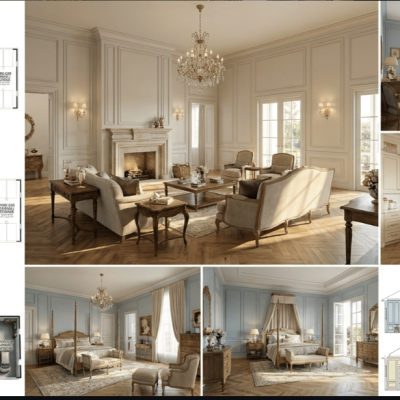
A 3D rendering shows aesthetics, proportions, colors, and layout intent. It does not dictate manufacturing engineering.
3D Rendering (Visual Intent) ≠ Factory Shop Drawing (Manufacturing Spec)
A visually identical kitchen render can be manufactured in a dozen different ways. One factory may price a basic carcass with standard shelves, while another prices heavy-duty hardware, interior lighting channels, and finished end panels.
Unless you normalize the technical specification behind the design, comparing headline numbers will lead to misleading conclusions.
How Much Can Cabinet Construction Affect the Price?
The cabinet carcass (or box) forms the structural core of your kitchen. The choice of substrate and assembly method directly impacts both the price and long-term durability.
Carcass Substrates
- Particleboard / MFC (Melamine Faced Chipboard): Cost-effective, structurally stable, and widely used for dry cabinet runs. Higher-density moisture-resistant grades cost more than standard grades.
- MDF (Medium-Density Fiberboard): Provides a smooth surface, ideal for painted or lacquered cabinets, but is heavier and less moisture-resistant than exterior-grade plywood.
- Plywood: Offers high screw-holding capacity and moisture resistance, making it suitable for sink base cabinets and wet areas. Plywood substrates generally carry a higher material cost than chipboard.
   Basic Spec (Lower Cost)                  Upgraded Spec (Higher Cost)
+---------------------------+            +---------------------------+
| 16mm Particleboard        |            | 18mm Marine Plywood       |
| 3mm Folded Back Panel     |   VS       | 9mm Solid Back Panel      |
| Standard Melamine Interior|            | Matching Veneer Interior  |
+---------------------------+            +---------------------------+
Construction Details to Check
Beyond the base material, structural details influence factory pricing:
- Panel Thickness: 16 mm vs. 18 mm carcass walls.
- Back Panel Strength: A 3 mm folded groove back panel is cheaper than a 9 mm or 18 mm solid screwed back panel.
- Edge Banding: Basic PVC edging versus PUR (Polyurethane) or Laser edge banding, which provides superior moisture and heat resistance.
Can Different Door Materials Double the Kitchen Cost?
Door fronts represent the primary visible surface of your kitchen, and substrate and surface choices create significant cost variations.
[Melamine / PET]  <  [Laminate / Acrylic]  <  [Painted MDF / Lacquer]  <  [Natural Wood Veneer]
  (Entry Cost)                                                            (Premium Joinery)
Two factories may both present a “wood finish” sample, but the underlying material can differ substantially:
- Engineered / Melamine Surfaces: Replicates wood grain digitally on a paper or resin layer over chipboard or MDF.
- Natural Wood Veneer: A thin layer of real timber applied to an MDF or plywood substrate, requiring manual selection and multi-coat lacquer finishing.
- Solid Timber Doors: Fully solid wood construction, which requires careful kiln-drying to prevent warping in varying climates.
A quotation featuring painted MDF lacquer or real timber veneer will naturally sit in a different price tier than one utilizing direct-pressure laminate.
How Much Difference Can Veneer and Finishing Make?
When specifying real wood veneer (such as American Walnut or Natural Oak), processing techniques introduce further price variance.
- Reconstituted / Engineered Veneer: Made from dyed, sliced, and re-glued fast-growing timber to create a uniform grain pattern. It minimizes material waste and lowers manufacturing costs.
- Natural Wood Veneer: Sliced directly from natural logs, showcasing unique grain variations, knots, and character.
Reconstructed Veneer (Uniform, Low Waste) VS Natural Veneer (Book-Matched, High Skill)
Advanced Veneer Craftsmanship
If your villa design calls for continuous grain flow across multiple cabinet fronts, processing requirements increase:
- Book-Matching & Sequence Matching: Slices of veneer are mirrored or kept in consecutive order across adjacent doors, requiring manual selection and higher waste factors.
- Finishing Coats: Clear acrylic or polyurethane lacquers applied in multi-stage spray booths add labor and curing time compared to pre-finished board surfaces.
How Does Cabinet Hardware Affect a Chinese Kitchen Quote?
Hardware dictates how cabinetry feels and performs over time. Generic quotation terms like “soft-close hardware” do not convey the specific grade or performance tier being quoted.
"Soft-Close Hardware"  =  Vague Feature Label
Brand + Model Series + Load Rating  =  Complete Hardware Spec
Key Hardware Categories
- Hinges: Standard 110° hinges versus wide-angle 155°/170° hinges or integrated soft-close mechanisms from established manufacturers (e.g., Blum, DTC, Hettich).
- Drawer Slide Ratings: Standard 30 kg undermount slides versus heavy-duty 50 kg or 70 kg drawer systems designed for wide island drawers.
- Lift-Up Systems: Basic gas struts versus mechanical bi-fold lift systems (such as Blum Aventos) for upper wall cabinets.
Standard Gas Strut ($) VS Bi-Fold Lift System ($$$)
Can Internal Accessories Significantly Change the Price?
The exterior of two kitchen islands can look identical, but their internal configurations may differ completely.
Factory A (Standard Shelving)      Factory B (Integrated Accessories)
+----------------------------+    +----------------------------+
| [ Shelf ]  [ Shelf ]       |    | [ Pull-out Pantry ] [Bins] |
| [ Shelf ]  [ Shelf ]       |    | [ Corner Carousel ] [Trays]|
+----------------------------+    +----------------------------+
High-Value Accessories
Adding functional interior hardware increases the total cabinet quotation:
- Tall pull-out larder units and pantry towers.
- Blind corner swing-out trays (e.g., Magic Corner systems).
- Integrated waste sorting drawer bins.
- Milled drawer dividers, cutlery trays, and spice organizers.
A quote for a kitchen fitted with standard adjustable shelves will be significantly lower than one equipped with a full suite of internal metal storage systems.
Are Countertops Included in Both Quotes?
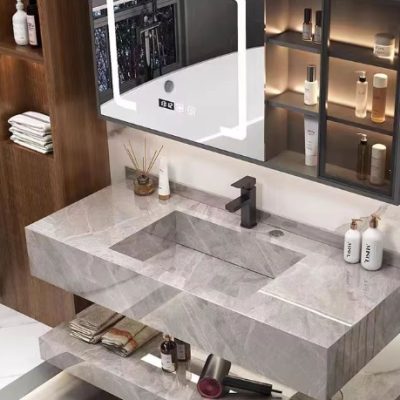
Countertop supply and fabrication are a frequent source of quotation discrepancies. One factory may quote cabinetry only, while another includes fabricated stone tops.
Factory A Scope: Cabinetry Only
Factory B Scope: Cabinetry + 20mm Sintered Stone + Undermount Cutouts + Waterfall Edges
Stone Factors to Verify
- Material Type: Quartz, natural granite, marble, or sintered stone (porcelain slabs).
- Fabrication Details: Slab thickness (e.g., 12 mm, 20 mm, or mitered 40 mm buildup), mitering, underside reinforcement, and waterfall end panels.
- Cutouts: Milled undermount sink cutouts, flush-mount cooktop recesses, and polished tap holes.
Does Installation Make One Chinese Kitchen Quote Look More Expensive?
Understanding the service boundaries included in the quotation prevents unexpected costs later in the procurement process.
[Ex-Factory]  -->  [FOB / Crated]  -->  [Site Coordination]  -->  [Turnkey Installation]
 (Narrow Scope)                                                     (Broad Scope)
Common Scope Variations
- Ex-Factory (EXW): Production only. You or your agent manage pickup, export packing review, loading, and transit.
- Export Crated (FOB): Production plus seaworthy wooden crating and transport to the export port.
- Site Installation / Coordination: On-site installation assistance, local trade coordination, or sending a factory technician to oversee assembly.
A quote covering only ex-factory production will appear substantially lower than one incorporating export crating, port logistics, and installation support.
Why Do Drawings and Engineering Work Affect the Quote?
Engineering custom villa joinery requires significant technical labor before any panel is cut.
- Basic Layouts: Some factories quote directly from rough floor plans or 3D renders using simplified, off-the-shelf cabinet modules.
- Detailed Shop Drawings: Professional factories produce complete shop drawing sets, including elevation details, panel breakdowns, hardware fixing points, electrical chase channels, and appliance clearance details.
Rough Floor Plan  -->  Quick Estimate (High Risk of On-Site Adjustments)
Detailed Shop Drawing  -->  Precision Engineering (Accurate Factory Cutouts)
Factory engineering hours, CAD drafting, and technical site coordination add upfront costs, but they help ensure the kitchen fits your site conditions without requiring on-site modifications.
How Can You Compare Two Chinese Kitchen Quotes Properly?
To conduct a clear evaluation between two suppliers, normalize their specifications across every category.
Step 1: Normalize Quantities & Dimensions
Step 2: Align Substrates & Door Finishes
Step 3: Specify Hardware Series & Load Ratings
Step 4: Audit Accessories & Countertop Scope
Step 5: Compare Packaging, Freight & Service Scope
Quote Comparison Table
| Feature Category | Factory A Specification | Factory B Specification | Specification Alignment Check |
| Cabinet Carcass | 16mm Particleboard | 18mm Plywood | Confirm substrate type and panel thickness. |
| Door Substrate & Finish | Melamine Wood Grain | Natural Walnut Veneer | Verify real wood vs. printed finish. |
| Veneer Matching | Standard / Random | Book-Matched Sequence | Check grain flow across cabinet runs. |
| Hardware Brand/Series | Generic Soft-Close | Blum Movento / Legrabox | Identify specific runner and hinge model lines. |
| Internal Accessories | Standard Adjustable Shelves | 6 Pull-Out Units Included | Itemize internal hardware components. |
| Visible End Panels | White Carcass Exterior | Finished Veneer End Panels | Ensure exposed sides match door fronts. |
| Countertop | Excluded | 20mm Quartz Included | Confirm stone material and fabrication scope. |
| Appliances | Cutouts Only | Cutouts + Metal Support Brackets | Verify structural support integration. |
| Drawings & Engineering | Basic Floor Plan Sketch | Full CAD Shop Drawing Set | Review elevation and layout detail depth. |
| Packaging Scope | Standard Flat Carton | Custom Wooden Crating | Check export protection levels. |
| Service Boundaries | EXW (Ex-Factory) | FOB (Port Delivery + Crating) | Align freight and logistics responsibilities. |
What Should You Ask the Factory Before Comparing Prices?
Send this list of questions to both factories to eliminate specification ambiguity:
- Carcass: What board material and thickness are specified for the cabinet carcasses and back panels?
- Doors: Is the door finish real timber veneer, lacquer, or a decorative laminate?
- Hardware: What exact brand and model series are quoted for hinges and drawer runners? What are their load ratings?
- Accessories: Which internal pull-out accessories, waste bins, and organizers are included in the line-item price?
- Exposed Sides: Are exposed cabinet ends and island backs quoted in finished door-matching panels or standard carcass material?
- Countertops: Is stone supply, edge profiling, and sink cutout fabrication included in the quote?
- Drawings: Does the price include detailed CAD shop drawings and appliance integration engineering?
- Packaging: How is the cabinetry packaged for international sea freight shipping?
Why Is the Cheapest Kitchen Quote Not Always the Cheapest Option?
Selecting a kitchen based strictly on a lower headline price can introduce hidden costs during installation:
- Missing End Panels: Exposed cabinet sides delivered in plain carcass melamine require purchasing extra finished end panels mid-installation.
- Undersized Hardware: Standard drawer runners installed on wide island drawers can sag under heavy loads, requiring replacement with heavy-duty slides.
- On-Site Modifications: Inadequate filler panels or missing appliance ventilation cutouts force local trade contractors to modify cabinetry on-site, increasing installation labor costs.
A lower initial quotation may simply reflect omitted items that must be paid for later.
Why Is the Most Expensive Kitchen Quote Not Automatically Better?
Conversely, a higher quotation does not guarantee that every included upgrade aligns with your project goals:
- The higher quote may include premium internal accessories or motor-assisted opening systems that you do not require.
- The factory may have priced a rare veneer species or complex finish process when a standard finish would meet your design intent.
- The scope may include services (like site installation oversight) that your local general contractor is already handling.
The objective is not to buy the most expensive specification, but to ensure you are paying for features that serve your villa’s design and usage needs.
3 Hypothetical Villa Sourcing Examples
Example 1: The $25,000 vs. $50,000 Headline Gap
Scenario: A homeowner receives two quotes for a 7-meter villa kitchen island and tall unit run.
Analysis: Factory A ($25,000) quoted 16 mm particleboard carcasses, basic melamine doors, generic hinges, and ex-factory pickup. Factory B ($50,000) quoted 18 mm marine plywood carcasses, book-matched natural walnut veneer, Blum Legrabox drawers, integrated LED lighting, sintered stone countertops, and export crating.
Outcome: The two factories were not quoting the same product. The price gap reflected structural materials, hardware tiers, and included scope rather than factory markup.
Example 2: The Hidden Finishing Cost
Scenario: Two factories quote on a minimalist lacquer kitchen render. Factory A quotes $18,000; Factory B quotes $28,000.
Analysis: Factory A priced single-coat matte PET foil doors over MDF. Factory B priced a multi-stage polyurethane lacquer process with hand-sanded edges and custom color matching.
Outcome: While both doors look smooth in 3D renders, Factory B’s finishing process involves significantly more labor and material curing time.
Example 3: Cabinetry-Only vs. Turnkey Scope
Scenario: Factory A quotes $30,000; Factory B quotes $42,000 for a large walk-in pantry and main kitchen set.
Analysis: Factory A’s quote covered cabinet boxes packed in cardboard cartons, leaving local freight, stone sourcing, and accessory sourcing to the buyer. Factory B included full export crating, integrated pull-out pantries, quartz countertops, and dedicated CAD shop drawing support.
Outcome: Once Factory A’s missing scope items were priced locally, the overall project cost gap narrowed significantly.
How a Foshan Sourcing Agent Helps Compare Kitchen Quotes
Comparing multiple factory quotations across language barriers and technical specification sets requires local oversight.
[Design Inputs]  -->  [HSY Normalization]  -->  [Aligned Factory Bids]  -->  [Clear Comparison]
(Renders & BOQ)        (Standardize Specs)      (Same Scope & Materials)     (Informed Choice)
Working with an experienced Foshan-based sourcing partner helps streamline this evaluation:
- Specification Normalization: Converting varied factory quote formats into a single, standardized comparison framework.
- Material & Sample Audits: Verifying physical veneer swatches, carcass board samples, and hardware series directly at local factories.
- Drawing Alignment: Ensuring all participating factories build their bids from the exact same drawing revision set and appliance specification sheets.
- Production Oversight: Conducting pre-shipment inspections to verify that approved hardware and board materials are used during manufacturing.
Sourcing Custom Kitchens in Foshan
Foshan is a major global hub for custom joinery, furniture, lighting, and building materials. The local ecosystem houses high-end custom cabinetry factories alongside specialized hardware distributors and stone fabricators.
However, factory capabilities in Foshan vary widely. Some suppliers specialize in high-volume, standardized modular cabinetry, while others excel at complex, bespoke villa joinery. Sourcing successfully in Foshan requires identifying the right factory match for your specific engineering requirements rather than relying on price lists alone.
Frequently Asked Questions
Why do Chinese custom kitchen quotes vary so widely?
Quotes vary because factories interpret generic designs using different carcass substrates, door materials, finish techniques, hardware series, internal accessories, and service scopes.
Is a 2× price difference between Chinese kitchen factories normal?
Yes. A 2× price difference is common when one factory quotes standard materials with narrow service boundaries, while another quotes premium joinery, brand-name hardware, countertops, and complete export packaging.
Should I automatically select the lowest kitchen quote?
No. First verify that the lower quote includes all necessary components, such as end panels, adequate hardware load ratings, proper carcass substrates, and export packaging.
How do I ensure two Chinese factories are quoting the same kitchen?
Provide a detailed specification document that explicitly states the carcass board material, door substrate, veneer matching type, hardware brand/series, included accessories, and scope expectations.
Do cabinet hardware choices significantly impact the total price?
Yes. Upgrading from standard soft-close hinges to heavy-duty drawer systems, bi-fold lift mechanisms, and pull-out pantry hardware across a large kitchen can add thousands of dollars to the manufacturing cost.
Are countertops usually included in Chinese kitchen cabinet quotes?
Not automatically. Countertops are often quoted separately. Always confirm whether stone supply, edge profiling, and sink cutouts are included in the quote line items.
How does door finish affect the overall quotation?
Material surface choices vary widely in cost. Standard melamine or laminate sits at an entry price point, while painted MDF lacquer, natural book-matched wood veneer, or solid timber involve significantly higher material and labor costs.
What is the difference between EXW and FOB in a cabinet quote?
EXW (Ex-Factory) means the price covers production only at the factory floor. FOB (Free on Board) includes inland transit, export crating, and port clearance fees to place the goods onto the shipping vessel.
Can a sourcing agent in Foshan help normalize factory quotes?
Yes. A local sourcing agent audits factory proposals, aligns technical specifications, verifies hardware models, and coordinates physical samples so you can evaluate bids accurately.
Key Takeaways
- Headline prices reflect specifications, not just profit margins. A 2× price gap usually indicates different material and hardware choices.
- 3D renders do not dictate manufacturing methods. Standardize cabinet substrates, door finishes, and hardware series in writing.
- Hardware choices drive total costs. Specify exact brand series and load ratings for hinges, drawer runners, and lift systems.
- Inspect internal storage inclusions. Compare internal cabinet schedules to identify which quote includes functional pull-out accessories.
- Verify countertop and service boundaries. Check whether stone fabrication, export crating, and logistics are included in the quote.
- Normalize specifications before comparing numbers. Convert varied factory quotes into a standardized comparison table prior to making a purchasing decision.
Work With HSY Sourcing
If you are evaluating custom kitchen cabinetry for a private villa or high-end residential project, HSY Sourcing can help you navigate Chinese factory quotations from our office in Foshan.
Send us your kitchen floor plans, CAD elevations, 3D renderings, or BOQ schedules. Our team will help normalize specifications across suitable factories, coordinate physical material samples, and oversee pre-shipment quality control.