
Key Takeaways:
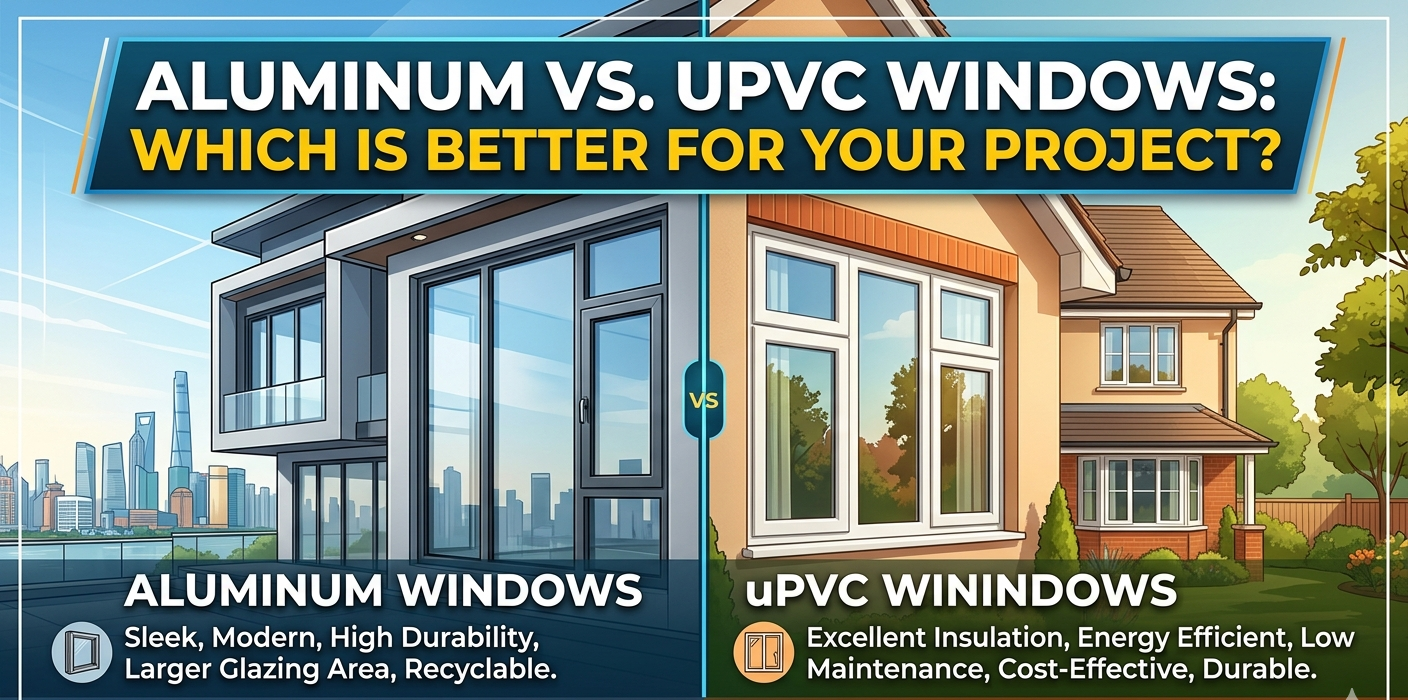
- Structural Integrity: Aluminum is superior for high-rise apartments and large-span hotel glazing due to its higher strength-to-weight ratio.
- Thermal Efficiency: Modern uPVC naturally insulates better, but high-end thermally broken aluminum achieves similar results with sleeker profiles.
- Longevity: Aluminum generally offers a 40+ year lifespan, whereas uPVC may face UV degradation or warping in extreme climates after 20-25 years.
- Aesthetics: Aluminum allows for thinner frames and larger glass areas, a preferred trend in modern luxury real estate.
Selecting the right window system is one of the most critical decisions in a construction project’s “shell and core” phase. For developers sourcing from Foshan, the choice between Aluminum and uPVC (Unplasticized Polyvinyl Chloride) isn’t just about price; it’s about balancing structural requirements, local building codes, and long-term maintenance cycles.
How Does Structural Strength Influence the Choice?
Aluminum is a structural metal. Its inherent strength allows it to support heavy, triple-glazed units or massive floor-to-ceiling glass panes without the need for bulky frames. This makes it the standard choice for high-rise residential towers and luxury hotels where unobstructed views are a selling point.
uPVC, being a specialized plastic, requires internal steel reinforcement to achieve structural stability. Even with reinforcement, it cannot match the slim profiles of aluminum. For ground-level residential projects or low-rise apartments, uPVC is a highly functional choice, but for large commercial spans, aluminum is the safer and more durable engineering solution.
Which Material Offers Better Thermal and Acoustic Insulation?
Historically, uPVC was the undisputed leader in thermal performance because plastic does not conduct heat. It is an excellent choice for projects in cold climates where preventing heat loss is the priority.
However, the technology in Foshan’s aluminum manufacturing has evolved. Thermally broken aluminum—which uses a polyamide strip to separate the inner and outer frame—effectively stops heat transfer. When paired with Low-E double or triple glazing, aluminum windows meet the strictest energy-saving standards for modern green buildings. For acoustic insulation (STC ratings), both materials perform similarly; the glass thickness and the quality of the EPDM seals are more important than the frame material itself.
What Are the Long-Term Maintenance Costs for Each?
For hotel and apartment operators, “maintenance-free” is a primary goal.
- Aluminum: Highly resistant to the elements. High-quality powder-coated or PVDF finishes prevent rusting, peeling, or fading, even in coastal environments with high salinity.
- uPVC: Low maintenance in terms of cleaning, but susceptible to “expansion and contraction” issues. In regions with extreme temperature fluctuations or high UV exposure, uPVC can become brittle or yellow over time. Additionally, the multi-point locking systems in uPVC frames often require more frequent adjustment as the frame shifts slightly.
How Do Costs Compare for Large-Scale Procurement?
On a per-unit basis, standard uPVC windows are generally 20% to 30% cheaper than thermally broken aluminum. For budget-conscious apartment projects or social housing, uPVC offers an excellent return on investment.
However, for luxury developments or commercial projects, aluminum often provides better long-term value. Its durability reduces the frequency of replacement cycles, and its aesthetic appeal often increases the resale or rental value of the property. When sourcing from Foshan, the price gap can also be narrowed through bulk procurement and efficient factory-direct negotiation.
Why Choose HSY Sourcing for Your Window Procurement?
At HSY Sourcing, we understand that windows are not just “fillers” for wall openings; they are technical components that must meet specific wind-load, thermal, and acoustic benchmarks.
- Foshan Hub Advantage: We are located in the heart of China’s window and door manufacturing cluster. We audit the factories to ensure they use genuine aluminum ingots and high-quality thermal strips, not recycled scrap.
- Technical Drawing Review: We don’t just take an order. We review your architectural drawings to ensure the window profiles you’ve selected are structurally sound for the height and location of your building.
- Stringent QC: Our inspectors check the miter joints, the thickness of the powder coating, and the integrity of the seals. We ensure that the “Sample Quality” is the “Batch Quality.”
- Consolidated Shipping: We manage the complex logistics of shipping glass products, using specialized steel A-frames to ensure your windows arrive at the construction site without a single crack.
Visit www.hsysourcing.com to request a technical comparison and quote for your next project.
Frequently Asked Questions (FAQ)
Q: Is aluminum better for coastal hotel projects?
A: Yes, provided it has a PVDF or high-micron powder coating. Aluminum is highly resistant to salt-air corrosion, making it more durable than uPVC for beachfront properties.
Q: Can uPVC windows be customized in different colors?
A: Yes. Modern uPVC can be “foiled” or laminated in various colors and wood-grain textures. However, darker colors on uPVC can absorb more heat, which may lead to warping in very hot climates.
Q: Do I need a sourcing agent if I already have a window quote from Alibaba?
qA: A quote is just a number. A sourcing agent verifies that the factory actually has the certifications they claim (like AS2047, NFRC, or CE) and performs on-site inspections to ensure the factory doesn’t swap high-quality hardware for cheap imitations during bulk production.