
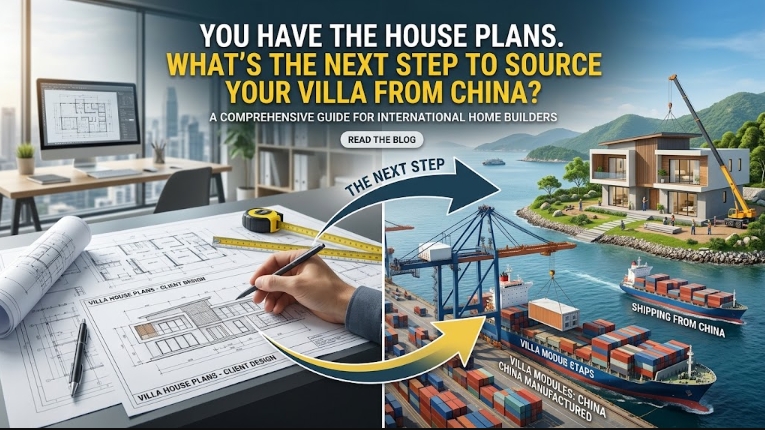
Having a full set of architectural plans is a major milestone for any private homeowner building or renovating a high-end villa. However, holding detailed drawings does not mean you can immediately send them to factories in China and expect accurate quotes or flawless production.
Architectural plans communicate design intent, spatial relationships, aesthetic vision, and general dimensions. Factories, on the other hand, require technical manufacturing specifications, physical material performance criteria, hardware details, and approved shop drawings to produce building products accurately.
To successfully transition from architectural drawings to a shipped container of custom building materials, you must convert design information into a practical procurement scope. This guide details the exact steps required to turn your villa plans into a realistic, structured, and manageable China sourcing project.
You Have the House Plans — Are You Actually Ready to Start Sourcing?
Yes, having architectural plans means you can begin the sourcing process, but you are not yet ready to place factory orders. Architectural drawings are the starting point for sourcing conversations, not the final purchasing document.
When you work with an architect or interior designer, your project documentation typically includes a variety of drawing sets:
- Architectural Drawings: Show overall layouts, floor plans, exterior elevations, building sections, and opening dimensions.
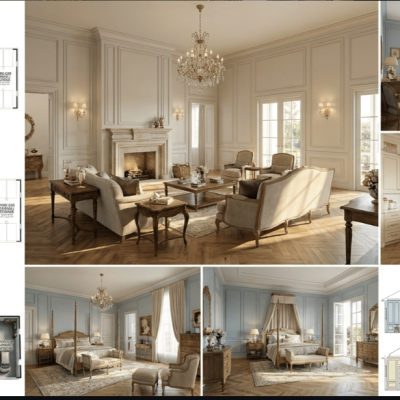
- Interior Design Packages: Feature 3D renders, mood boards, spatial layouts, reflective ceiling plans, and joinery concepts.
- Schedules: Outline door and window schedules, finish schedules, and sanitary ware schedules.
- Structural and MEP Drawings: Provide structural calculations, electrical layouts, and plumbing points.
[Architectural Plans & Renders] ──> (Design Intent)
                                           │
                                           ▼
[Procurement Scope & Specifications] ──> (Technical Details)
                                           │
                                           ▼
[Factory Shop Drawings & Samples] ──> (Production Ready)
Why Design Information Is Not Factory-Ready
A door schedule on an architectural drawing might specify a “3000mm x 2400mm black aluminum sliding door with double glazing.” While this gives your architect enough clarity for spatial planning, a window and door manufacturer in China cannot build from this description alone.
To manufacture that door correctly, a factory must know:
- System & Profile: What profile depth and wall thickness are required? Is it thermally broken?
- Glass Specification: What glass thickness, low-E coating, argon gas fill, and tempered glass certifications are needed for your local climate and building codes?
- Hardware & Mechanism: Are you using German-engineered hardware (such as Siegenia or Hoppe) or top-tier domestic hardware? Is it a lift-and-slide or a standard inline slide?
- Finish: Is the aluminum finish powder-coated (e.g., AkzoNobel), anodized, or PVDF-coated? What specific RAL color code applies?
- Sub-frame & Drainage: How does the frame integrate with your local wall structure, sill, and waterproofing details?
Architectural drawings describe what the home should look like. Procurement documentation defines how the products will be manufactured, tested, packaged, and installed. Sourcing begins when you bridge the gap between these two sets of information.
Which Parts of a Villa Are Worth Sourcing from China?
Not every item in a luxury villa should be imported. Sourcing from China makes the most sense for custom-manufactured, high-value, or highly repetitive interior and architectural categories where direct factory customization offers significant budget flexibility or design freedom.
┌────────────────────────────────────────────────────────────────────────┐
│                   SUITABLE FOR CHINA SOURCING                          │
├──────────────────────────────┬─────────────────────────────────────────┤
│ Custom Millwork & Kitchens   │ High customization, high local labor    │
│ Aluminum Windows & Doors     │ Engineered systems, substantial savings │
│ Porcelain Tiles & Stone      │ High material volume, factory direct    │
│ Custom Furniture & Lighting  │ Made-to-order, flexible finishes        │
└──────────────────────────────┴─────────────────────────────────────────┘
Custom Kitchens and Cabinetry
Millwork is often one of the largest single line items in a custom home. Sourcing cabinetry from China allows for complete bespoke manufacturing tailored to your exact floor plans.
- Main Kitchens & Islands: Custom panel finishes, integrated LED channels, stone integration, and specific cabinet organization hardware.
- Prep Kitchens & Pantries: Durable laminate, PET, or lacquer finishes paired with heavy-duty storage configurations.
- Walk-in Wardrobes & Closets: Custom wood veneers, aluminum frame glass doors, leather drawer organizers, and built-in vanity stations.
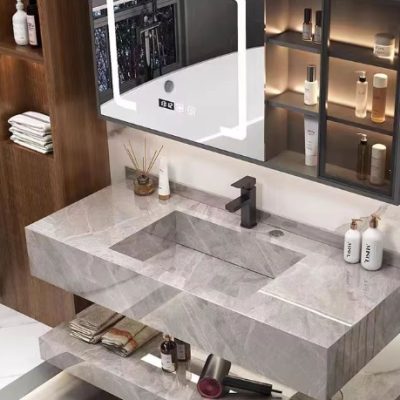
- Bathroom Vanities & Utility Storage: Water-resistant carcasses (such as plywood or compact laminate) matched with custom sintered stone or marble tops.
Aluminum Windows and Doors
Large architectural openings, slim-frame sliding doors, and curtain wall systems are ideal candidates for China sourcing due to the advanced manufacturing capabilities of top-tier extrusion factories.
- Sliding & Lift-and-Slide Doors: Ultra-slim profile systems engineered for expansive glass areas and smooth operation.
- Casement Windows & Tilt-and-Turn Systems: Thermally broken aluminum windows designed for modern thermal insulation.
- Bi-fold Doors & Glass Facades: Custom folding door configurations connecting indoor living areas to outdoor patios.
Note: Windows and doors require careful technical verification to ensure they meet your local climate conditions, structural wind loads, and regional building energy codes.
Tiles, Slabs and Bathroom Materials
Sourcing hard finishes directly from manufacturing hubs allows homeowners to access high-end surface materials at direct-from-factory pricing.
- Porcelain Tiles & Slabs: Large-format sintered stone slabs (e.g., 1600x3200mm) for wall cladding, flooring, and island countertops.
- Sanitary Ware & Faucets: Ceramic toilets, solid-surface freestanding bathtubs, thermostatic shower mixers, and custom metallic PVD-finished faucets.
- Shower Enclosures: Custom-sized tempered glass panels with stainless steel or aluminum framing and concealed hardware systems.
Furniture, Lighting and Interior Finishes
For custom villas, off-the-shelf retail furniture rarely fits large architectural spaces perfectly. Made-to-order production in China aligns furniture dimensions directly with your interior plans.
- Custom Loose Furniture: Dining tables, sectional sofas, bed frames, and accent chairs built to specific dimensions, upholstery, and wood/metal finishes.
- Architectural & Decorative Lighting: Large-scale chandeliers for double-height foyers, linear LED profile systems, and custom decorative wall sconces.
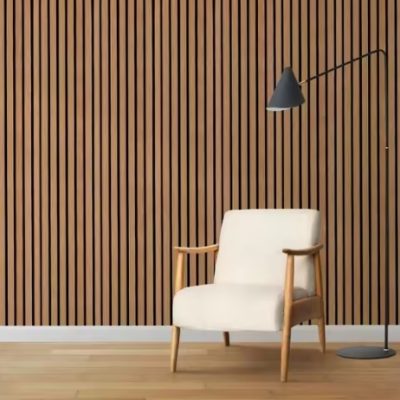
- Interior Finishes: Engineered hardwood flooring, flute wall paneling, acoustic panels, and custom metal decorative trims.
What Should You NOT Source from China?
A realistic sourcing strategy requires knowing what not to import. Sourcing certain items internationally can introduce unnecessary project risks, compliance bottlenecks, or installation headaches.
┌────────────────────────────────────────────────────────────────────────┐
│                   BETTER PURCHASED LOCALLY                             │
├──────────────────────────────┬─────────────────────────────────────────┤
│ Structural Steel & Concrete  │ Local engineering, freight weight costs │
│ Concealed MEP Infrastructure │ Local trade code compliance, inspection │
│ Basic Drywall & Framing      │ Low unit value, high shipping volume    │
│ Hazardous Materials/Glues    │ Import restrictions, chemical standards │
└──────────────────────────────┴─────────────────────────────────────────┘
You should generally purchase the following items locally:
- Structural Framing & Rough Construction Materials: Rebar, structural timber, ready-mix concrete, and standard drywall boards. These materials are heavy, low-value, and carry high transport costs relative to their unit price. Furthermore, structural framing must strictly comply with local engineering certifications.
- Concealed Electrical & Plumbing Infrastructure: Rough-in electrical wiring, circuit breakers, conduit, and underground drain pipes. Local building inspectors frequently mandate regional certifications (such as UL, ETL, or specific regional plumbing approvals) for hidden infrastructure before signing off on wall framing.
- Low-Cost Bulk Commodities: Basic structural screws, standard waterproofing membranes, or basic insulation rolls that can be sourced easily at a local building trade supplier without international shipping hassle.
- Items Requiring Immediate On-Site Adjustments: Custom items that depend on final, unpredictable job-site conditions where minor dimension variations would cause immediate construction halts, unless a local installer is capable of making precise on-site modifications.
Evaluating whether a product makes sense to import requires balancing product value, customization requirements, certification strictness, and local installation capacity.
How Do You Turn House Plans into a China Sourcing List?
To convert architectural drawings into an actionable sourcing list, you must break down your house plans room by room and trade by trade. This process organizes design concepts into structured, line-item procurement categories.
Architectural Drawings
         │
         ▼
Categorize by Trade (Windows, Millwork, Surfaces, Sanitary)
         │
         ▼
Extract Room-by-Room Quantities & Dimensions
         │
         ▼
Attach Finish/Material Specifications & Renders
         │
         ▼
Actionable Sourcing List
Step 1: Categorize by Trade
Group your project into logical product packages rather than trying to look for everything at once:
- Package A: Exterior Glazing (Windows, Doors, Louvers)
- Package B: Built-in Millwork (Kitchens, Wardrobes, Vanities, Wall Panels)
- Package C: Hard Surfaces (Floor Tiles, Wall Cladding, Countertops)
- Package D: Bathroom & Plumbing Fixtures (Toilets, Faucets, Showers, Bathtubs)
- Package E: Loose Furniture & Decorative Lighting
Step 2: Extract Specific Line Items
Take your door schedule, window schedule, or interior finish legend and build a structured spreadsheet. For every item, capture:
| Category | Item ID | Location | Description / Type | Dimensions (WxHxD mm) | Primary Material & Finish | Hardware / Spec | Design Ref / Render |
| Glazing | W-01 | Living Room | Lift & Slide Door | 4500 x 2800 | Thermally Broken Aluminum, Black Powder Coat | 6mm+12A+6mm Low-E Tempered Glass | Architectural Elev. A3 |
| Millwork | K-01 | Main Kitchen | Kitchen Island | 3600 x 1100 x 900 | Natural Oak Veneer + Sintered Stone Top | Blum Tip-On / Soft Close | Interior Render Page 12 |
| Sanitary | BT-01 | Master Bath | Freestanding Tub | 1800 x 850 x 580 | Solid Surface Matte White | Concealed Pop-up Drain | Plumbing Schedule P2 |
This structured approach transforms loose design ideas into an explicit document that factories can evaluate efficiently.
Do You Need a BOQ Before Sourcing from China?
A Bill of Quantities (BOQ) is exceptionally helpful, but you do not need a fully finalized, contract-grade BOQ to begin initial sourcing discussions.
Architectural BOQ vs. Factory Procurement BOQ
- Architectural BOQ: Typically prepared by a quantity surveyor or architect. It outlines estimated surface areas ($m^2$), linear counts ($m$), or unit totals based on drawings.
- Factory Procurement BOQ: Prepared during the sourcing phase. It refines those preliminary estimates into production units, full panel sheets, factory box quantities, waste factors, and hardware counts.
If you already have an architectural BOQ, your sourcing agent or factory network can use it immediately to establish preliminary pricing ranges. If you do not have a formal BOQ, a clear set of architectural plans accompanied by a room-by-room material list is sufficient to begin organizing your procurement scope.
Why Product Specifications Matter More Than Product Names
When communicating with factories, generic descriptive terms like “luxury,” “premium,” “modern,” or “high-end” carry no operational meaning. Two factories can hear the words “luxury kitchen” and produce products that differ dramatically in material quality, hardware durability, structural integrity, and price.
To receive accurate, fair, and comparable pricing, you must specify the exact technical parameters of each product.
      GENERIC TERM                   TECHNICAL SPECIFICATION
┌───────────────────────┐     ┌─────────────────────────────────────┐
│ "Luxury Italian-Style │  ─> │ • Carcass: 18mm Plywood (E0 Grade)  │
│       Kitchen"        │     │ • Door: 18mm MDF Lacquer Finish     │
│                       │     │ • Hardware: Blum Blumotion Hinges   │
│                       │     │ • Top: 20mm Sintered Stone          │
└───────────────────────┘     └─────────────────────────────────────┘
Example 1: Aluminum Windows
- Vague Description: “High-end thermal break aluminum sliding window.”
- Technical Specification: “65 series thermally broken aluminum profile, 2.0mm wall thickness; AkzoNobel powder-coated matte finish; Double-glazed 6mm Clear Tempered + 12mm Argon Gap + 6mm Low-E Glass; German Siegenia hardware; EPDM weather sealing strips.”
Example 2: Kitchen Cabinetry
- Vague Description: “Modern luxury lacquer kitchen cabinet.”
- Technical Specification: “Carcass: 18mm E0-grade moisture-resistant plywood with matching melamine edging; Door Panels: 18mm MDF with multi-coat matte lacquer finish; Hardware: Blum Blumotion soft-close concealed hinges and Legrabox drawer runners; Countertop: 20mm sintered stone with mitered waterfall edge.”
When you define explicit specifications, factories quote on identical technical foundations. This eliminates guesswork and protects your budget from unexpected compromises during manufacturing.
Why Foshan Can Be Useful When Sourcing a Custom Villa from China
Foshan, located in Guangdong Province near Guangzhou and Hong Kong, is the world’s primary manufacturing and trading hub for custom building materials, furniture, and interior products.
┌────────────────────────────────────────────────────────────────────────┐
│                   FOSHAN & SURROUNDING INDUSTRIAL CLUSTERS             │
├──────────────────────────────┬─────────────────────────────────────────┤
│ Nanhai District (Foshan)     │ Aluminum Extrusions, Windows & Doors    │
│ Shunde District (Foshan)     │ Custom Furniture, Cabinetry, Millwork   │
│ Nanzhuang / Shiwan (Foshan)  │ Ceramics, Porcelain Tiles, Sintered Stone│
│ Zhongshan / Guzhen (Nearby)  │ Architectural & Decorative Lighting     │
│ Chaozhou (Nearby)            │ Sanitary Ceramics & Bathroom Fixtures   │
└──────────────────────────────┴─────────────────────────────────────────┘
For a private villa owner, the concentration of these industrial clusters provides distinct practical advantages:
- Proximity of Related Trades: You can review custom windows in Nanhai, inspect cabinetry in Shunde, select porcelain slabs in Nanzhuang, and check decorative lighting in neighboring Guzhen—all within a single geographical area.
- Material Matching and Coordination: Custom villa projects often require matching finishes across different factories (e.g., matching the wood veneer on a living room wall panel produced by a millwork factory with a dining table produced by a furniture manufacturer). Local proximity makes physical material cross-checking straightforward.
- Efficient Logistics and Consolidation: Because these supplier ecosystems sit side-by-side, gathering partial shipments from five or six specialized manufacturers into a central Foshan warehouse for combined container loading is fast and cost-effective.
How Do You Choose the Right Factory for a Custom Villa?
One of the most common mistakes overseas buyers make is selecting a factory simply because it operates a large facility or offers the absolute lowest price. For a private custom home, the ideal supplier is rarely the largest mass-production factory, nor is it the cheapest.
┌────────────────────────────────────────────────────────────────────────┐
│                   EVALUATING CUSTOM VILLA FACTORIES                    │
├──────────────────────────────┬─────────────────────────────────────────┤
│ Manufacturing Orientation    │ Custom bespoke focus vs. high-volume    │
│ Technical CAD/Shop Drawings  │ In-house drafting team capability       │
│ Export Packaging Standards   │ Wooden crating, corner protection       │
│ Project History              │ Portfolio of overseas private homes     │
└──────────────────────────────┴─────────────────────────────────────────┘
When evaluating potential manufacturers for a residential villa project, look for:
- Customization Capability over Mass Volume: Large export factories optimized for multi-story apartment developments often struggle with unique, one-off residential details. Smaller or medium-sized specialized workshops that focus on high-end residential work are far better suited to handle custom dimensions and complex finishes.
- In-House Technical Drafting Teams: A qualified villa factory must possess a strong shop-drawing department. They need to translate your architect’s 2D layout into detailed fabrication drawings without requiring you to explain basic construction details repeatedly.
- Proven Export Experience and Packaging Standards: High-end finishes require protective export packaging. The factory must regularly use fully enclosed plywood crates, protective corner guards, and vacuum-sealed wrapping for delicate items like glass, polished stone, and lacquered millwork.
Why Should You Compare Specifications Before Comparing Prices?
Receiving three quotes for a custom kitchen—one at $15,000, one at $24,000, and one at $38,000—does not mean the $15,000 factory is offering the best value. In custom manufacturing, price differences almost always reflect structural differences in specifications.
FACTORY A ($15,000)                FACTORY B ($24,000)
┌─────────────────────────┐        ┌─────────────────────────┐
│ Particle Board Carcass  │  VS.   │ Plywood Carcass (E0)    │
│ Standard Local Hardware │        │ Blum Soft-Close         │
│ Basic Edge Banding      │        │ Laser Edge Banding      │
│ No Shop Drawings        │        │ CAD Shop Drawings Incl. │
└─────────────────────────┘        └─────────────────────────┘
  ▲                                  ▲
  └────── APPLES-TO-ORANGES ─────────┘
Before comparing quotation numbers, normalize the underlying specifications across all suppliers:
- Material Grades: Is the quote based on particle board, MDF, moisture-resistant plywood, or solid wood?
- Hardware Brands and Models: Are drawer runners basic unbranded slides, or genuine imported Blum/Hettich hardware?
- Surface Preparation: Is lacquer applied in a dust-free spray booth with multiple primer coats, or simple single-coat finish?
- Inclusions and Exclusions: Does the quote include sink cutouts, LED driver power supplies, countertop edge profiling, shop drawings, and export crating, or will those appear later as extra charges?
Only when two factories are quoting on identical materials, hardware, finishes, and scope can you perform a true apples-to-apples price comparison.
When Should You Order Samples and Approve Shop Drawings?
Physical samples and shop drawings represent the two critical checkpoints that prevent manufacturing errors.
Architectural Drawings ──> Physical Samples Approved ──> Shop Drawings Signed ──> Mass Production
Physical Samples
Do not authorize mass production for custom finishes based solely on digital photos or PDF renders. Colors, textures, and sheen levels look significantly different in person compared to a computer monitor.
Physical samples are critical for:
- Cabinetry Finishes: Wood veneer stain approvals, lacquer color swatches (referenced to RAL or Pantone codes), and sheen levels (matte vs. gloss).
- Hard Surfaces: Natural marble slabs, sintered stone samples, and porcelain tile glazes.
- Metal & Glass: Anodized aluminum profile swatches, metal PVD finishes for hardware, and tinted or fluted glass samples.
Shop Drawings
Shop drawings are factory-produced technical blueprints that show exactly how an item will be built. They detail precise manufacturing dimensions, material thickness, internal joinery methods, reveal gaps, hardware placement, and mounting points.
Production should never start until you (or your architect/designer) have reviewed, marked up, and formally signed off on the factory’s final shop drawings. The signed shop drawing forms the legal and technical baseline for quality control inspections prior to shipment.
What About Building Codes and Local Standards?
Sourcing products directly from China does not exempt your project from complying with the building codes and regulatory requirements of your home country.
┌────────────────────────────────────────────────────────────────────────┐
│                      LOCAL CODE CONSIDERATIONS                         │
├──────────────────────────────┬─────────────────────────────────────────┤
│ Windows & Doors              │ Thermal insulation (U-Factor, SHGC),    │
│                              │ Wind-load resistance, Impact glass      │
│ Electrical Fixtures          │ Wiring standards, Local laboratory      │
│                              │ Safety Marks (UL, ETL, CE, SAA)         │
│ Plumbing & Sanitary          │ Pipe thread standards (NPT vs. BSP),    │
│                              │ Flow rate regulations, Lead-free certs  │
└──────────────────────────────┴─────────────────────────────────────────┘
Work with your architect, structural engineer, or local building contractor to confirm relevant compliance parameters before placing orders:
- Glazing & Structural Performance: In storm-prone or coastal regions (e.g., Florida, Australia, or the Caribbean), windows and doors must meet specific wind-load calculations and impact resistance standards. Thermal performance requirements (such as U-Factor and SHGC) must also align with local energy codes.
- Electrical Safety & Wiring: Lighting and motorized systems must be wired to match your local grid voltage (e.g., 110V/60Hz vs. 230V/50Hz) and utilize components that satisfy regional electrical safety standards (e.g., UL/ETL for North America, CE for Europe, SAA for Australia).
- Plumbing Fittings & Plumbing Threads: Faucet connections, drain sizes, and shower valves must match your local plumbing infrastructure (such as NPT thread standards in North America versus BSP threads used elsewhere).
A capable China sourcing partner helps communicate these explicit technical constraints to factories during the specification phase so that products are manufactured to meet your project’s local code requirements.
How Much Will the Materials Actually Cost After Leaving China?
The factory floor price (Ex-Works or FOB price) represents only a portion of the total cost required to get building materials onto your construction site. To evaluate your project budget accurately, you must calculate the landed cost.
$$\text{Landed Cost} = \text{Factory Price} + \text{Packaging} + \text{Local Transport} + \text{QC \& Warehousing} + \text{Freight} + \text{Customs \& Taxes} + \text{Site Delivery}$$
┌────────────────────────────────────────────────────────────────────────┐
│                        LANDED COST COMPONENTS                          │
├───────────────────────────────────┬────────────────────────────────────┤
│ Ex-Works / Factory Price          │ Base manufacturing cost            │
│ Export Packaging & Crating        │ Wooden boxes, pallets, protection  │
│ Inland China Logistics            │ Factory-to-warehouse trucking      │
│ Warehousing & QC Inspection       │ Receiving, unboxing, inspection    │
│ International Sea Freight         │ Ocean container transport          │
│ Customs Duties, Tariffs & Taxes   │ Import fees levied at destination  │
│ Destination Port Clearance & Haul │ Port handling, local trucking      │
└───────────────────────────────────┴────────────────────────────────────┘
Evaluating items based on their fully landed cost prevents budget surprises and ensures that importing high-volume or heavy materials remains economically advantageous compared to local purchasing.
How Do You Ship Materials from Multiple Chinese Factories for One Villa?
A custom villa project typically involves five to ten distinct, highly specialized manufacturers across different industrial districts.
Factory 1 (Windows)   ──┐
Factory 2 (Kitchen)   ──┼─> [Central Foshan Warehouse] ──> [Container Loading] ──> [Ocean Freight]
Factory 3 (Sanitary)  ──┤     • Quality Inspection
Factory 4 (Tiles)     ──┤     • Itemized Labeling
Factory 5 (Lighting)  ──┘     • Custom Crating
Managing shipment logistics from multiple manufacturers requires a consolidated warehousing process:
- Centralized Warehouse Receiving: Instead of shipping partial, loose cargo directly from individual factories to a port, goods are transported to a central warehouse in Foshan as production finishes.
- Incoming Goods Inspection: Each shipment is unboxed, checked against approved shop drawings and specifications, counted, and inspected for surface or structural defects.
- Consolidation and Container Packing: Once all goods arrive and pass quality checks, a specialized loading team packs the ocean container. Heavy goods (such as tiles and stone) are stowed securely at the bottom, while custom millwork crates and furniture are strapped safely above to prevent shifting or damage during transit.
- Unified Export Documentation: A single consolidated commercial invoice, packing list, and bill of lading are generated for customs clearance at your destination port, significantly streamlining import logistics.
When Should You Start Sourcing Materials for a Villa?
Sourcing should begin during the detailed design phase, well before your site contractor finishes ground excavation or structural concrete pours.
PROJECT TIMELINE OVERVIEW

Phase 1: Design & Scope Definition   [Months 1 - 2]
Phase 2: Factory Specs & Quotations  [Months 2 - 3]
Phase 3: Samples & Shop Drawings     [Months 3 - 4]
Phase 4: Manufacturing               [Months 4 - 6]
Phase 5: QC, Consolidation & Shipping[Months 6 - 8]
Phase 6: On-Site Installation        [Months 8+]
Lead Time Breakdown by Trade
- Aluminum Windows & Doors: Require approximately 30–45 days for manufacturing after shop drawing sign-off, plus 30–45 days for ocean freight and customs. Because window rough openings dictate exterior wall work, window shop drawings must be finalized early.
- Custom Kitchens & Millwork: Require roughly 45–60 days for precision fabrication following shop drawing approval. Millwork dimensions often depend on finalized interior framing or drywall dimensions.
- Tiles, Sanitary Ware & Loose Furniture: Typically require 20–35 days for production, depending on custom finishes.
Starting your sourcing conversations early ensures that shop drawings, custom material samples, and factory lead times integrate smoothly into your master construction schedule without causing site delays.
What Are the Most Common Mistakes Homeowners Make When Sourcing a Villa from China?
Navigating international procurement for a private home involves avoiding several common pitfalls:
- Focusing on Price Before Specification: Requesting quotes without providing precise material specifications leads to apples-to-oranges comparisons and unexpected quality downgrades.
- Relying Solely on 3D Renders: Sending architectural renders to a factory without precise dimensions, floor plans, or hardware requirements results in inaccurate estimates and production errors.
- Skipping Physical Sample Approvals: Ordering custom wood finishes, paint colors, or stone slabs without reviewing physical samples first creates significant risk of color mismatch.
- Ignoring Local Building Codes: Failing to verify window thermal values, glass impact ratings, or plumbing thread standards with your local contractor before placing orders.
- Authorizing Production Without Signed Shop Drawings: Allowing a factory to start production based on general architectural drawings rather than detailed, factory-drafted fabrication plans.
- Underestimating Export Packaging: Allowing fragile items like custom cabinetry, glass, or polished stone to ship without fully enclosed wooden crating and corner protection.
A Practical China Sourcing Process for a Custom Villa
To keep your procurement project organized, follow this practical 9-step execution framework:
[1. Review Plans & Scope] ──> [2. Create Sourcing List] ──> [3. Define Specs]
                                                                    │
                                                                    ▼
[6. Samples & Shop Drawings] <── [5. Compare Quotes] <── [4. Match Factories]
            │
            ▼
[7. Production Orders] ──> [8. QC & Warehouse Consolidation] ──> [9. Shipping & Customs]
- Review House Plans & Sourcing Scope: Evaluate your architectural drawings with your design team to determine which product categories make practical sense to source from China.
- Create an Itemized Procurement List: Organize your drawings into structured trade packages (Windows, Millwork, Tiles, Sanitary Ware, Furniture).
- Define Technical Specifications: Establish explicit material, dimension, hardware, glass, and finish requirements for every line item.
- Identify and Match Specialized Factories: Engage qualified, residential-focused manufacturers in specialized clusters around Foshan.
- Normalize and Compare Factory Quotations: Review detailed quote breakdowns based on material specifications, inclusions, and hardware brands rather than headline numbers alone.
- Approve Physical Samples & Shop Drawings: Review swatches for all surface finishes and formally sign off on technical factory shop drawings prior to production.
- Authorize Production: Place production deposits and establish clear manufacturing milestones and quality criteria with each supplier.
- Conduct On-Site Quality Control & Warehousing: Inspect finished goods at individual factories or upon arrival at a central Foshan warehouse prior to paying final balances.
- Consolidate, Load, and Ship: Pack finished goods into dedicated ocean containers, prepare unified export documentation, and coordinate ocean freight to your home port.
Why Choose HSY Sourcing for Your Villa Project?
Bridging the gap between an architect’s vision and a Chinese factory’s production floor requires local presence, technical communication, and rigorous quality control.
HSY Sourcing is a dedicated Foshan building material sourcing agent specializing in luxury villa sourcing services for overseas homeowners. Located directly in Foshan, HSY acts as your independent, on-the-ground representative throughout the procurement journey.
HOMEOWNER / ARCHITECT ◄──► [ HSY SOURCING ] ◄──► FOSHAN FACTORY NETWORK
(Design Intent & Specs)    (Local Coordination)  (Windows, Millwork, Furniture)
How HSY Sourcing assists private homeowners:
- Translating Design Plans to Procurement Packages: We review your architectural drawings, floor plans, and schedules to build technical, factory-ready procurement packages.
- Supplier Selection & Specification Alignment: We match your project with vetted manufacturers in Foshan that specialize in high-end residential custom work, ensuring all quotes reflect your exact technical specifications.
- Shop Drawing & Sample Coordination: We manage communication between your design team and factory engineers to coordinate physical material samples and detailed shop drawings.
- Independent Quality Control: Our team performs detailed quality control and factory inspections during production and upon warehouse delivery, checking dimensions, materials, finishes, and operation against approved shop drawings.
- Warehouse Consolidation & Shipping: We receive, inspect, and store products from multiple suppliers at our warehouse consolidation facility, managing container loading, custom crating, and export documentation for smooth transit.
HSY Sourcing does not manufacture products directly, nor do we push stock factory inventory. Our role is to represent your interests locally in Foshan, reducing procurement risks and ensuring that the building materials delivered to your site match your original architectural vision.
Take the Next Step
If you already have your house plans, floor plans, BOQ, or interior design package, the logical next step is to evaluate which parts of your project are suitable for China sourcing before approaching factories.
Contact HSY Sourcing today to share your project drawings. Our team will review your plans, help organize your procurement scope, and guide you through a practical, structured sourcing strategy tailored to your custom villa.
Key Takeaway
Having architectural plans is an essential first step, but plans represent design vision rather than factory purchasing documents. A successful China sourcing project relies on converting architectural drawings into technical product specifications, evaluating specialized manufacturers, approving physical samples and shop drawings, and managing on-site quality control.
By focusing on custom, high-value categories like aluminum windows, custom kitchens, hard surfaces, and loose furniture, private homeowners can access the full manufacturing advantages of Foshan’s industrial clusters. Sourcing should never be about buying everything from China—it is about identifying the right products for your project and executing the procurement process with clarity, precision, and local oversight.
Frequently Asked Questions
I already have my villa plans. Can I start sourcing from China?
Yes. Having architectural plans allows you to begin defining your procurement scope, identifying suitable manufacturing categories, and requesting initial preliminary quotations. However, before factories can begin production, your architectural drawings must be converted into technical manufacturing specifications, and the factories must produce detailed shop drawings for your formal approval.
What drawings do Chinese factories need to quote custom villa materials?
To provide accurate, detailed quotations, factories generally require 2D floor plans with key dimensions, interior elevations, wall sections, 3D design renders, and schedule documents (such as window, door, or finish schedules). For custom millwork and cabinetry, reflective ceiling plans and appliance specifications are also needed to establish complete pricing.
Do I need a BOQ before sourcing building materials from China?
A formal Bill of Quantities (BOQ) is helpful, but it is not strictly required to start initial discussions. If you do not have a BOQ, your sourcing agent or factory network can extract preliminary quantities, surface areas, and product counts directly from your architectural plans and finish schedules to build a procurement scope.
Which villa materials are worth sourcing from China?
Custom architectural and interior categories offer the best value for international sourcing. These include custom kitchen cabinetry, walk-in wardrobes, thermally broken aluminum windows and slim sliding doors, large-format porcelain slabs and tiles, sanitary ware, decorative lighting, and made-to-order loose furniture. Standard rough construction commodities (like cement, rebar, or drywall) should be purchased locally.
Can Chinese factories work directly from architectural drawings?
Architectural drawings serve as the initial reference for design intent, layout, and overall dimensions. However, factories cannot manufacture directly from high-level architectural drawings alone. The factory drafting team must generate technical shop drawings that detail internal joinery, profile wall thickness, edge details, hardware cutouts, and assembly structures for your written approval prior to fabrication.
How do I compare quotations from different Chinese factories?
Always compare technical specifications before comparing headline prices. Ensure that each quotation accounts for identical material grades (e.g., plywood vs. particle board), surface finishes (e.g., lacquer vs. melamine), hardware brands (e.g., Blum vs. unbranded slides), glass configurations, and inclusion details (such as packaging, shop drawings, and local transport fees).
Do I need to visit China before ordering materials for my villa?
While visiting Foshan allows you to inspect showroom displays and factory operations firsthand, a visit is not mandatory. Many overseas homeowners manage their procurement remotely by working with a trusted local sourcing partner like HSY Sourcing to review physical finish samples, verify shop drawings, conduct video inspections, and handle local warehouse checks.
How can I coordinate products from multiple Chinese factories?
To coordinate products from multiple specialized manufacturers, arrange for finished goods to be delivered to a central consolidation warehouse in Foshan. There, items from different suppliers are inspected against approved shop drawings, verified for correct quantities, custom-crated where necessary, and loaded systematically into a single ocean container for unified export.
What should I check before paying a Chinese factory?
Never release final balance payments to a factory until an independent physical quality inspection has been completed. Verify overall dimensions, surface finishes, operating mechanisms (such as drawer slides or window hinges), color consistency against approved samples, export packaging quality, and total item counts against the final packing list.
Can HSY Sourcing help me source materials based on my house plans?
Yes. HSY Sourcing helps overseas homeowners review architectural plans, define custom procurement scopes, match projects with qualified Foshan manufacturers, normalize supplier quotes, coordinate samples and shop drawings, perform independent quality control inspections, and manage multi-factory warehouse consolidation and container shipping.