
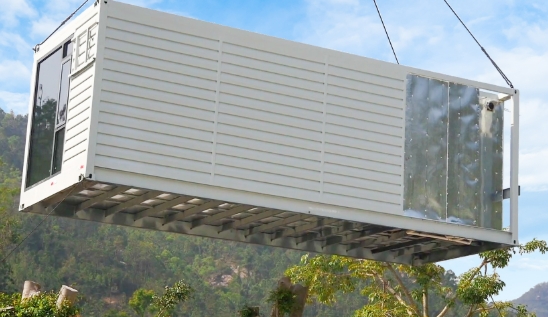
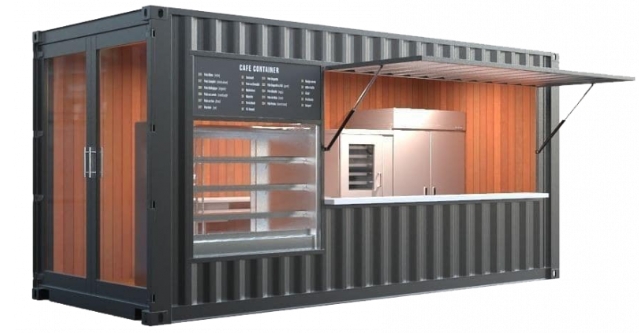
For global real estate developers and commercial builders, MiC (Modular Integrated Construction) has evolved from a niche alternative to a primary strategy for tackling high labor costs and aggressive timelines.
In 2026, the success of a modular project hinges not on the purchase of a “container,” but on the deep integration of the supply chain. As your sourcing partner in China, we move beyond the catalog to ensure your modular units meet permanent building codes and rigorous project specifications.
1. Strategic Sourcing for MiC Modular Integrated Construction
H1: Navigating the China MiC Supply Chain: From Factory to Permanent Structure
MiC is more than just a “container house.” It is a volumetric building method where over 90% of the construction—including structural framing, MEP (Mechanical, Electrical, and Plumbing), finishing, and even furniture—is completed in a controlled factory environment.
Our role as your Sourcing Agent is to distinguish between “temporary site huts” and “Permanent MiC Modules.” We help you source units that function as high-performance, long-term assets, matching the structural integrity and fire ratings of traditional on-site construction.
2. Industrial Clusters: Where to Source MiC in China
China’s modular industry is divided into specialized hubs. Choosing the right region is critical to your project’s technical success and logistics efficiency.
| Industrial Cluster | Specialization & Strength | Ideal For |
| Guangdong (Foshan, Shenzhen, Jiangmen) | The Innovation Hub. Global leaders in high-rise steel-structure MiC and luxury hospitality pods. Access to premium furniture/MEP supply chains. | High-end Hotels, Luxury Apartments, & Permanent High-rises. |
| Jiangsu (Nantong, Suzhou, Nanjing) | The Engineering Center. Strong focus on concrete-hybrid MiC and public sector projects (Schools/Hospitals). High precision engineering. | Government Projects, Educational Facilities, & Medical Clinics. |
| Hebei & Shandong (Cangzhou, Weifang, Qingdao) | The Volume Powerhouse. Master of large-scale standardized camps, foldable units, and cost-optimized detachable modules. | Disaster Relief, Workforce Camps, & Budget Retail Chains. |
| Tianjin & Northern Port Zones | Heavy Industrial Modules. Direct port access for oversized modules. Experts in heavy steel framing for extreme climates. | North American/Middle Eastern Projects & Heavy Industrial Units. |
3. Sourcing Agent Insights: Managing Technical Integrity
As your local eyes on the ground, we manage the technical “hidden” risks that most factories overlook:
💡 The “Code Alignment” Reality
Many manufacturers claim “International Standard” compliance, but the devil is in the details of the Local Building Codes (e.g., IBC/IRC for the US, NCC for Australia, or Eurocodes). We act as your technical bridge, auditing drawings before production to ensure structural calculations and insulation R-values meet your local law.
💡 MEP & Smart Integration
The failure of most modular projects happens at the joints. We oversee the MEP (Mechanical, Electrical, Plumbing) Integration. We ensure that electrical wiring is pre-certified, plumbing is pressure-tested within the walls, and smart home systems are pre-mapped for seamless “plug-and-play” on site.
💡 Fire Safety & Material Audits
We strictly verify fire-rating certificates for wall panels (A1 Non-combustible) and check formaldehyde levels in internal finishes. We ensure that the Thermal Break technology used in the window and wall systems actually meets the energy efficiency targets of 2026.
4. Our Portfolio of MiC Solutions
- Permanent Multi-Story Residential: Volumetric steel or concrete modules for apartment blocks and student housing.
- Hospitality & Hotel Pods: Fully furnished “Plug-and-Play” luxury suites with integrated smart room controls (GRMS).
- Commercial & Healthcare Units: Rapid-deployment clinics, office complexes, and high-tech modular laboratories.
- Mission-Critical Modules: Pre-integrated data centers and telecommunication hubs.
5. Our Hardcore QC Protocol
We don’t just inspect the finished house; we inspect the hidden engineering:
- Concealed Works Inspection: We audit the steel frame welding, anti-corrosion coating, and insulation filling before the wall panels are sealed.
- Water & Airtightness Testing: We conduct high-pressure rain simulations on bathrooms and the external shell to guarantee zero leakage.
- 1:1 Trial Assembly: For large projects, we mandate a “Pre-stacking” test at the factory. We verify that all bolts, sockets, and plumbing connections align perfectly across different modules.
- Logistics Protection Audits: We oversee the internal bracing and sea-worthy packaging to prevent structural warping or interior damage during 30+ days of ocean transit.
6. Why Partner with a Professional Sourcing Agent?
MiC is a management project, not a retail purchase.
- Supply Chain Integration: We combine the best precision frames from Foshan with specialized MEP modules from Shenzhen to optimize your BOM (Bill of Materials).
- Transparency & Control: You get weekly 360° video updates and on-site inspection reports. You manage the factory as if you were standing on the shop floor.
- Cost Efficiency: By managing the technical specs and factory negotiations directly, we typically save our clients 10-15% in hidden costs and prevent expensive “re-work” on the construction site.
Frequently Asked Questions (Sourcing MiC in China)
Q: Can MiC modules from China meet my local building codes (IBC, Eurocodes, AS/NZS)?
A: Yes, but it requires proactive management. Most factories produce according to Chinese GB standards by default. Our role as your sourcing agent is to perform “Code Alignment.” we work with third-party labs and structural engineers to ensure the steel grade, fire ratings, and insulation R-values are verified against your specific national or regional building codes before production begins.
Q: How are these massive modules shipped, and what are the logistics costs?
A: There are two main methods:
- ISO Standard Dimensions: Modules designed to fit within a 40HQ shipping container frame for standard ocean freight.
- Breakbulk/SOC (Shipper Owned Container): Custom-sized volumetric modules that travel as independent units on the deck or in the hold of a vessel. We help you optimize the dimensions at the design stage to balance “maximum interior space” with “minimum shipping tariffs.”
Q: Is MiC suitable for permanent high-rise buildings, or just temporary sites?
A: We focus on Permanent MiC (Modular Integrated Construction). While China is famous for rapid-response temporary units, the industrial clusters in Guangdong and Jiangsu specialize in heavy-gauge steel and concrete-hybrid modules designed for a 50-year+ lifespan, matching the durability and safety of traditional on-site construction.
Q: Can we customize the interior finishes and MEP (Mechanical, Electrical, Plumbing) components?
A: Absolutely. This is a core part of our sourcing service. You can specify everything from the brand of the HVAC system to the grade of the flooring. We perform BIM (Building Information Modeling) coordination to ensure that all pre-installed utilities align perfectly when modules are connected on-site.
Q: What is the typical lead time for a modular apartment project?
A: While every project varies, the MiC method generally reduces total construction time by 30% to 50%. A typical production cycle for a batch of modules (e.g., 50–100 units) is approximately 60–90 days after technical drawings are finalized. This allows you to complete foundation work on-site while we manage the building fabrication in the factory simultaneously.
Q: What is the Minimum Order Quantity (MOQ) for a custom MiC project?
A: For bespoke architectural projects, MoQ usually starts at 10 to 20 units (approx. one small apartment block or boutique hotel wing) to justify the cost of structural engineering and production line setup. For standardized units, the MOQ can be lower.