
Equipping a 200-room hotel or a multi-unit apartment complex is a logistical heavy lift. You are not buying individual products; you are buying systems that must arrive on time, fit precise architectural dimensions, and withstand years of heavy commercial use.
For property developers and hospitality procurement teams, the Canton Fair is the ultimate hunting ground. However, navigating 1.5 million square meters of exhibition space without a targeted procurement list is a recipe for project delays and budget overruns.
If you are sourcing for hotel and apartment projects, here is a strategic breakdown of exactly what you should be looking for at the Canton Fair—and what technical specifications you need to verify.
The “Project Mindset” vs. The “Retail Mindset”
Before looking at specific categories, you must shift your perspective. Retail buyers look for trends and packaging. Project buyers must look for durability, compliance, and batch consistency.
When walking the aisles, you are evaluating a supplier’s capacity to handle bulk, non-standard orders. If a factory only understands “retail-grade” production, they are a liability to your project.
Core Categories to Source for Hospitality and Residential Projects
To maximize your time, focus on the big-ticket items that drive the bulk of your project’s budget.
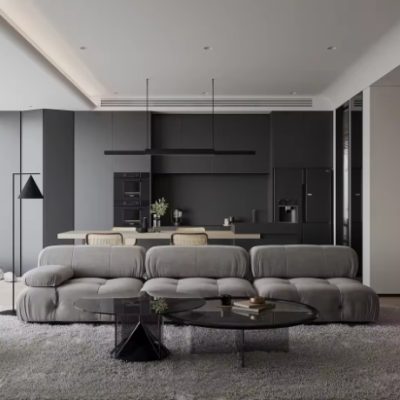
1. FF&E (Furniture, Fixtures & Equipment)
For hotels and serviced apartments, furniture takes a beating. Do not get distracted by a beautiful design in a booth without checking the engineering underneath.
- What to look for: Lobby seating, outdoor/patio furniture, and standardized guest room casegoods (beds, wardrobes, desks).
- The Project Test: Ask the supplier about “contract-grade” standards. Check the density of the foam (high-resilience is a must). Ask for the Martindale rub count for upholstery.
- Compliance Check: Ensure the factory can provide the necessary fire-retardant (FR) treatments required by your local building codes (e.g., CAL117 for the US, BS5852 for the UK).
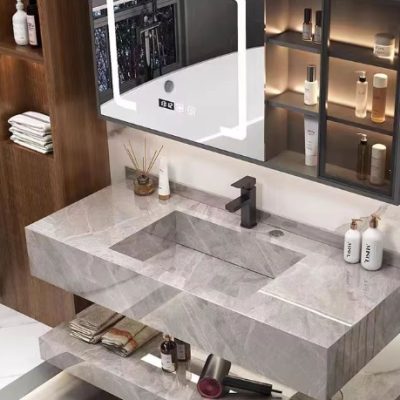
2. Sanitary Ware & Bathroom Fixtures
Bathrooms are the most heavily scrutinized areas in a hotel or apartment. You need high-volume standardization.
- What to look for: Wall-hung toilets, smart bidets, freestanding bathtubs, shower enclosures, and vanity mirrors.
- The Project Test: For faucets and showerheads, ask about the internal cartridges (ceramic is standard) and the PVD (Physical Vapor Deposition) coating process. PVD finishes prevent the brass from tarnishing after daily exposure to commercial cleaning chemicals.
- Compliance Check: Look for WaterSense (US), WELS (Australia), or CE (Europe) certifications to pass local plumbing inspections.
3. Building Materials & Surface Finishes
Sourcing heavy materials in China offers massive cost savings, but the risk of batch inconsistency is high.
- What to look for: SPC/LVT flooring, large-format sintered stone (excellent for hotel lobbies and bathroom walls), acoustic wall panels, and commercial-grade carpet tiles.
- The Project Test: For flooring, check the “wear layer” thickness—commercial projects typically require a minimum of 0.5mm (20 mil) on SPC flooring. For tiles, ask the factory how they guarantee color consistency across a 10,000-square-meter production run.
4. Lighting & Smart Room Controls
Lighting sets the mood of a hospitality project, but the electronics must be flawless.
- What to look for: Custom lobby chandeliers, architectural downlights, LED strip lighting, and smart-room switches.
- The Project Test: A cheap LED chip will flicker and degrade within months. Ask about the brand of the LED drivers (e.g., Meanwell, Philips) and the CRI (Color Rendering Index)—you want a CRI of 90+ for hospitality spaces to ensure colors look natural.
- Compliance Check: UL, ETL, or CE certifications are non-negotiable for lighting. Do not accept products without them, or your building will fail its electrical inspection.
What Not to Finalize at the Fair
While the Canton Fair is great for discovery, you should never finalize complex, custom architectural millwork or built-in joinery at a booth.
Custom cabinetry and built-ins require precise site measurements, deep engineering, and detailed shop drawings. Meet the suppliers at the fair, assess their capability, but move the actual technical negotiations to their factory boardroom.
The Golden Rule: Move from the Booth to the Factory
The items listed above cannot be successfully procured just by swapping business cards.
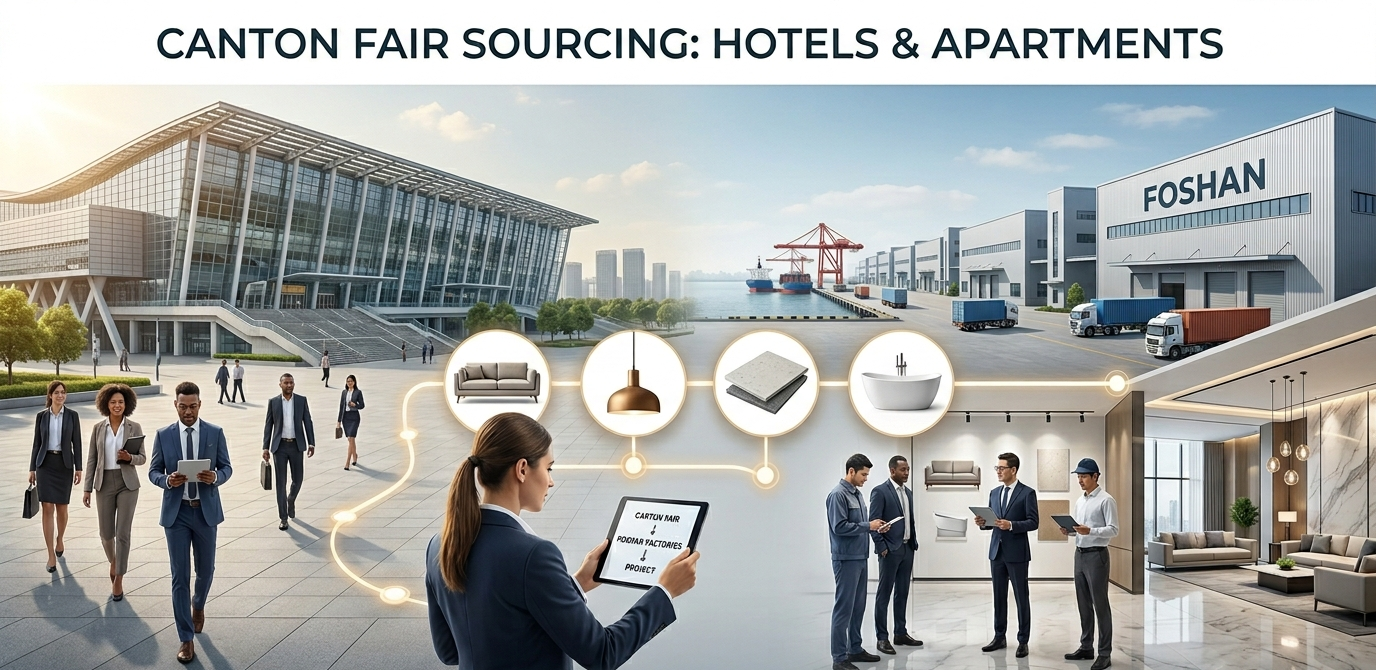
The Canton Fair is your shortlisting phase. For hotel and apartment projects, the real procurement happens in the days following the fair. You must travel to the manufacturing hubs—Foshan for furniture, tiles, and sanitary ware, and Zhongshan for lighting.
Visiting the factory allows you to inspect their actual production lines, review their quality control (QC) procedures, and view full-scale hotel room mockups in their showrooms.
Key Takeaways
- Source for Durability: Prioritize “contract-grade” specifications over pure aesthetics. Commercial projects require higher foam density, wear layers, and structural integrity.
- Verify Compliance: Never assume a product meets your local building codes. Always verify fire ratings, electrical certifications, and plumbing standards upfront.
- Prioritize Phase 1 and Phase 2: covers building materials, sanitary ware, and lighting and covers FF&E and home décor. Plan your trip accordingly.
- Don’t Stop at the Fair: Use the Canton Fair to build a shortlist of 3-5 suppliers per category, then conduct physical audits at their factories in Foshan and Zhongshan.
FAQ: Sourcing for Projects at the Canton Fair
Can I buy complete hotel room packages from a single supplier at the fair? Rarely. Factories in China are highly specialized. A top-tier sofa factory does not make showerheads. To equip a full hotel room, you will need to coordinate with multiple specialized manufacturers.
Is the Canton Fair suitable for small boutique hotel projects? Yes, but you must be upfront about your Minimum Order Quantities (MOQs). Some large factories may reject a 20-room project, but there are plenty of mid-sized manufacturers eager for boutique hospitality business.
How do I manage quality control when buying from multiple factories? This is the biggest challenge for project developers. The most effective solution is to hire a local, project-focused sourcing agent. They act as your on-the-ground project manager, consolidating shipments, performing pre-shipment inspections against your BOQ, and ensuring the lighting matches the furniture finishes.
Should I bring my architect or interior designer to the fair? It is highly recommended. Having your design team present allows them to touch the materials, understand production limitations, and adjust their designs in real-time based on what is actually feasible and cost-effective to manufacture.