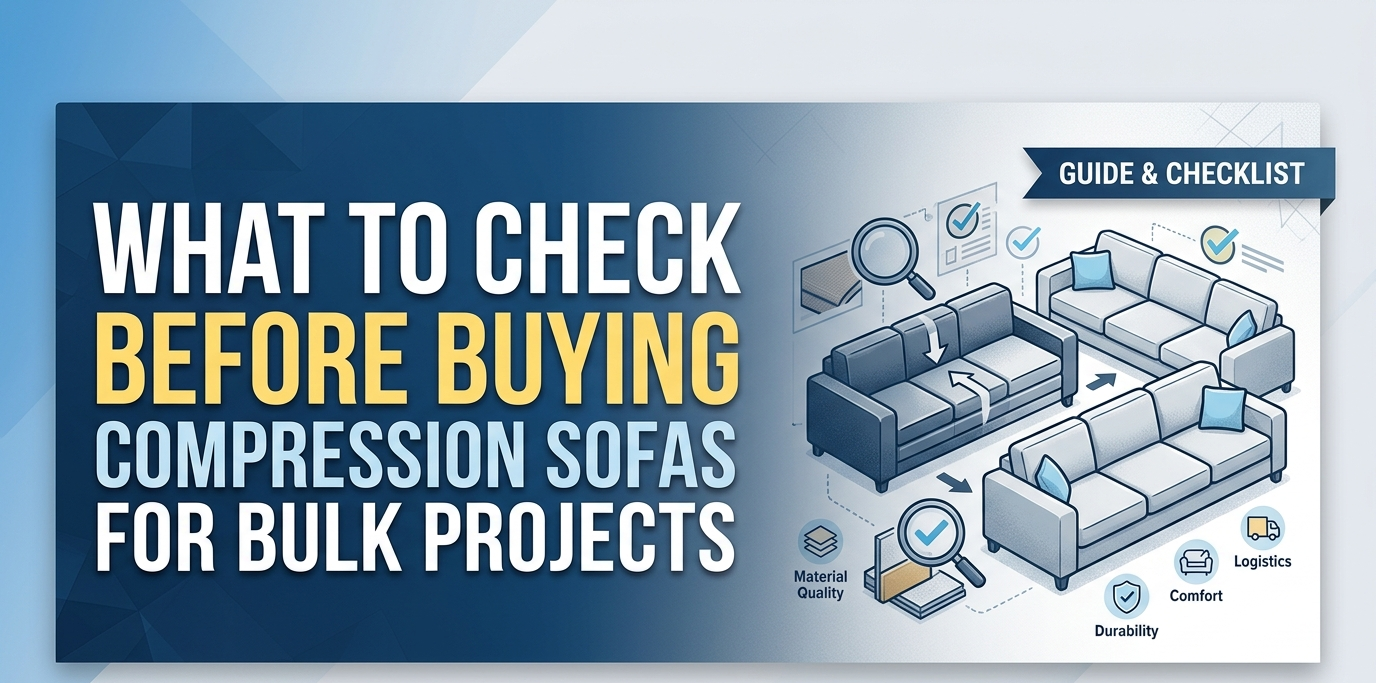


Key Takeaways:
- The Math of CBM: Vacuum compression reduces a sofa’s shipping volume by 50% to 70%, allowing you to load three times as many units into a 40HQ container and drastically cutting the freight cost per unit.
- Density is Non-Negotiable: For a compressed sofa to fully recover its shape after weeks in transit, the internal foam must have a minimum density of 35kg/m³ (High Resilience foam).
- Fabric Selection Matters: Not all fabrics survive compression well. High-polyester blends and performance fabrics resist permanent creasing better than pure linen or thick velvets.
- Structure Types: Decide between “All-Foam” modular sofas (fully compressed) and “KD” (Knock-Down) sofas where the frame is flat-packed and only the cushions are vacuum-sealed.
When outfitting a 200-room hotel or a new multi-family apartment development, the cost of the furniture is only half the equation. The other half is logistics. Traditional sofas consist mostly of “empty air,” consuming massive amounts of cubic meters (CBM) inside a shipping container.
To solve this freight overhead, many project buyers are shifting to compression sofas. Foshan, particularly the Longjiang manufacturing cluster, has heavily invested in heavy-duty vacuum sealing technology. However, compressing a sofa stresses its materials. If you procure incorrectly, the sofas will arrive permanently flattened. Here is what procurement managers must check before ordering.
Why Are Compression Sofas Becoming Standard for Multi-Unit Projects?
The shift toward compression sofas is driven entirely by logistics and ROI.
A standard, fully assembled 3-seater commercial sofa typically occupies 1.2 to 1.5 CBM. A standard 40-foot High Cube (40HQ) container holds roughly 68 CBM. This means you can only ship about 45 to 50 assembled sofas per container. If ocean freight is $5,000, the shipping cost alone adds over $100 to each unit.
By utilizing vacuum-compression, that same sofa is compressed into a tight roll or a flat box, reducing its volume to roughly 0.4 CBM. You can now load 150+ units into the same container, slashing the freight cost per unit by nearly 70%. For apartment developers outfitting entire buildings, this logistical efficiency frees up significant capital.
How Does Foam Density Affect the Rebound Rate?
The primary risk of buying compressed seating is a failed “rebound”—where the sofa looks deflated and cheap upon unboxing. The determining factor is the quality of the polyurethane foam.
When a sofa is vacuum-sealed and sits in a shipping container for 30 to 45 days, cheap foam breaks down at a cellular level.
- Budget Foam (25kg/m³ – 28kg/m³): Often used in cheap residential furniture. It will not fully recover its shape after prolonged compression.
- Commercial Foam (35kg/m³ – 45kg/m³): High Resilience (HR) foam is required for compression. The denser cell structure acts like a spring, allowing it to recover 95% to 98% of its original volume within 48 to 72 hours of unboxing.
As a buyer, you must specify the exact foam density in your Bill of Materials (BOM) and have your local agent verify it on the factory floor before the compression machine seals the product.
Which Fabric Materials Best Survive Vacuum Compression?
Subjecting upholstery to several tons of pressure can create permanent creases. Therefore, fabric selection requires technical consideration, not just aesthetic preference.
- Recommended: Synthetic performance blends (high polyester content) and microfibers. These materials have strong “memory” and naturally drop their wrinkles as the foam expands inside them.
- Use with Caution: Pure linen and heavy pile velvets. Linen crushes easily and holds sharp creases, while velvet pile can be permanently crushed by the heavy plastic wrapping, leaving visible pressure lines.
If your design requires a fabric prone to wrinkling, we strongly advise requesting a pre-shipment mock-up: compress one unit, leave it in the factory warehouse for 30 days, then unbox it to observe the fabric’s recovery.
Can You Compress Sofas with Solid Frames?
A common misconception is that compression is only for “bean bag” style all-foam seating. While all-foam modular sofas (similar to bed-in-a-box technology) are highly popular for modern apartment projects, you can still procure framed sofas efficiently.
For projects requiring traditional rigidity, factories produce Knock-Down (KD) hardware frames. The process works like this:
- The base, arms, and backrest use a solid pine or metal frame designed to be flat-packed (similar to IKEA).
- The seat and back cushions are vacuum-compressed into flat plastic sleeves.
- Everything is packed into a single, highly efficient cardboard carton.
This provides the structural feel of a traditional hotel sofa with the shipping footprint of a compressed product.
Why Choose HSY Sourcing for Your Furniture Procurement?
Located at the center of the Foshan furniture belt, HSY Sourcing provides the technical oversight required to procure compression sofas safely.
- Factory Vetting: Not all factories have industrial-grade compression machines. We partner directly with manufacturers in Longjiang who own top-tier vacuum equipment, ensuring your products are packed securely without bursting in transit.
- Material Auditing: We physically inspect the raw materials. We don’t just read the spec sheet; we verify the foam density blocks and Martindale fabric ratings before assembly begins.
- Rebound Testing: For any new OEM design, we mandate a time-lapsed rebound test on the first off-line sample to guarantee it meets commercial aesthetics after decompression.
- Consolidated Loading: We manage the complex logistics of loading your compressed sofas alongside fragile or heavy items (like tiles, lighting, and bathroom fixtures) into the same containers, maximizing every inch of your freight.
Visit www.hsysourcing.com to share your project’s FF&E (Furniture, Fixtures, and Equipment) list, and let us engineer the most cost-effective sourcing strategy for your development.
Frequently Asked Questions (FAQ)
Q: How long does a compression sofa take to fully expand after unboxing?
A: Most high-quality HR foam sofas will regain 80% of their shape within the first 2 hours. However, it takes approximately 48 to 72 hours for the foam cells to fully decompress and the fabric wrinkles to fall out completely.
Q: Can we leave the sofas compressed in our storage facility for months?
A: It is not recommended. We advise unboxing compression furniture within 3 to 4 months of the manufacturing date. Leaving foam vacuum-sealed for over 6 months increases the risk of permanent volume loss and foam degradation.
Q: Are compression sofas durable enough for a high-traffic hotel lobby?
A: Yes, provided they are engineered correctly. For high-traffic commercial spaces, we recommend specifying a heavy-duty KD (Knock-Down) metal or hardwood flat-pack frame, paired with high-density compressed cushions, rather than an all-foam structure.