
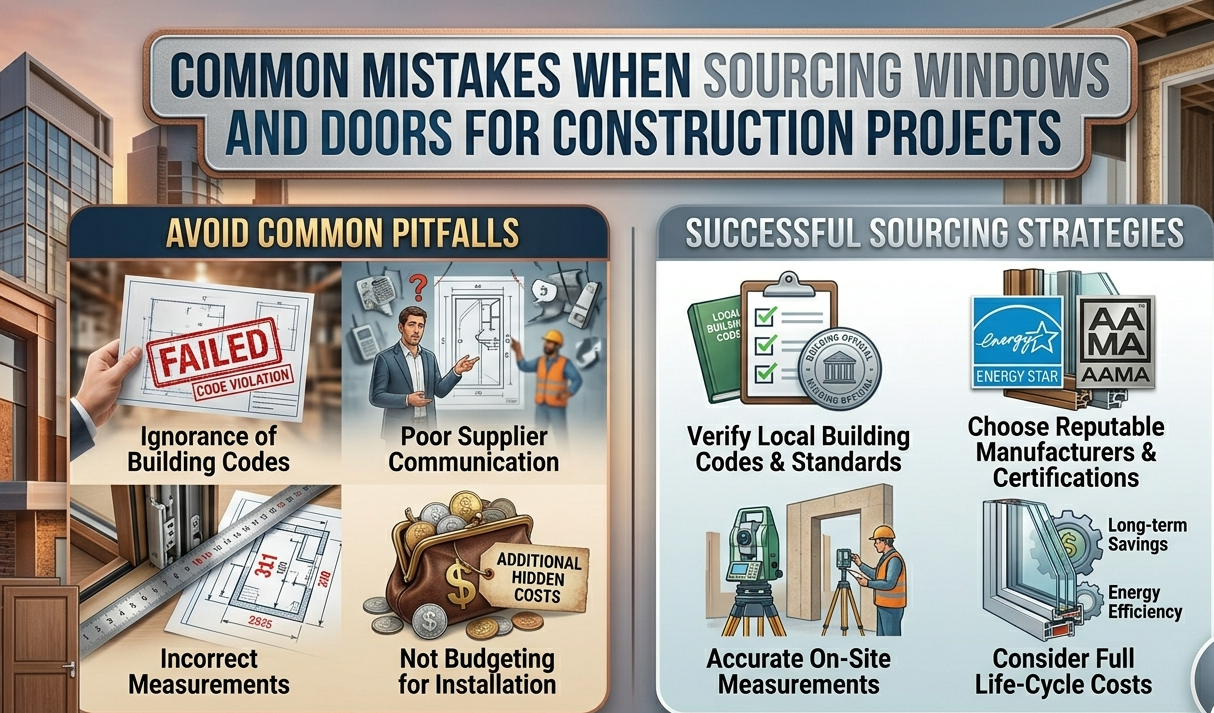
Key Takeaways:
- Technical Specs Over Price: Saving 10% on unit price often leads to a 50% increase in energy or maintenance costs if thermal breaks are ignored.
- The Measurement Trap: Never assume “standard sizes.” In commercial projects, 5mm is the difference between a perfect fit and a rejected shipment.
- Certification Rigor: Ensure your supplier has verifiable test reports (AS2047, NFRC, or CE) specifically for the glass-frame system, not just the glass.
- Logistics Complexity: Shipping glass requires specialized steel A-frames; standard wooden crates often lead to breakage during ocean transit.
Sourcing windows and doors from China—specifically the industrial hub of Foshan—can significantly reduce a project’s capital expenditure. However, for real estate developers and hotel owners, the complexity of these “moving parts” of a building envelope is often underestimated.
Based on our experience managing large-scale procurement in Guangdong, here are the most critical mistakes to avoid when sourcing for your next project.
Why Do Many Projects Fail at the “Technical Specification” Stage?
The most frequent mistake is providing an RFQ (Request for Quote) that is too vague. Simply asking for “double-glazed aluminum windows” is an invitation for quality issues.
For hospitality and residential projects, you must define:
- Thermal Break Quality: In 2026, energy codes are stricter than ever. Using non-thermally broken aluminum in temperate climates results in condensation and massive HVAC bills.
- STC Ratings (Acoustics): For hotels near highways or airports, a standard window isn’t enough. You must specify the Sound Transmission Class (STC). A mistake here leads to guest complaints and poor reviews that are impossible to fix after installation.
- Aluminum Wall Thickness: For high-rise apartments, the wind load is immense. Using 1.4mm thickness when the project requires 2.0mm or 2.5mm can lead to structural sagging or air leakage over time.
How Can Measurement Errors Ruin a Container Shipment?
How to Source Windows and Doors for Hotel Projects in ChinaIn construction projects, there is no such thing as a “standard size.” A common error for international buyers is taking measurements before the structural openings (rough openings) are finalized.
- Tolerance Gap: You must account for the installation gap (usually 10-15mm). If your windows are manufactured exactly to the rough opening size, they will not fit.
- The Shop Drawing Loop: The most successful projects involve a “Shop Drawing” phase where your architect and the factory’s engineers cross-verify every millimeter. Skipping this step to “save time” almost always results in on-site modifications that cost thousands.
Is Your Supplier Using Certified Systems or Just Certified Glass?
Many factories in China will show you a certificate for “Tempered Glass.” While important, it is not a certificate for the entire window system.
- The System Fallacy: A window is a complex assembly of glass, aluminum, EPDM gaskets, and hardware (like Hoppe or KinLong). The air infiltration and water penetration tests must be performed on the complete assembly.
- Hardware Durability: In a hotel, a balcony door may be opened 1,000 times a year. Using “no-name” hardware is a recipe for maintenance nightmares within 24 months. Always mandate commercial-grade, multi-point locking systems.
Why is Loading and Logistics the “Final Boss” of Sourcing?
Even a perfect product can be ruined by poor logistics. For large-scale apartments or hotels, standard packing is insufficient.
- The Steel A-Frame Requirement: Large glass panes should be shipped on reinforced steel A-frames, not just wooden crates. This allows for vertical storage and prevents the “pressure cracking” that occurs when containers sway at sea.
- Phased Delivery: A construction site cannot usually store 500 windows at once. A mistake is shipping the entire order in one go. You need a partner in Foshan who can consolidate and “phase” the delivery to match your installation schedule (e.g., Floors 1-10 first).
Why Choose HSY Sourcing for Your Construction Project?
At HSY Sourcing, we specialize in bridge-building between the technical requirements of global developers and the manufacturing reality of Foshan’s top-tier factories.
- Foshan Insider Advantage: We are physically located in the world’s capital of building materials. We don’t just “find” a supplier; we audit their production line to ensure they have the precision machinery (like CNC milling) required for commercial-grade joinery.
- Technical Liaison: We act as your on-site engineering team. We review your architectural drawings, translate them into Chinese factory standards, and catch “impossible” details before production begins.
- Transparent Quality Control: Our QC isn’t just a checklist. We perform water-tightness tests and caliper-check aluminum thickness for every batch. You receive a detailed report before you pay the balance.
- Logistics Management: We specialize in project-based shipping, ensuring your windows and doors are packed for maximum protection and delivered according to your site’s timeline.
Visit www.hsysourcing.com to discuss your project’s Bill of Quantities (BOQ) and secure your supply chain.
Frequently Asked Questions (FAQ)
Q: What is the lead time for custom windows for a 100-unit apartment?
A: Typically, once shop drawings are approved, production takes 35-45 days. Add 3-5 weeks for ocean freight depending on your location.
Q: Should I buy the hardware separately or through the factory?
A: It is usually better to buy through the factory but specify the brand. We recommend brands like KinLong, Cmech, or Siegenia. This ensures the factory machines the slots (milling) specifically for that hardware’s dimensions.
Q: How do I handle a “Sample Approved, Bulk Rejected” scenario?
A: This is why HSY Sourcing performs “During Production” (DUPRO) inspections. We catch deviations when only 10% of the order is done, forcing the factory to correct the batch before the entire order is finished.