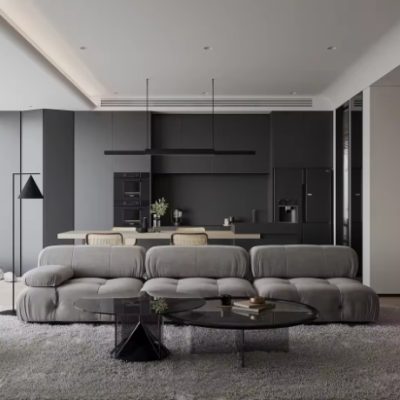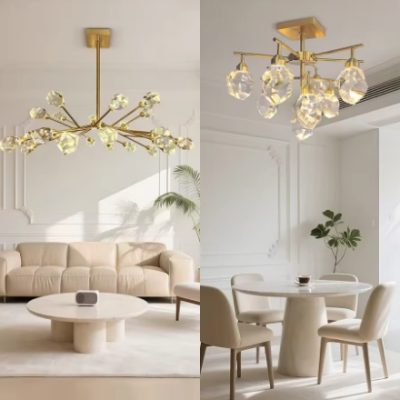

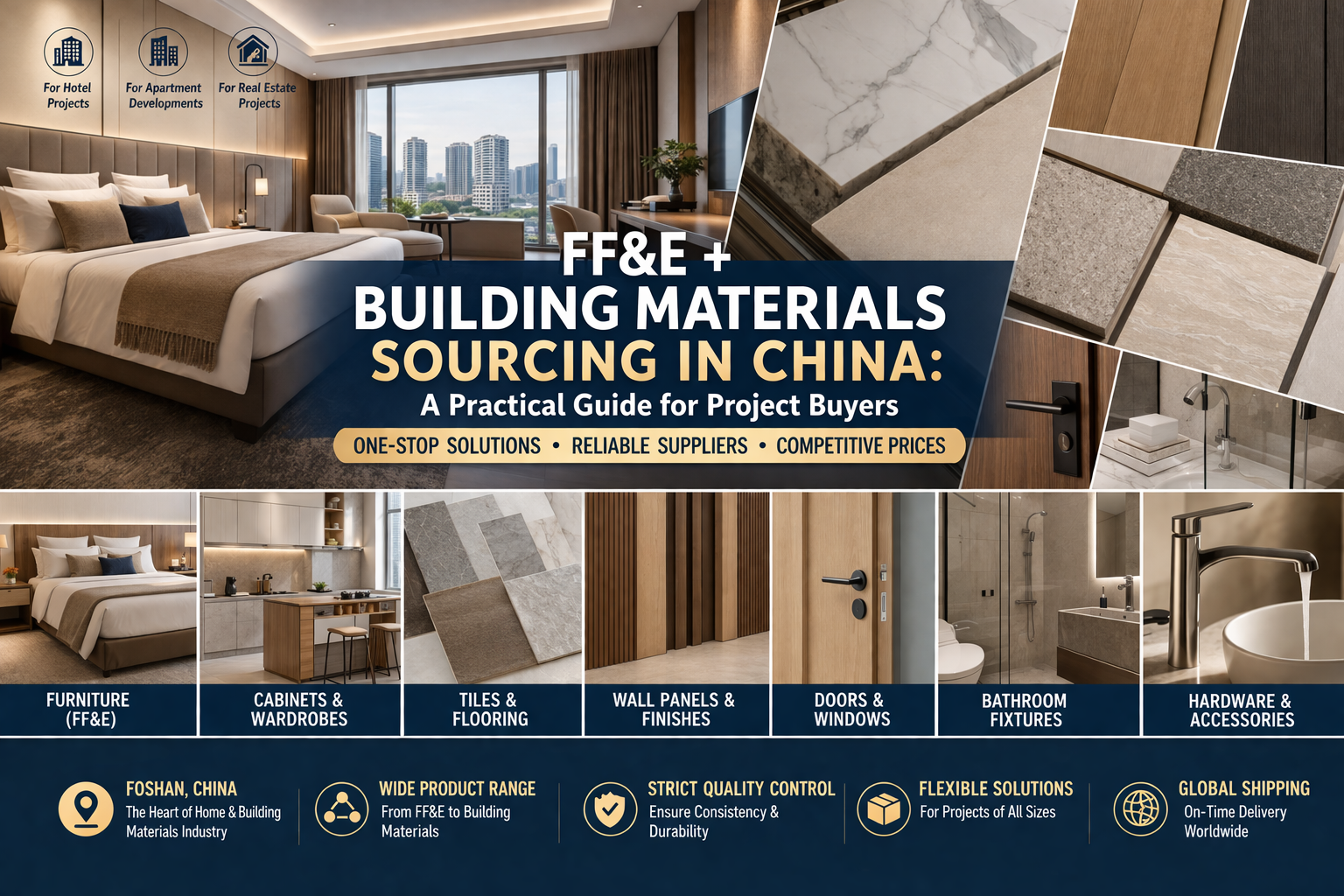
For many project buyers, the sheer scale of the Chinese manufacturing landscape is overwhelming. You aren’t just buying products; you are managing a complex ecosystem where FF&E (Furniture, Fixtures, and Equipment) must perfectly interface with building materials.
If your flooring arrives three weeks after your furniture, or if your vanity faucets don’t fit the pre-drilled holes in your stone tops, your project’s ROI vanishes into site delays and local modifications. This guide focuses on the practical mechanics of coordinating these two distinct categories into one successful delivery.
What is the fundamental difference between sourcing FF&E and building materials?
While both come from China, they operate on different production logic.
Building Materials (tiles, stone, sanitary ware, flooring) are often “stock” or “semi-custom” items. They are heavy, high-density, and usually the first items needed on the construction site. The risk here is mostly technical: color batch variance and breakage.
FF&E (sofas, beds, lighting, decorative items) is highly customized and “visual.” The risk here is aesthetic and ergonomic: Is the fabric rub-count high enough? Is the foam density correct for a commercial hotel?
Why is container consolidation the “hidden” profit center for project buyers?
Shipping “air” is the fastest way to lose money in procurement. If you buy furniture from one city and tiles from another, you pay for multiple LCL (Less than Container Load) shipments, which are notoriously expensive and prone to damage.
In Foshan, we use a Layered Loading Strategy. Building materials like porcelain tiles and sintered stone slabs are incredibly heavy. We place these on the floor of the container to create a stable, low center of gravity. We then stack the high-volume, lower-weight FF&E items (like flat-packed wardrobes or upholstered chairs) on top. This “Full Container Load” (FCL) approach typically reduces shipping costs by 20–35% compared to separate shipments.
How do you ensure technical compatibility across different factories?
The biggest nightmare for a project buyer is “The Gap.” This is when a faucet from Factory A doesn’t fit the sink from Factory B, or the LED drivers for your lighting aren’t compatible with your country’s voltage.
Practical sourcing requires Inter-Factory Technical Coordination:
- Hardware Standardization: We insist that all custom joinery and loose furniture use the same grade of hardware (e.g., Blum or high-end local DTC) to ensure a uniform feel.
- Sample Swapping: We physically take a tile sample to the furniture factory to check it against the sofa fabric under natural light.
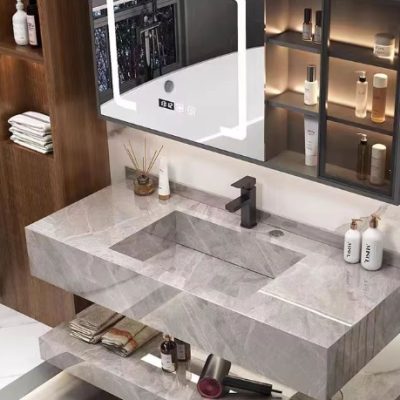
- The “Dry-Fit” Requirement: For bathroom vanities or kitchen islands, we require the stone factory to send the tops to the cabinet factory for a physical fit-test before either item is packed.
What are the “Red Flags” project buyers should look for during QC?
Inspection isn’t just about looking for scratches. For a project buyer, the inspection must be technical. We look for:
- VOC Levels: Does the furniture have a strong chemical smell? We check for E0/E1 formaldehyde compliance to meet international health standards.
- Fabric Durability: For hotel projects, we verify the Martindale rub count of the upholstery to ensure it can withstand high-traffic use.
- Moisture Content: For solid wood items, we use moisture meters to ensure the wood is dried to 8–12%, preventing warping when the furniture moves from humid China to a drier climate like the US or Middle East.
Key Takeaways
- Logic-Based Sourcing: Purchase building materials for their technical specs and FF&E for their guest-facing aesthetics, but coordinate their colors at the source.
- Consolidate in Foshan: Leverage the proximity of the furniture and ceramic hubs to mix heavy and light goods in the same containers.
- Control the Finishes: Never trust a digital photo for color matching; always use physical “Master Samples” shared across all factories.
- Technical Inspections: Go beyond visual checks—test hardware cycles, moisture content, and material certifications.
FAQ: Sourcing FF&E and Materials
Q: Can I source both luxury and budget items in the same shipment?
A: Yes. Many developers use “Value Engineering” to spend more on high-impact FF&E (lobby furniture) while sourcing high-quality, unbranded building materials (standard floor tiles) to balance the budget.
Q: How do I handle electrical certifications for lighting?
A: This is critical. We ensure that every lighting factory provides the correct certification for your region (UL for North America, CE for Europe, SAA for Australia). We also verify that the internal wiring and sockets match your local requirements.
Q: What happens if something is damaged in the container?
A: We always include “Attic Stock”—a 2–3% overage of critical items like tiles, hardware, and fabric. For high-value FF&E, we use reinforced plywood crating rather than standard cardboard to withstand the rigors of ocean freight.
Technical Procurement with HSY Sourcing
Procurement in China is only “Practical” if you have eyes on the ground. At HSY Sourcing, we act as your technical department in Foshan. We don’t just find suppliers; we manage the interface between your construction site and the factory production line.
From coordinating the weight of your tiles to the rub-count of your sofas, we ensure that your “Interior Package” arrives as a cohesive, ready-to-install solution.